Blog

Finding Comfort For the End of Life

But after my death let it be known that in my old age, at the very end of my life, there was still plenty that made me smile. Orhan Pamuk, author of My Name Is Red 

November is National Hospice/Palliative Care Month. A daughter I interviewed for my book, Mom’s Gone, Now What? was so positively impacted by the hospice care her mother received that, as an adult, she became a lifelong hospice volunteer. Hospice and palliative care frequently make a profound, positive difference in the lives of families and patients. 

What is the difference between hospice and palliative care? Hospice care is for terminally ill patients when treatment is no longer curative during the last six months of life. Palliative care can be employed while the patient is continuing active treatment through different phases of their life-limiting condition. Both provide comfort to the patient. 

Affirmation: I’m grateful for the volunteers and professionals who provide hospice and palliative care.

Coaching request: If you are a patient or family member dealing with a life-threatening condition, consider hospice or palliative care now or in the future.
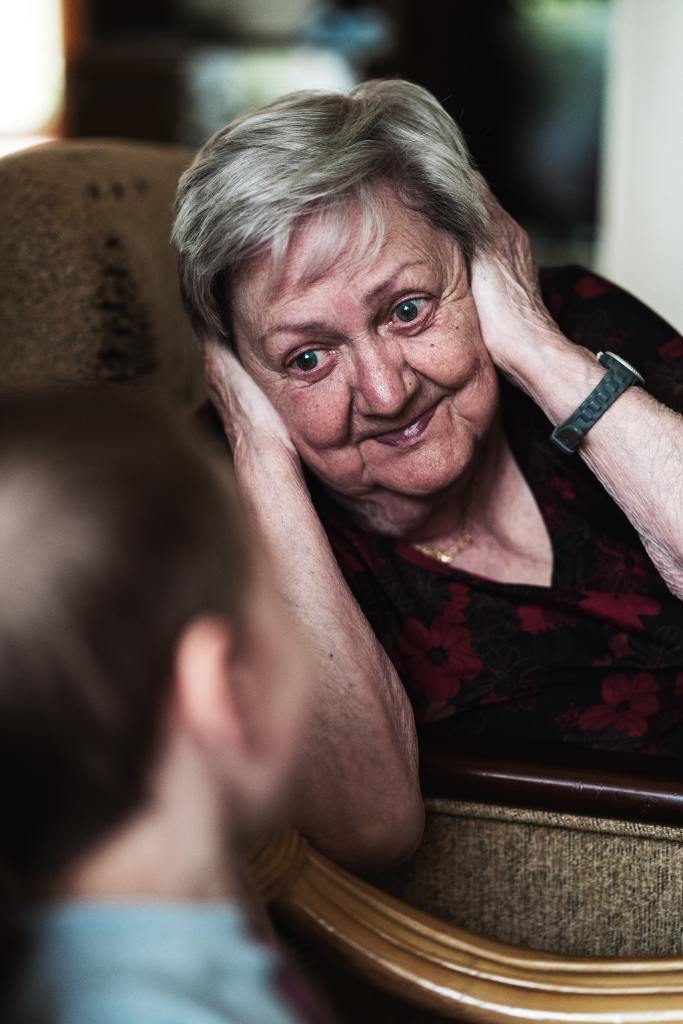
Photo by William Krause on Unsplash


The Art of Being True to Yourself

Dragonflies are reminders that we are light and we can reflect light in powerful ways if we choose to do so. Robyn Nola, Artist and believer in the power of affirmation

In almost every part of the world, the Dragonfly symbolizes change, transformation, adaptability, and self-realization. The Dragonfly is iridescent both on its wings and body. The magical property of iridescence is associated with the discovery of one’s ability by unmasking the real self and removing the doubts cast on his/her sense of identity. 

Discovering and embracing who we truly are is an integral part of our maturity. A friend of mine who faces the challenge of addiction recovery has a dragonfly tattoo on her arm as a symbol of her transformation. To her the dragonfly stands for hope, change, and love. A powerful daily reminder that she has embraced change and remains true to herself.

Affirmation: I am true to myself. 

Coaching questions: In what ways have you changed and become more of your true self? What symbol would you use to prompt you to reflect light and embrace self-realization? 

Photo by michael beattie on Unsplash

Embracing the Gentle Giant

Even the big 12-foot alligator will give way to the manatee. Patrick Rose, Aquatic Biologist and Executive Director of the Save the Manatee Club

November is Manatee Awareness Month. Manatees are Florida’s official state marine mammal and are listed as treated at the federal and state level.

Want to know more? Some facts according to Aquatic Biologist, Patrick Rose, include:

— Manatees are known as sea cows but are more of a distant relative of the elephant

— They usually travel in small groups through the shallow coastal waters

—They are vegetarians

— They can weight up to 1300 pounds and measure up to 13 feet long

—They move like a dolphin in slow motion

— When an alligator is in its way, a manatee bumps or nudges them to move

— Manatees face threats of collisions with boats, habitat loss, cold stress, toxic effects of red tide and other algae blooms

I’ve been fortunate to see manatees in the wild. They are truly the gentle giants of Florida’s waterways. 

Information for this blog was taken from Coastal Breeze newspaper

Affirmation: I will help to keep manatees safe

Coaching question: Learn something new? I hope so. How do you embrace the natural world around you? 

Photo by NOAA on Unsplash

On Taking Churchill’s Advice

Never, never, never, never give up. Winston Churchill, British statesman

In the next week I will complete the first draft of my second book, a historical fiction set on the Nebraska plains of 1875-76. Then, the real work begins. 

As I rewrite, edit, evaluate the point of view, consider the through-line, correct errors, I’m reminded of how this work is an analogy for re-writing one’s life after a significant loss. 

When your mother, husband, child or other significant person in your life dies, parts of your life need to be re-written. Perhaps you’re no longer defined as a care-giver or a partner and you’re wondering who you are and what you’re going to do without your former roles. 

Take a moment and reconnect with what you like and don’t like, how you see yourself in the future, and what contributions you want to make. Re-writing is not for the faint of heart. It takes perseverance, creativity, a determination to succeed and, in my case, prayer. But–never, never, never give up!

Affirmation: I never give up.

Coaching question/request: If you’re recovering from a recent loss, what steps are you taking to re-write your life? Take a moment to journal your thoughts on what’s next. Write a list of specific ways you will move forward—even if it is just for today or this week. 

Photo by Arthur Osipyan on Unsplas

Learning to Dance In the Rain

Life isn’t about waiting for the storm to pass, it’s about learning to dance in the rain. Vivian Green, American singer and song writer

It’s been eight months. Have you learned to “dance in the rain” yet? There’s no doubt that we’ve been living in a storm. Some of you have literally been living in a storm of fire, rain, hurricanes, and tornados on top of the storm of a pandemic.

Dancing in the rain takes practice. If you’ve experienced storms in the past—death, divorce, financial crisis, health issues—you know what I mean. You’ve learned resiliency, patience, acceptance—or not. 

To me, dancing in the rain doesn’t mean I’m enjoying the storm. As I dance, I’m wishing for sunny days but dance I will because crying in the rain hasn’t worked for me, wishing away rainy days hasn’t worked for me, dancing in the rain works for me.

Affirmation: I will dance in the rain. 

Coaching questions: What does “dancing in the rain” look like to you? How do you handle the storms of life? What works, what doesn’t? What will you choose today?

Feeling Lonely?

Relationships provide meaning and a sense of purpose to your life. Julianne Holt-Lunstad, Ph.D.

In a Cigna study earlier this year, 61 percent of U.S. adults reported feeling lonely, this was before COVID struck.

Here are a few tips on combating loneliness at a time when more of us are alone—or nearly alone—than ever before in our lives. 

—Call or Face Time someone you care about daily. Even texting helps us feel connected and less alone.

—Just twenty minutes of exercise helps get our mood-enhancing brain chemicals pumping. 

—Service is a great antidote to loneliness. Send a card, write a check, volunteer at a food pantry (if you’re low risk), make calls to get out the vote. 

Hopefully, being separate from friends and family is making us realize how much we need one another. I don’t know about you, but I will come out of this with an even stronger commitment to the ones I love. 

Affirmation: I will combat loneliness.

Coaching questions: What is helping you feel less alone? What helped you in the past? What step(s) will you take today to combat loneliness?

Photo by Elijah O’Donnell on Unsplash

Even Clouds Have Silver Linings

There is no doubt that COVID-19 is a cloud that continues to hover over our world. For some the virus brought catastrophe—a lost loved one, lost business, lost job. For others, the impact has been less severe but, nevertheless, COVID has impacted all of us in some negative way.

But, as with all clouds, there are silver linings—needed rain, cooler temperatures, rainbows.  

My COVID silver linings have been time to write a new book and publish the book I’d spent three years writing. I’ve also become friends via email with my next door neighbor (a lovely lady from England) and a weekly opportunity to learn in a Zoom class taught by my editor, Elena, who lives in Washington state.

My granddaughter’s silver lining was the opportunity to teach herself to play the guitar. Some have planted gardens, read more books, reconnected with old friends, learned to cook new recipes. 

Affirmation: I believe in silver linings.

Coaching questions: What silver linings have you had in the last eight months? What have they meant to you?

Photo by NOAA on Unsplash

Fill A Bucket

An empty lantern provides no light. Self-care is the fuel that allows your light to shine brightly. Unknown

Last year, I sent a children’s book entitled, Fill a Bucket by Carol McCloud and Katherine Martin, to some of my Greats and Grands. The book’s message is that we all have an invisible bucket which holds good thoughts and feelings about ourselves. When someone does something nice for you, you do something nice for them, or you do something nice for yourself, you fill your bucket and visa versa. 

I’ve used the bucket analogy as a Life Coach for years. I’d notice my client’s bucket was empty by how she sounded or what she said. I’d ask her, “What will you do this week to fill your bucket?” 

As the holiday season approaches, it’s easy to deplete our own buckets while working hard to fill the buckets of others. This month, keep tabs on your bucket, notice when it’s getting low and either fill it yourself (a nap, a call to a friend, a bath, a walk) or ask someone to fill it (please clean up the kitchen, take me to dinner, drop this off at the post office). As we fill the buckets of others, our joy increases but we need to watch the balance. 

Affirmation: I have a full bucket.

Coaching questions: How’s your bucket doing? Is it full or empty? What can you do this week to fill up your bucket while adding to another’s?

Photo by Samur Isma on Unsplash

When Our “Sandcastles” Are Erased

Have you ever walked along a shoreline, only to have your footprints washed away? That’s what Alzheimer’s is like. The waves erase the marks we leave behind, all the sand castles. Pat Summitt, American women’s college basketball head coach

Every sixty-six seconds a new brain develops Alzheimer’s. Two-thirds of them belong to women. In addition, women make up two-thirds of all the caregivers caring for those with Alzheimer’s or dementia. Women are at the epicenter of the Alzheimer’s crisis. That’s why we must be at the heart of the solution. 

Much attention is given to the support of cancer and heart disease research which is necessary and important. We need to add Alzheimer’s to our list. If you’re a woman over sixty, you are twice as likely to develop Alzheimer’s than you are breast cancer. Support the cause and support caregivers. It takes a community to stand up to this devastating disease.

Affirmation: I support Alzheimer’s research.

Coaching request:  If you’ve swept Alzheimer’s and other dementias under the rug, take another look. Become informed, support research and caregivers.

24/7 helpline – 1-800-272-3900

www.alz.org

Watch for your local walk

What Makes You Laugh?

When our mind is full of the warmth of humor, we are in touch with the best of ourselves. Quote from Welcoming the Unwelcome by Pema Chodron

I definitely agree with Chodron’s quote but, since I don’t think of myself as funny, humor is a difficult topic for me to write about. In today’s world, however, I’m grateful for anything that makes me laugh. I’m craving a big, out-loud laugh. I know how good it feels.

I just went through my Facebook feed to find something funny for inspiration. Alas, nada. That’s not always true but laugh-out-loud humor, that isn’t at the expense of someone, is rare these days. Yet, it’s so vital to getting in touch with “the best of ourselves.”

Affirmation: I like to laugh.

Coaching questions and request: Where do you find humor? What makes you laugh out loud? How do you feel when you do? Please share something funny. I need a good laugh.

Photo by Stormy All on Unsplash