Chronic Lateness Is Hazardous To Your Health

I’m late, I’m late, for a vey important date! No time to say hello, goodbye, I’m late, I’m late, I’m late! The Rabbit, Alice in Wonderland, 1951 Disney film. 

Being perpetually late (time blindness) causes chronic stress, anxiety, and relationship strain, often stemming from poor time estimation or anxiety-driven avoidance.

The constant rush to make up time increases adrenaline and cortisol, keeping your body in a “fight or flight” mode that is taxing over time.

People who are chronically late may experience higher rates of anxiety, poor self-esteem, and lowered self-discipline.

Chronic tardiness can lead to a loss of trust and broken “social contracts” in relationships.

Coaching question: If being late is causing you problems, what’s one thing you’ll change this week? Setting the timer on my phone helps me.
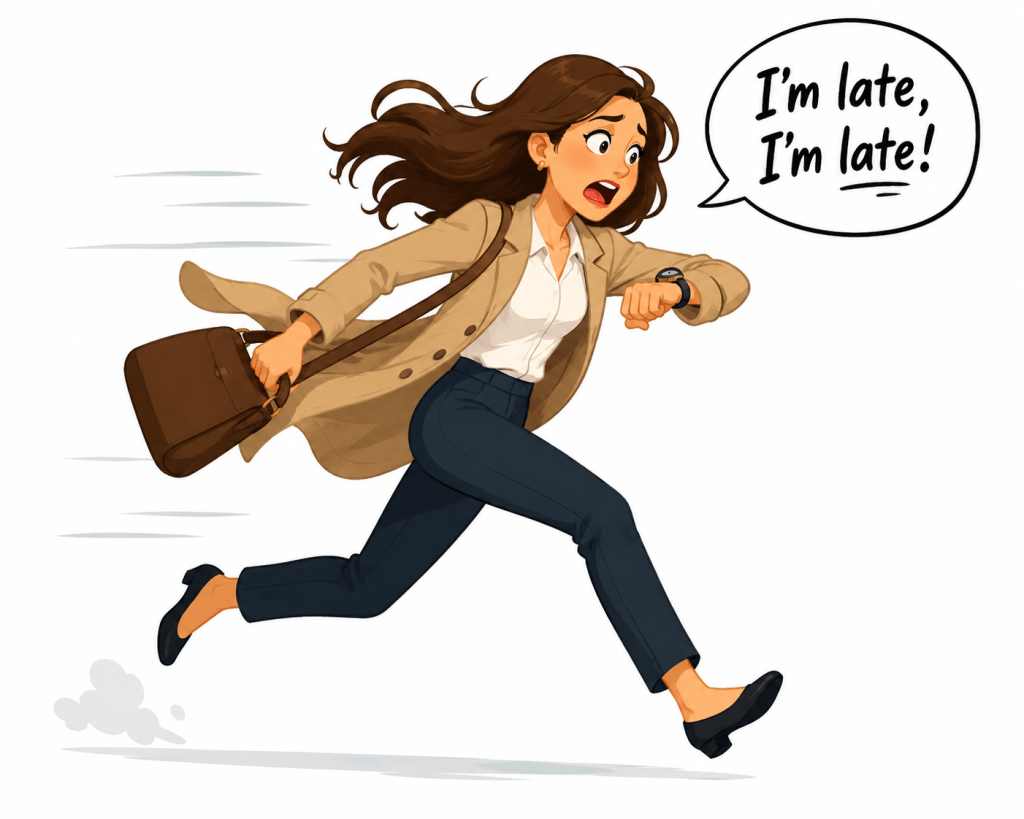

I’m Late, I’m Late….

I’m late! I’m late! For a very important date! No time to say ‘hello, goodbye,’ I’m late, I’m late, I’m late! The Rabbit in Alice in Wonderland

Whether you’re the person impatiently waiting for a late friend or The Rabbit running behind— yet again—tardiness can be an important issue. The person left waiting who feels disrespected or taken for grated needs to express her feelings. Understanding the possible cause of chronic lateness may also be helpful. 

Unless a person uses lateness as a control mechanism, chances are it is about their internal processing system. People who are chronically late may have one or more of these traits:

—Multi-tasking – Losing track of time because of the temptation to do just one more thing before hitting the road.

—Chasing the shiny – Distracted by the mini-thrill from computer games, social media, etc.

—Miscalculating time – In contrast to the type A personality who is usually on time because of their accurate awareness of time, the more laid back Type B literally perceives time differently. They have difficultly accurately judging how long a task can task take.

Affirmation: I will be more understanding of lateness.

Coaching questions: Are you frequently waiting for your friend/relative or are you the one they are waiting for? Are your relationships impacted by your position? What will you do to improve the on time vs late dynamic? 

emiliano-vittoriosi-PwXIsh7QpsI-unsplash