Blog

Don’t Underestimate Your Power

Don’t underestimate your power. Hate is potent, but so is kindness. And goodness, and grace. Use yours generously. Oprah

I wrote this blog at the end of 2020. Now, at the close of 2021, we’re again in the midst of an active pandemic and it’s easy to feel powerless in the wake of continued psychological and physical chaos.

But, as Oprah says, “what I know for sure,” is how you treat every person in your sphere can and will make a difference. Don’t underestimate the power of goodness, kindness, and empathy. Don’t underestimate the power of modeling grace—to children and others. Do what you can to make 2022 a gentler, kinder year. 

Affirmation: I have power.

Coaching question: What one behavior will you change in 2022 to make a difference in our troubled world? 

Photo by Eyestetix Studio on Unsplash 

Are You Having a Blue Christmas?

What is Christmas? It is tenderness for the past, courage for the present, hope for the future. It is a fervent wish that every cup may overflow with blessings rich and eternal, and that every path may lead to peace. Agnes M. Pharo, author

My Christmas wish is that your cup may overflow and your path will lead to peace. For Christians the world over, Christmas has significance beyond gifts and glitter. Jesus’ birth and life are about love—God’s love for His creation.

If you’re feeling blue today, I hope, Dear Reader, you’ll find a slice of love and joy in the days to come. Please know that if you’re grieving, sad, or lonely— I’m thinking of you!

Affirmation: Someone cares about me.

Coaching questions: What will you do to acknowledge your sadness? OR How will you share your love and joy? Remember: This is one day out of 365. What’s your vision for tomorrow? 

Not Everyone Is Merry – Learn to Listen

Big emotions aren’t there to torture us. Rather, they show up to offer us some insight, to point out something that needs healing, or to help us address a deeper problem. Kate Hanley, author of How to Be a Better Person

The holidays are anything but merry for many people. When you speak with a friend who is struggling, resist trying to cheer them up. Instead, start with simply being present.

Listen. Let their words in. Say things like, “I hear you saying…” or “It sounds like…”. Hanley reminds us that jumping in to problem-solve or attempting to absolve their fear with toxic positivity may inhibit them from recognizing the insight that the emotion is trying to help them understand.” 

Affirmation: I will listen.

Coaching questions: If you’re the “friend” who is struggling, ask yourself, “What do I need?” Or, “What is a way forward?”

Photo by Nathan Dumlao on Unsplash 

Can You Find the ME in Merry?

Almost everything will work again if you unplug it for a few minutes, including you. Anne Lamott, American novelist

If you’re a woman, particularly if you’re a mother or grandmother, you’re closing in on THE week. The week of last minute gift buying, wrapping, baking, traveling, decorating, hosting—in short, creating the best Christmas possible for those you love. 

We want this to truly be a merry time. But, did you notice that there’s a ME in merry? Yep. How do you take care of the “me” while you’re making sure the holidays are as perfect as possible? If, by Christmas Day, the ME is bedraggled you’ve done too much for others and not enough for yourself. 

Affirmation: I will keep the ME in merry.

Coaching questions: How will you unplug this week? How much is enough? What will you do to keep the ME in MERRY?

Photo by Clint Patterson on Unsplash 

Learn To Trust Your Intuition

Trust your intuition. You don’t need to explain or justify your feelings to anyone, just trust your own inner guidance, it knows best. Anonymous

Today my husband and I declined an invitation to a party when we found out that the host couple are unvaccinated. The other guests plan to attend.

It’s not easy bucking the crowd but sometimes I just have to trust my intuition. No one thinks they’re going to get sick until they do. No one! So this year we’re playing it safe and saying “no” when we feel we need to. We missed being with our family for Christmas last year and we’re taking no chances this year. 

Affirmation: I trust my intuition.

Coaching questions: When have you trusted your intuition? What was the outcome?  What keeps you from listening to/trusting your intuition?

Photo by Edz Norton on Unsplash 

Are Holiday Parties Threatening To Sabotage Your Healthy Eating Plan?

Mindful eating is about awareness. When you eat mindfully, you slow down, pay attention to the food you’re eating, and savor every bite. Dr. Susan Albers, author, psychologist

I’m a couple of holiday parties down with several more festivities on my calendar. My Health Coach is helping me to be mindful about the party food including sugar, carbs, fat, and alcohol. In addition, I’m embracing these tips—are you with me?

  1. Don’t show up hungry. Eat something nutritious before the party and you’ll be less tempted. I plan to grab a few almonds, a spoonful of peanut butter, or a piece of fruit. 
  2. Be clear about your health goals. Now is a good time to review your plan. Mine plan is to lose weight by reducing my food consumption, eat more healthy protein, and maintain my exercise program. What are your intentions?
  3. Stay hydrated. Drinking water positively affects your overall health, your cognitive function, concentration and alertness. I will continue to start my day with a full glass of water then add at least seven more before dinner.  
  4. Enjoy. When you do indulge, notice what it is you are eating, be mindful of the texture and taste, and really enjoy the experience. If the first bite of a treat isn’t absolutely delicious, I plan to leave the rest. 

Affirmation: I will eat mindfully.

Coaching questions: What’s your holiday eating plan? What will you do to enjoy the season and take care of your health at the same time? 

Photo by krakenimages on Unsplash 

Are You A Procrastinator?

For decades, psychological research has been able to explain procrastination as a functioning problem, not a consequence of laziness. 

Procrastination isn’t about being lazy. Being curious about the underlying issues of procrastination, rather than judging the behavior, can be very helpful. For instance, delaying action can be a symptom of feeling that our action won’t be acceptable. 

Dithering may be a result of not knowing how to take the first steps or not having the innate capacity to divide a large project into smaller, manageable pieces. 

Before judging, consider that a person may seem to be procrastinating when they’re actually struggling with mental health issues or a difficult home environment. 

People don’t want to fail or disappoint. There are always barriers, whether we see them or not. 

Affirmation: I will take a deeper look at procrastination.

Coaching questions: Why do you procrastinate? How do you judge others who procrastinate? What’s a step you’ll take to discover the underlying cases of your procrastination? 

Photo by Magnet.me on Unsplash 

Tightly Hugging Hope

As we express our gratitude, we must never forget that the highest form of appreciation is not to utter words, but to live by them. President John F. Kennedy 

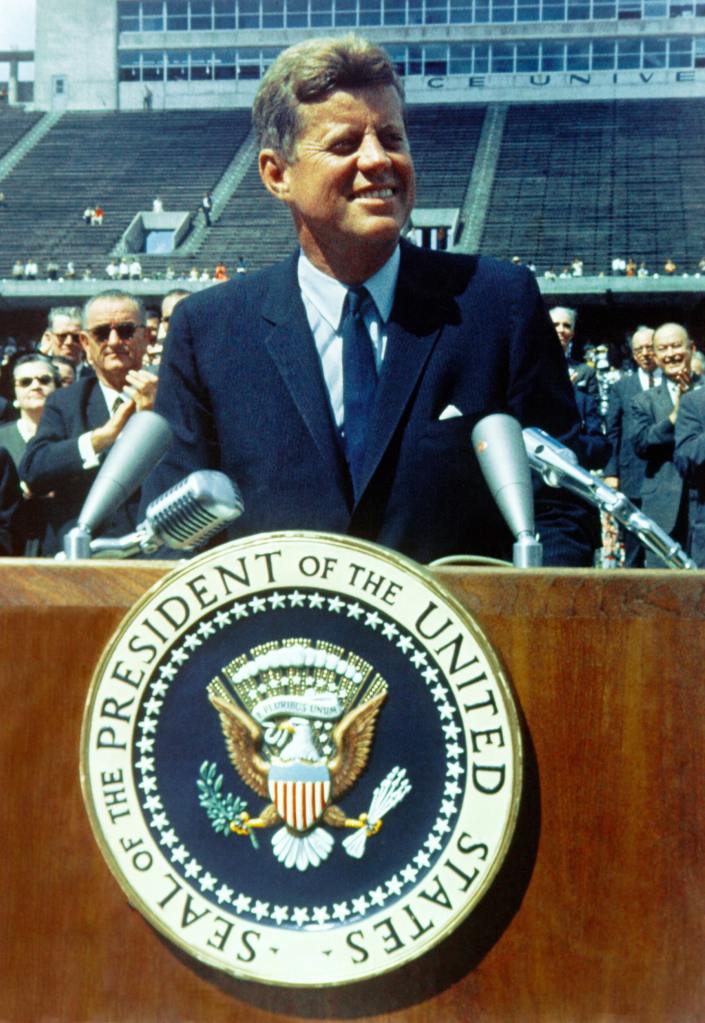
Today is the fifty-eighth anniversary of the assassination of President John F. Kennedy. If you were an adult living in the United States at that time, you undoubtedly remember the day very well. As a nation we felt not only sadness but hopelessness that this could happen in our country. 

When our world looks bleak and we feel like we’re drowning in grief, pain, regret, or anger, sometimes we must rely on hope to get us through. Tightly hugging hope to your chest is a way to stay on top of what has/is happening in your world. 

Affirmation: I’m always hopeful.

Coaching questions: What do you need to be hopeful about? Where do you find hope?

Photo by History in HD on Unsplash

Are You Showing Gratitude For the Little Things In Life?

When trying to go to sleep, instead of counting sheep, try counting things you’re grateful for— in alphabetical order. AJ Jacobs, author

With Thanksgiving on the horizon (I’m particularly mindful because my daughter and her family are coming for a visit), it’s not too early to consider, really consider, the little things for which we’re grateful.

 AJ Jacobs, author of Thanks a Thousand, is just the guy to emulate. His book recounts his mission to thank every single person who played a part in making his morning coffee, over one thousand people. His journey took him from coffeeshop barista to the Colombian coffee farmer to the lid designer. Oh, he also thanked the lady from pest control who kept the bugs out of the coffee warehouse. 

Scientific studies indicate that showing gratitude is good for our physical and mental health. Keeping a gratitude journal helps patients in their recovery and health-care workers’ stress levels decline by an average of twenty-eight percent. We humans are naturally negative. Spreading gratitude is a way to make the world a better place. 

Affirmation: I’m grateful.

Coaching questions/request: Who have you thanked today? What difference does it make when someone thanks you? Think of someone who rarely receives appreciation and thank them.

Photo by Nathan Dumlao on Unsplash 

How Full Is Your Bucket?

An empty lantern provides no light. Self-care is the fuel that allows your light to shine brightly. Unknown

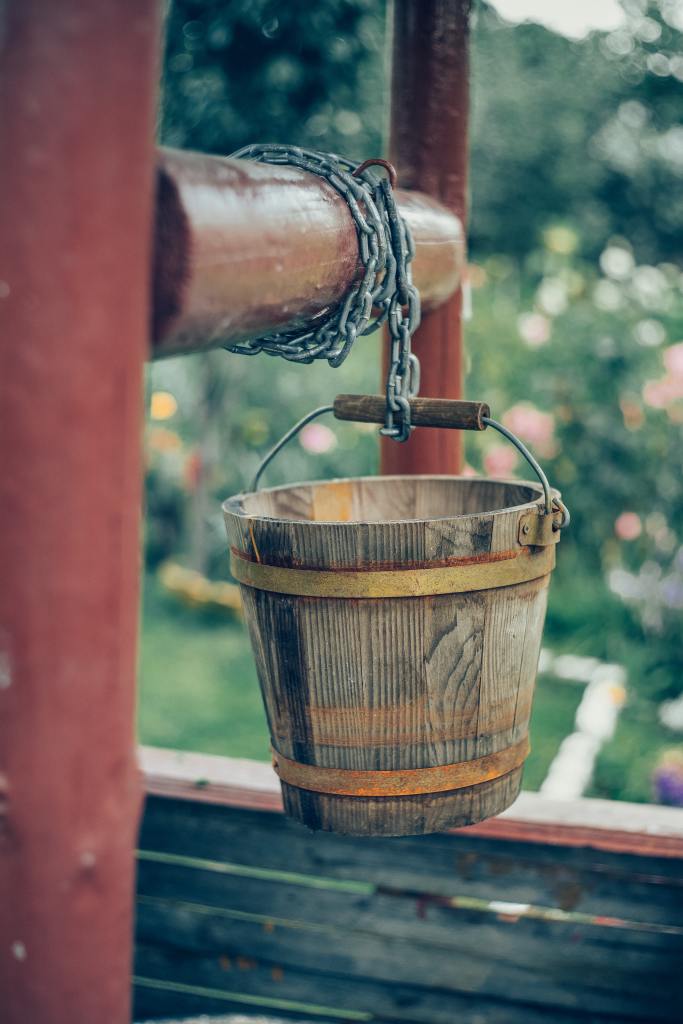
Fill A Bucket is a children’s book by Carol McCloud and Katherine Martin with the premise that we all have an invisible bucket which holds good thoughts and feelings about ourselves. When someone does something nice for you, you do something nice for them, or you do something nice for yourself, your bucket fills. 

I’ve used the bucket analogy as a Life Coach for years. I frequently noticed my client’s bucket was empty by how they sounded or what they said. Then, I’d ask them, “What will you do this week to fill your bucket?” At the beginning of the holiday season, it’s easy to deplete our own buckets while working hard to fill the buckets of others.

This month and next, keep tabs on your bucket. Notice when it’s getting low and either fill it yourself (a nap, a massage, a walk) or ask someone to help you fill it (please clean up the kitchen, take me to dinner, drop this off at the post office). As we fill the buckets of others, the joy in our buckets goes up but we need to watch the balance. 

Affirmation: I strive to have a full bucket as I fill the buckets of others.

Coaching questions: How’s your bucket doing? Is it full or empty? What can you do this week to fill up your bucket? 

Photo by Samur Isma on Unsplash