If we learn nothing else from this tragedy, we learn that life is short and there is no time for hate. Sandy Dahl, wife of Flight 92 pilot, Jason Dahl
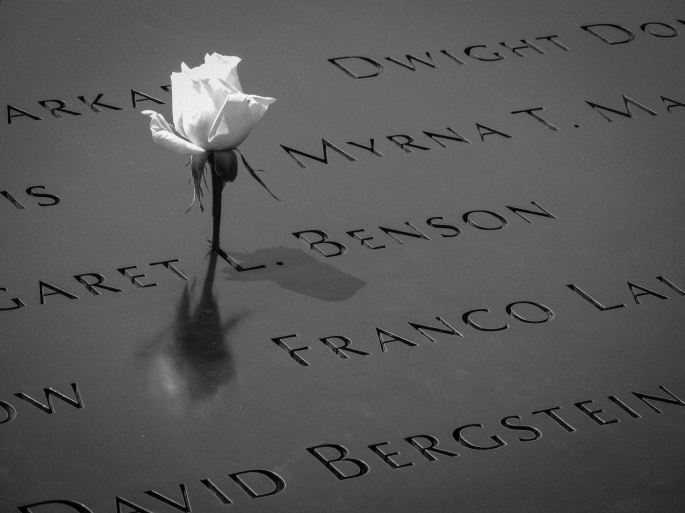
Today, we remember the 2,977 people who were killed during the 9/11 coordinated terrorist attacks and honor the first responders and others who personally met the challenge. This day is also dedicated to community service.
I agree with President Obama who said, “Even the smallest act of service, the simplest act of kindness, is a way to honor those we lost, a way to reclaim that spirit of unity that followed 9/11.”
Affirmation: I remember and honor through service.
Coaching questions: What is one small act of service or kindness you will give to help reclaim the spirit of unity? How does your act of service/kindness enrich your life?
Never regret a day in your life: good days give happiness, bad days give experience, worst days give lessons, and best days give memories. Anonymous
The older I get, the less I regret a day. I sense my days quickly slipping away as I enter the fourth (if I’m lucky) quarter of my life. This motivates me to savor each and every day no matter what they bring. I have highs and lows but mostly, my days are “good days” that give me happiness.
How we frame the days of our lives—bad equals experience, worst equals lessons, best equal memories—makes a difference in whether or not we experience peace and joy in life.
Affirmation: Each day is a gift.
Coaching questions: How do you frame your bad and worst, good and best days? What helps you stay in the present and embrace each day as a gift?
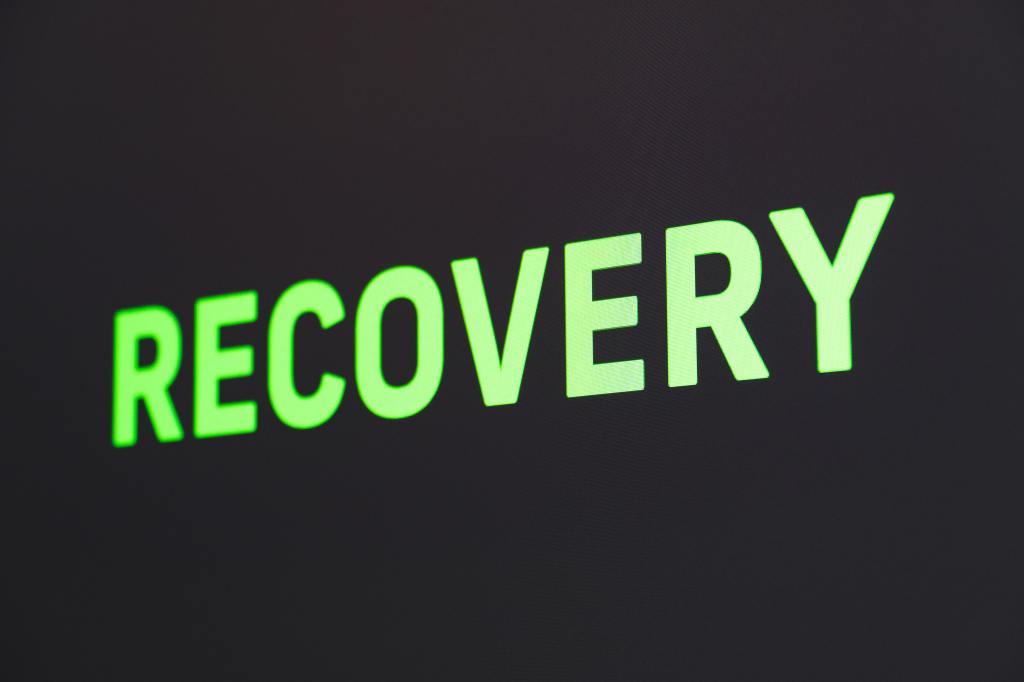
September is National Recovery Month. It’s a time to think about those who are working hard in substance abuse recovery programs and the organizations that serve and support them.
The pandemic has been a major challenge for those living a life in recovery and those who are actively addicted. In Cook County Illinois, for instance, statistics are trending to double the number of opioid-related deaths in the wake of the pandemic. With the increase in substance use, there is an increased need for counseling services at a time when funding for not-for-profit organizations is down.
I’m highlighting this because, with all the “noise” in our world right now, the important messages of drug use and recovery are often lost.
Affirmation: I care about my recovering brothers and sisters.
Coaching questions: Has the pandemic caused you to engage in addictive behaviors? What are you doing to mitigate this behavior?
In prosperity our friends know us. In adversity, we know our friends. Colin Powell, American politician and retired four-star general
Friends are exceptionally important to me. As a motherless daughter and only child, I have always sought out friends to fill the mother/sister void in my life. I’ve learned that in adversity we know our friends, as General Powell says.
In my lifetime, I have disappointed people, made them angry, and lost their trust. Some friends retaliated and abandoned me, others, the true friends, stood by me knowing I needed help to regain my balance. I’ve learned to carefully chose my friends.
Jim Rohn, author and motivational speaker, says, “The most intimate of our associations, the closest five, have the greatest impact on our self worth, our habits, and our lifestyles.” Choose your five well—be one of the five for someone else.
Affirmation: I choose my friends carefully.
Coaching questions: What do friends mean to you? If you don’t have close friends, how might you cultivate meaningful relationships? In what ways do you show up as a friend?
Speaking openly about our grief can create powerful human connections. Our honesty and vulnerability leads not only to our own healing, but the healing of others. Carmel Breathnach, author
It is National Grief Awareness Day—a perfect time to, as Breathnach writes, consider the impact of speaking opening about our grief. As we collectively grieve our losses, we gain a sense of comfort, knowing that others understand.
Loss is part of the human experience. Perhaps losing my mother as a child taught me to not be surprised by loss. I marvel at daughters who are shocked by the death of their very elderly mothers. I want to ask, “Did you expect her to live forever?” Or, “Did you want to precede her in death?” Of course, I don’t ask these intrusive questions and I totally respect their feelings of great loss, but I do wonder about their expectations.
If you haven’t yet, someday you will fiercely grieve. Prepare yourself, not in a morbid way, but in a sense that death is part of the circle of life; the human experience.
Affirmation: I will grieve this day for my losses in the past and for those to come. My grieving reflects that fact that I’m fully alive.
Coaching questions: Who/what will you grieve/remember today? What have you learned from your losses—your grief? How have your losses contributed to who you are?
The purpose of life is to live it, to taste experience to the utmost, to reach out eagerly and without fear for a newer and richer experience. Eleanor Roosevelt
Your brain is built to be more sensitive to unpleasant news than it is to pleasant. You’ll probably remember the rebuke longer than you’ll remember the praise. Sometimes, the sadness of death will impact a person more than the feelings of joy and warmth they received from their loved one.
This bias for negativity generally causes us to worry more than necessary, fear the worst, and focus on bad narratives for too long. When we allow this to happen, we rob ourselves of experiencing the joys around us.
Affirmation: I choose joy.
Coach request: This week, take time to be aware of your negativity. As you do, refocus your thoughts by meditating, having an attitude of gratitude, establishing a “worry time,” or writing down your negative thoughts to get them out of your head. Some negativity will hang around for a while and that’s ok. What counts is your continued effort to redirect and reprogram.
“The world is imperfect,” I tell my children. “But there are millions of perfect moments.” Priscilla Warner from The Faith Club
My Girl Talk God Talk group is finishing our study of The Faith Club by Ranya Idliby, Suzanne Oliver, and Priscilla Warner. At one chapter a week, our journey with these three amazing women has taken us 19 weeks.
This is my third reading of the book and each time I gain more insight into how Muslims, Jews, and Christians share common values, history, and desires for our children and grandchildren.
Priscilla’s quote feels perfect for right now. Life is difficult for us, our friends, family, neighbors—heck—it’s difficult for people the world over. And yet—there are millions of perfect moments if we’d but recognize them.
Affirmation: As I work to make the world a better place, I embrace the perfect moments.
Coaching questions: What perfect moment did you experience last week? Are you willing to look for the perfect moments in this week? If you are, I believe you will find them.
We’ve put more effort into helping folks reach old age than into helping them enjoy it. Frank Clark, author
Having the satisfaction of making a difference in the life of another is one way older people find joy in their bonus years. In the age of COVID-19, however, finding ways to reach out may become problematic for those who choose to stay-safe-at-home.
Here are a few ideas of how to make a difference from home:
—If you previously volunteered at a school, consider becoming a pen pal.
—If you know how to knit or crochet, consider making hats for new borns or other useful projects. Google “Ten charities that need homemade items” for ideas.
—If you want to help healthcare workers taking care of COVID patients, send gift cards from local restaurants to hospitals for distribution.
—If you loved singing in the choir, ask your pastor how you might record a song to be used in a virtual service.
—If you are a political activist and your marching shoes are in storage, consider writing post cards to your representatives about what’s important to you or calling people to remind them to vote.
Affirmation: There are many ways I can make a difference.
Coaching question: If making a difference is important to you, how can you adapt your past activities to the current environment?
It is not the strongest of the species that survives, not the most intelligent. It is the one that is most adaptable to change. Charles Darwin, English naturalist, geologist, and biologist
Right now, as we experience the effects of an ongoing global pandemic, the challenge to become this person Darwin writes about, the one who is “most adaptable to change,” is a constant. Older people, and those with underlying conditions, are adapting to a life of isolation. Those who are considered essential workers are adapting to working in potentially unsafe environments. We’re all adapting to an unknown future.
In the beginning, students and parents were asked to adapt to virtual learning. Now, they are making difficult choices about school going forward as they evaluate in-person learning and/or virtual education. Special needs children, children who depend on meals at school, and children living in unsafe home environments are particularly impacted and may not have the capacity to adapt.
When The Rug Was Pulled Out
At the beginning of the pandemic, I felt the rug had been pulled out from under me. I’m a 75 year old, very active—now isolated—woman who misses her past life.
However, with no kids to educate, no business to lose, good health, and isolating with a kind and easy-to-live-with husband, I’m counting my blessings. Even with these positives, I spent the early months mourning my losses—a long-planned cruise, a family reunion/75th birthday party, summer with my grandchildren, an in-person book tour, and all the other activities that kept me a vital person.
My History
Three dramatic life experiences taught me how to adapt to this pandemic.
I first learned how to adapt to sudden and unprecedented change when my 34 year old mother died and left my dad and I alone. I was 8.
The second lesson was finding myself divorced after 25 years of marriage. I had to adapt to the challenges and insecurities of being a self- employed, single mother of three.
Lesson three came when, at 55, after only ten months of marriage, I suddenly became a widow when my 53 year old husband literally dropped dead of a heart attack.
I’ve had a lifetime to learn resilience, perseverance, and how to quickly adapt to change.
When COVID-19 closed us down in mid-March, I was about to publish Mom’s Gone, Now What? a book that details ten steps to help daughters move forward after loss. At first, I didn’t make the connection to the sense of loss I was feeling due to the pandemic and the advice I had spent three years researching and writing about. However, after a few weeks, I started tapping into six of the ten steps from my book.
Six Steps That Helped Me Adapt to Change – And Can Help You Too
Get Creative
As a child, I watched my dad model how creativity helps a person move forward after loss. A widower and single parent at 36, he found respite by making something on a wood lathe most every day. This hobby not only helped him get through losing his young wife, it served him years later when his second wife died. Creative endeavors soothe me too. Today, I cook, paint, color, and write to give my life focus and joy.
2. Help Others
As a teenager without a mother, I found meaning in volunteering at a Veterans Hospital. Helping others helps me move forward after loss and avoid the “why me?” question. I’ve found that simple acts of kindness such as dropping off cookies, making a phone call, or sending a card to an isolated friend can keep us out of the doldrums.
3. Reach Out for Help
Many motherless daughters, and others who have had significant loss, turn to therapy, counseling, or grief groups to help them heal. My losses due to COVID are minor in comparison to the great loss of a loved one. Even so, I’m finding solace in reaching out to friends and family when I’m feeling down and in need of a pick-me-up. Even a quick text that puts a smile on my face is therapeutic.
4. Stay Mentally, Physically, Spiritually Healthy
The doors to my church are closed, my gym membership is canceled, my vibrant social network is gone. I had to learn to find satisfaction in seeing friends and family on Zoom and exercise on my own stationary bike. At first virtual church felt stale and uninviting without “real” music and hugs. Lately, I started singing along with the person on screen and find myself engaged in the service. Most Sunday services bring me to tears (the good kind) just as they did in the church building.
5. Accept the hand you’re dealt
To me, adaptability is knowing how to make lemonade out of lemons so I asked myself, “How can I use this situation to my advantage?” I published my book in July, right at the height of my state’s COVID surge. As I contemplated how to do a book tour, meet with groups, and make presentations, Zoom proved to be my lemonade. I’m also taking advantage of the free webinars experts are producing in lieu of conferences. I’m not always crazy about my isolation but I’m accepting the hand I was dealt.
6. Tell your story
My book begins with Tell Your Story. Now, I’m concluding with this step because I think it’s what we are naturally doing. To help us regain our equilibrium, we tell and retell our COVID stories. We’re sharing what we’re missing, what we’re looking forward to, and affirming our realization about what is really important. In 2017, after Hurricane Irma hit my area, it was all we talked about for weeks, even months. COVID is like that. Telling our stories helps to relieve some of the fear and anxiety. We bond over our common experience. Story telling is critical in our healing and adaptation to a new reality.
Affirmation: I know from past experience that I am resilient. As Darwin said, I will survive and thrive because I know how to adapt.
Coaching questions: How was your ability to adapt in the past serving you now? What steps will you take to thrive in this season of change?
The average American child is said to spend 4 to 7 minutes a day in unstructured play outdoors, and over 7 hours a day in front of a screen. Child Mind Institute
Richard Louv, in his book Last Child in the Woods, referred to this as “nature-deficit disorder.” Louv believes it is one reason for rising rates of depression and anxiety in children.
Children are not the only ones spending too much time indoors these days. According to research, American adults spend more than 90 percent of their lives indoors.
If this is true for you (as it often is for me), here are three factors to help motivate us to get off the couch and go outside.
Nature is beautiful. A starry sky, a sunset, flowers, a bird in flight all induce a sense of wonder in us. We are soulful creatures and beauty is good for the soul.
Nature is relaxing. Studies show that spending time in nature calms the nervous system and reduces levels of stress hormones. This makes our immune systems stronger (very important in the age of COVID), helps improve our sleep, and lifts our mood.
Nature speaks to us. Plants and trees release beneficial chemicals and provide a pleasant sensory experience. Humans evolved to be outdoors; it’s part of what makes us human.
Research tells us that the biggest impact occurs in the first five minutes of being in nature. So, whether you have a few minutes or a few hours, get outside and enjoy the great outdoors.
Affirmation: I love experiencing nature.
Coaching questions: What motivates you to get off the couch and go outside? What does spending time in nature mean to you?







 Life after losing a mother