Blog

Learn to Manage Your Energy

Life is long and if you play it right, you can do most of the fun things you always wanted. You just need to have patience and manage your energy so you can ENJOY the things you do. Darius Foroux, The Medium

There was a day when I concentrated on managing my time but I’ve learned that it’s more important to manage my energy. I still write to do lists and check my calendar but I’ve learned to view my schedule with an eye to managing my energy rather than figuring out how many activities I can squeeze into a day. 

As a person who has always needed quiet time and plenty of sleep, it hasn’t been difficult  to switch my priorities. Foroux writes, “Learn what activities destroy your mood and drain your energy. Manage your life so that most of what you do makes you happy and adds to your energy.” We all have the same 24-hours in a day. You know how much time you have. Learn to honor your varying energy levels so you can make the most of your life while enjoying the things you do. 

Affirmation: I manage my expenditure of energy.

Coaching questions: What activities make you happy and add to your energy? In what ways do you manage your expenditure of energy? If there is something you need to adjust, what will you do this week to make changes?


 

noah-silliman--UUGr3txNuc-unsplash.jpg

The Benefits of Embracing Nature

Embracing the great outdoors cuts down on mental rumination and can boost well-being in the process. Erman Misirlisoy, PhD

This morning my intuition told me to skip the gym and spend time in nature. I exercised my body by walking. I believe I also enhanced my overall health by reducing my mental workload and taking a break from making decisions. Although my intuition is usually spot on, we now have the research to prove the benefits of spending time in nature.

Caoimhe Twohig-Bennett, from UEA’s Norwich Medical School, writes, “Spending time in nature certainly makes us feel healthier, but until now the impact on our long-term wellbeing hasn’t been fully understood. We gathered evidence from over 140 studies involving more than 290 million people to see whether nature really does provide a health boost.”

The team analyzed how the health of people with little access to green spaces compared to that of people with the highest amounts of exposure. They found that spending time in, or living close to, natural green spaces is associated with diverse and significant health benefits. It reduces the risk of type II diabetes, cardiovascular disease, premature death,  preterm birth, and increases sleep duration. People living closer to nature also had reduced diastolic blood pressure, heart rate and stress. They also determined that exposure to green space significantly reduces people’s levels of salivary cortisol — a physiological marker of stress. 

The research team hopes that their findings will prompt doctors and other healthcare professionals to recommend that patients spend more time in green space and natural areas. Whether it’s a visit to a park, a walk on the beach, or a hike in the woods, make it a priority to regularly spend time in nature.

Affirmation: I spend time in nature.

Coaching question: How important is it to you to spend time in nature? How does being in nature make you feel? If you are rarely exposed to nature, what’s keeping you away?


IMG_3124.JPG

Celebrating My Life

When I throw my bread out upon the waters of life, it comes back buttered. Mershon

It’s my birthday! I’m seventy-four. It sounds old but I feel like I’m in the prime of my life. Although it’s been a wild ride starting with my mother dying when I was eight, a heart-breaking divorce after twenty-five years of marriage followed, eight years later, by the sudden death of my second husband ten months after we were married, there’s been much joy. In addition to good health and the blessing of faith and friends, I had three wonderful children who turned out to be amazing adults, eight grandchildren who are all brilliant and charming (of course), a precious third husband, and an abundance of step kids, step grands and step great grands who I love dearly. 

In the last four years, my husband and I started a whole new life on Marco Island. I now have new friends that feel like family, organizations that keep me vital, and the benefit of living in a beautiful, peaceful environment. I’m on the cusp of publishing a book on a topic I’m passionate about for an audience for whom I care deeply. Mom’s Gone, Now What? will be part of my legacy along with gardens lovingly planted, a kid or two who can now speak English, memorable tea parties, policy changes in the fields of mental health and aging, plus some people to whom I’ve brought love, support, and adopted babies. 

Early on I learned that life can be short. This lesson taught me to live each day with exuberance and joy. Because my mother and grandmother both died in their thirties, I’ve considered the last forty years of my life to be “gravy.” To me, the next twenty or so years will be “frosting on the cake” (you can tell I’m a Foodie).

Affirmation: I live my life with exuberance.

Coaching questions and request: Take time to celebrate your life. This isn’t an egocentric exercise. This is about gratitude for what you’ve endured, accomplished, and who you have become. If you’re thinking, maybe not, ask yourself, what’s holding me back? 

IMG_3098

Open Yourself to the Unlikely

If you open yourself when you open a good book it will continue to illuminate your life even after The End. Oprah

If you know me at all, you know I love books. However, there was a time when I read very little. With three children, a business, and a household to manage, even sitting down to read a magazine seemed a far off dream. Now I read about fifty books a year and many magazines. Reading is a necessity for writers but I still see it as a luxury afforded to an empty-nester. 

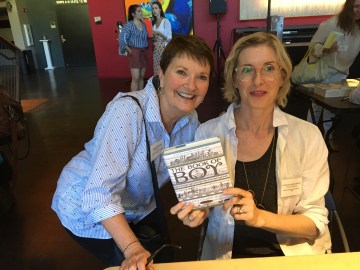
I recently read The Book of Boy by Catherine Gilbert Murdock. It’s everything I’d normally not read: A fantasy written for middle grade kids set in the Middle Ages. I bought the book at a writers’ conference and had it signed by the author for my ninety-two year old friend, Virginia, who writes for this age. Murdock won the 2019 Newberry Award, the top award for children’s literature, so I was intrigued. As I read the book before mailing it to Virginia, I did as Oprah suggested. I opened myself up to an unlikely genre, hero, author, and story. The visions Murdock created will illuminate my life even after The End. 

Affirmation: I open myself up to the unlikely. 

Coaching questions and request: What new endeavor or experience might you open yourself up to that could make a difference in your life? Camping, a different type of music, an unlikely friend, Lebanese cuisine, a memoir, tap dancing, a symphony? The list is endless. This week, I challenge you to try something outside of your comfort zone. Let me know how it works out.

IMG_3067.JPG

Embracing Imperfect Beauty

Nothing lasts, nothing is finished, and nothing is perfect. Richard Powell, author of Wabi Sabi Simple 

Fortunately, next week I get to celebrate another birthday. I’m not a woman who hides her age or laments lost youth. Eleanor Roosevelt once said, “Beautiful young people are accidents of nature but beautiful old people are works of art.” I’m embracing her words. 

I also make an effort to embrace the Japanese notion of wabi-sabi, or “imperfect beauty.”. Wabi-sabi prizes authenticity. It’s the true acceptance of finding beauty in things as they are. Jessie Shool, in her magazine article, The Wabi-Sabi Self, writes, “By perceiving ourselves through this generous lens, we can stop endlessly striving for the ideal body and focus instead on real physical health. All it takes is a shift in perception.”

Affirmation: I am a work of art.

Coaching questions: How do you perceive your aging? What shift in perspective do you need to make to embrace wabi-sabi?

pablo-rebolledo-yH7X4S8ywuo-unsplash.jpg

Photo by Pablo Rebolledo on Unsplash

Do No Harm

Character cannot be developed in ease and quiet. Only through experience of trail and suffering can the soul be strengthened, ambition inspired, and success achieved. Helen Keller

It breaks my heart to read the posts of women in motherless daughters’ groups telling a woman who is in despair over having just lost her mother that “it doesn’t get any better.” I shout out at my computer screen, “For Heaven’s sake, give the poor grieving woman some hope!” Most of us, if we’re over forty, have suffered at least one significant loss. If all of us never recovered, we would all be walking around like the Zombies we were that first week.

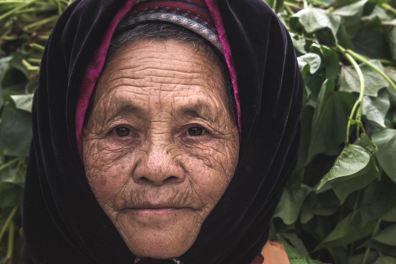
Even Helen Keller, with no sight, hearing or voice, offered a message of hope for those who are suffering and in distress. I believe it’s important to acknowledge a person’s grief, be with her in the reality of the moment, offer no platitudes like “she’s better off now” or “you’ll be fine.” Saying nothing is always good. Your presence is what matters. Reminisce with her about her loved one. But please, please, don’t take away hope for her future. Hope may be the only thread attaching her to this Earth—sometimes, literally.

Affirmation: I will be a healer and do no harm.  

Coaching questions: What helped you most in times of despair? What words or presence brought you the most comfort? How do you show up for your friends and family in times of distress?

joshua-rawson-harris-md7cCWYVq9U-unsplash.jpg

Let Nature Speak to You

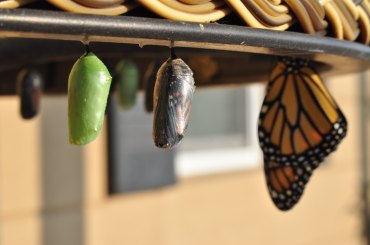
People talk about caterpillars becoming butterflies as though they just go into a cocoon, slap on wings, and are good to go. The reality is, caterpillars have to dissolve into a disgusting pile of goo to become butterflies. So if you’re a mess wrapped up in blankets right now, keep going. Jennifer Wright, author

Wright is right (I just had to do that). According to Scientific American, while in the cocoon, the caterpillar digests itself, releasing enzymes to dissolve all of its tissues. If you were to cut open a cocoon or chrysalis at just the right time, caterpillar soup would ooze out. However, certain highly organized groups of cells knowns as imaginal discs survive the digestive process. These discs use the protein-rich soup to fuel rapid cell division forming wings, antennae, legs, eyes, etc. 

Nature gives us signs and examples to help us with most of our dilemmas. The majesty of a sunrise or sunset give us hope for another day. The first green shoots of spring give us courage as we crawl out of winter. Now, for those of you who may be wrapped in a tear stained blanket wishing that life was different, the butterfly is another powerful metaphor. The butterfly’s past experiences tell us that life will not only be different, it will be beautiful and, one day, you too will soar as you emerge from your soggy blankets.

Affirmation: Nature speaks to me when I listen.

Coaching questions: What metaphors of nature speak to you? If you feel like you are dissolving in a cocoon of grief, use the story of the butterfly to visualize your recovery. Then, share it with another cocooned person. 

suzanne-d-williams-VMKBFR6r_jg-unsplash.jpg

Photo by Suzanne D. Williams on Unsplash

Four Truths From Toy Story 4

A person who seeks an enlightened existence must awaken to realize universal truths. Kilroy Oldster, author

Yesterday I took “my little girl,” Katie, and her three children to see the new movie, Toy Story 4. We all loved it! Here’s what I came away with: 

  1. We all need to learn resilience. When Woody’s child (the child to whom Woody, a toy, belongs) grows up, Woody is demoted in the playroom and loses his “favorite toy” status. As he clings to his old role, he must learn the hard lesson that life is ever-changing.
  2. Happiness can be found down a variety of paths. Woody believes that belonging to a child is the only path to happiness. Like a parent who experiences an empty nest, he has to come to terms with another way of life and realizes that, this too, can be fulfilling. 
  3. True friendship is worth the trouble. Woody places a high value on friendship and goes to great lengths to protect his friends— even when doing so makes his life difficult or uncomfortable. 
  4. Forgiveness is key to a happy life. As Woody and his friends forgive Chatty Cathy’s selfish, and sometimes sinister, behavior, they experience the peace that comes with forgiveness. 

Affirmation: Life’s lessons are universal.

Coaching questions: What have you learned lately from an unconventional source? What do people learn by watching you live your life? 

hannah-rodrigo-320734-unsplash.jpg


There But By the Grace of God Go I

No one leaves home unless home is the mouth of a shark. Warsan Shire, British writer, poet, editor and teacher

On December 4, 2000, the United Nations General Assembly instituted June 20 as World Refugee Day. It is commemorated to honor all refugees, raise awareness, and solicit support. The day is celebrated in many countries around the world. In the Roman Catholic Church, the World Day of Migrants and Refugees, instituted in 1914 by Pope Pius X, is celebrated in January.

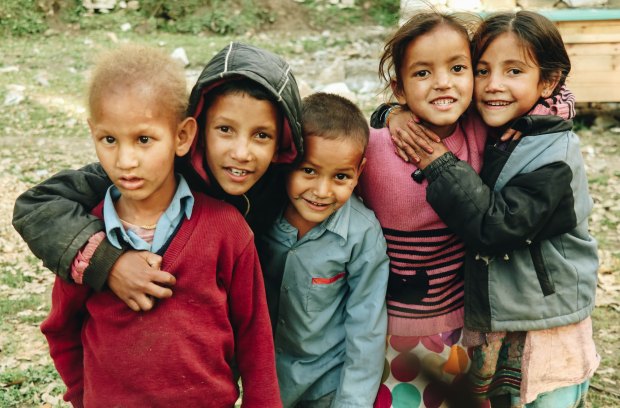
Why should we care about refugees, much less celebrate them? In my opinion, it’s because “there but by the grace of God go I.” Had I been born in a different country, at a different time, or of a different race or religion, I too might be the person forced to leave my country in order to escape war, persecution, or natural disaster. We frequently confuse immigrant with refugee. A refugee’s choice is frequently to stay and starve, be repeatedly raped, or die. An immigrant chooses to move from one country to another. Many years ago, I helped bring a refugee family to Illinois from war-torn Lebanon. Working with this family to help them assimilate and thrive, is one of my most cherished life experiences. 

Affirmation: I’m grateful to live where I am safe.

Coaching questions: If you don’t already know, how will you learn the facts about the worldwide refugee crisis? If you know a refugee or a refugee family, how can you make a difference in their lives?

siddhant-soni-371506-unsplash.jpg

Photo by Siddhant Soni on Unsplash

Friends Matter More Than You May Know

Each member knows that her friends count on her as much as she counts on her friends. Klazuko Manna, Moai group member, excerpted from Blue Zones newsletter

The Blue Zone project on longevity has proven that elders in Okinawa, Japan live extraordinarily better and longer lives than almost anyone else in the world. Moai, one of their longevity traditions, are social support groups they start in childhood and continue throughout their life. Sometimes these groups last for nearly 100 years!

As a motherless daughter and only child, girlfriends have always been especially important to me. This continues to be true as I age. I recently spent time with a group of friends I only see about twice a year. As we gather, it feels as if we were never apart. Our love and caring for each other continues across time and distance. 

Affirmation: I have friends who care about me.

Coaching questions: Do you have friends you can count on? If not, consider why that might be true. If friends are important to you, what are you willing to do to keep your friendship alive and well?

IMG_2835.JPG

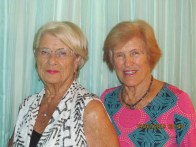
These two women (ages 90 and 91 in this photo) have shared the gift of friendship for over eighty years.