Be Inspired

Strong emotions such as passion and bliss are indictions that you’re connected to Spirit, or ‘inspired,’ if you will. When you’re inspired, you activate dormant forces, and the abundance you seek in any form comes streaming into your life. Wayne Dyer, American philosopher, self-help author, and motivational speaker.

The mug from which I drink my morning green tea has three words written on the inside rim, “Always Be Inspired.”

I’m inspired by people who demonstrate excellence and resolve…our garden store assistant who is a “plant encyclopedia” and willing to share, my best friend, Nanc, who doesn’t let being wheel-chair bound dampen her spirits or her fun, writers I met at the writer’s conference who were undaunted by the publishing statistics, caregivers for loved ones afflicted with Alzheimer’s, the daughters I have interviewed who, though their own loss was great, want to tell their stories to inspire others towards recovery.

Affirmation: I am inspired.

Coaching questions: What/who inspires you? What difference does this inspiration make in your life?
Look For The Helpers

When I was a boy and I would see scary things in the news, my mother would say to me, ‘Look for the helpers. You will always find people who are helping.’ Mister Rogers

Mister Rogers’s mother knew that if her son recognized the helpers he would feel calmer about the tragedy, knowing that someone was there to take control and put order to the chaos. Who has helped you in times of tragedy or need? Perhaps it was a teacher or a pastor, a grandmother or a neighbor, a friend or sibling.

As I talk with daughters who have lost their mothers to death, abandonment or Alzheimer’s, the trajectory of their grief recovery is often changed by the helpers who show up. The support and love of older brothers or sisters, grandmothers, neighbors, friends in support groups, hospice workers, or dads, calm the chaos of the moment and become the helpers in their lives.

Affirmation: I’ve been blessed with having helpers in my life.

Coaching questions: Who have been the helpers in your life? How have they made a difference? How have you shown up as a helper in the life of another? What difference did you make?

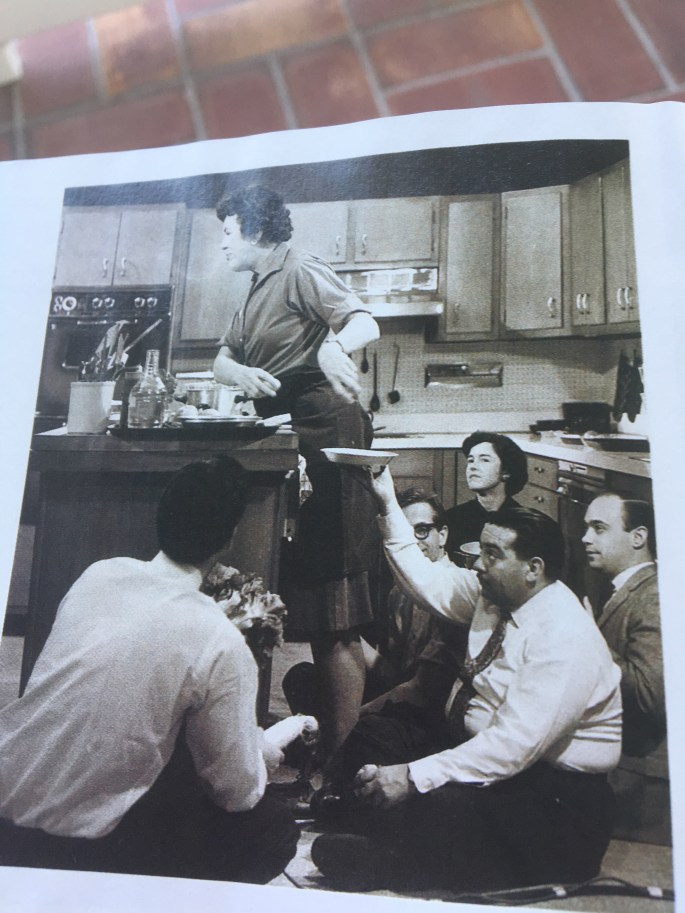
IMG_2071.jpgEven the famous Julia Child needed helpers…lots of helpers!

Gentle Communication

When communicating with someone with dementia, we always want to focus on the person and meet him or her where they are. Ruth Drew, MS, LPC, director of information and support services at the Alzheimer’s Association

Daughters I interview who have experience with dementia know that, over time, their mothers will have difficulty finding the right words or expressing a complete thought. It may be difficult, but connection remains possible (for a while) if these communication guidelines are followed.

…Connect at eye level by sitting next to or in front of your mother. Speak slowly and deliberately to her so she has time to process.

…Clear away as much of your own anxiety and frustration as possible. Your mother can read your mood and your anxiety can contribute to her shutting down.

…People with dementia are playing with a different set of rules. Don’t argue with them or try to correct facts. If your mother is frustrated and unable to express what is wrong, don’t bombard her with questions. hold her hand and acknowledge that she is having a bad day.

Affirmation: I can adjust my communication style.

Coaching questions: If you don’t have someone with dementia in your life, how can you use these suggestions to enhance communications with others….a grandchild, a disturbed friend, etc?

Ending Well

While I thought that I was learning how to live, I have been learning how to die. Leonardo da Vinci, Italian polymath (a person of wide-ranging knowledge or learning)

Yesterday I interviewed Jean, a daughter who lost her mother to Alzheimer’s and her step-father to vascular dementia just five days later. He didn’t know his wife had died…in fact he was in a different care facility miles away (she in memory care, he in skilled care). Just before slipping into a final coma, her mother said, “Thank you for everything.” Jean, a CNA, had been her caregiver so her mother would not have to make another move.

I’ve been told several similar stories. Vicki, whose mother had not said a word for two years suddenly looked her daughter in the eye and said, “I love you, Vicki”. These final gifts are precious and give daughters something to cherish as they grieve their loss and beyond.

Affirmation: I accept endings.

Coaching requests and questions: If you have an ending story, recall it now and take comfort in the message. What have you learned about death during your life? How is this informing how you live?

Remembering Those Who Don’t

She would grab whatever she could – a look, a whisper, a moan – to salvage from perishing, to preserve. But time is most unforgiving of fire, and she couldn’t, in the end, save it all. Khaled Hosseini, author, A Thousand Splendid Suns

According to the Alzheimer’s Association, every 65 seconds someone in the United States develops Alzheimer’s. Between 2000 and 2015 deaths from heart disease have decreased 11 percent while deaths from Alzheimer’s disease have increased 123 percent.

For daughters who are losing their mothers to this disease, these are not only numbers…to them, it is their life! They know how to help their mother through upsetting changes and situations. Perhaps you don’t –  so here are four tips:

Approach the person calmly from the front using positive statements.

Reassure the person by touching their hand or shoulder.

Don’t argue with the person or try to correct them. Affirm their experience and redirect their attention.

Respond to their emotions rather than to the content of their words.

Alzheimer’s 24/7 Helpline is 800-272-3900.

Affirmation: I care about others.

Coaching question: What can you do to help fight this deadly epidemic? (spread the word, donate, volunteer)


Be Good To Yourself!

Women 60 years old and older are twice as likely to develop Alzheimer’s than breast cancer.  Women’s Alzheimer’s Website

I know you’d rather read about beautiful sunrises (see yesterday) than deadly, debilitating diseases but the purpose of my blog is to enlighten, engage, and coach you to being the best you can be. Part three of my upcoming book tells stories of women who have lost or are losing their mothers to Alzheimer’s so I’m on a mission to learn and educate others about this dread disease.

Nothing can prevent Alzheimer’s. However, according to Catherine Cruikshank, MA, Ph.d, from the Alzheimer’s Association, there are things you can do to give yourself a better chance of staying healthy. The key, she says, is to remember that what is good for your heart is good for your brain. For instance…do exercises that elevate your heart rate, stretch, eat well, read, be social, learn new things, keep your alcohol consumption to a minimum, know the 10 signs of Alzheimer’s (see web site) and seek medical help early if you have suspicions.

Losing a mother to Alzheimer’s is one of the greatest heartaches of all because it means losing them twice.

Affirmation: I take good care of myself.

Coaching questions: What are you doing to take care of your heart and brain? Can you do more? If so, what’s one thing you will add to your regimen?