Grief is the reminder of the depth of our love. Gordon Wheeler, psychologist
In one of my all-time favorite books, The Book of Joy, the Dalai Lama says, “Sadness and grief are, of course, natural human responses to loss, but if your focus remains on the loved one you have just lost, the experience is less likely to lead to despair.
In contrast, if your focus while grieving remains mostly on yourself–‘What am I going to do now? How can I cope?’–then there is a greater danger of going down the path of despair and depression. So much depends on how we respond to our experience of loss and sadness.”
The motherless daughters I interviewed for my book, Mom’s Gone, Now What? who seemed to have made the adjustment to their loss, more frequently talked about what their mothers gave them, even if their time with her was short, rather than all they had lost because of her death.
Both conversations are appropriate, of course, but focusing on the former seems to lead to more joy and less long term depression and grief.
By her death, my mother gave me a greater sense of independence, the heart-felt knowledge that death is a part of life, and the ability to show empathy to those who have experienced loss.
Affirmation: I focus on the person I lost
Coaching questions: What is your response to loss? Is it working for you? What will help you focus more on the lost loved one and less on yourself?
Grown don’t mean nothing to a mother. A child is a child. They get bigger, older, but grown. In my heart it don’t mean a thing. Toni Morrison, author
I’m using my “stay at home” time to write a new book. This one is historical fiction. The main characters are my great grandparents, Elizabeth and Charles Horn (shown in photo), pioneers who originally lived in a sod house on the Nebraska prairie in the Loup River Valley.
Lately, I’ve wondered why I’m finding so much joy in writing this story. One idea that came to mind was that I’m getting to know and making friends with my great grandmother. Although she is only fifteen at the beginning of my story, it’s like having a new mother-figure in my life. To me, she is very real and part of who I am. One never knows where they’ll find a mother figure.
Affirmation: I have found a new mother figure.
Coaching questions: Where have mother figures popped up in your life? What difference did they make?
Every day that you attempt to see things as they are in truth, is a supremely successful day. Vernon Howard, teacher, author, philosopher
In the book, The Dark Side of the Light Chasers, Debbie Ford, asserts that as young children our personalities are like a mansion with many rooms. Unfortunately, as we age we choose to shut down different parts of ourselves – close off the rooms that “aren’t appropriate.”
Of course, modifying unruly or antisocial behavior is part of maturing. But we usually go too far and end up with a smaller version of ourselves than we were meant or made to be.
As we reclaim the “dark side” of ourselves, we open up the rooms of our mansion and begin to accept others in a new way. We don’t have to like the dark actions of others or act upon our dark thoughts, but recognizing that we have these traits somewhere within us is powerful.
Affirmation: I will reclaim the closed rooms of my “mansion.”
Coaching questions: What rooms have you closed off? What would it be like to open them with the confidence that you can acknowledge, without acting on, the dark side of yourself?
While our friends in the west are suffering from smoke and fire, many of us in the south have had rain—lots of rain. Jokingly, I emailed my neighbor and told her my husband had started building an ark, which got me thinking about the story of Noah and what we might learn from his example.
Plan ahead. Be ready before the crisis hits.
Stay healthy. You never know what God may ask of you when you’re 600 years old.
Don’t listen to the nay-sayers. Listen to your heart and be true to yourself.
Speed isn’t always an advantage. Cheetahs were on board along with the snails and they all arrived back on dry ground at the same time.
Seek help when you need it. Travel in pairs and listen to good advice when it’s given.
Don’t miss the boat! Take advantage of what’s given to you so you’ll have no regrets.
Affirmation: I embrace the lessons from Noah.
Coaching question: What’s your take-away from the Noah’s story?
Procrastination is the thief of time, collar him. Charles Dickens, author
1. Take time to plan. At the end of each day, plan for the next. Write a to do list that includes deadline-oriented items and steps to move long term projects forward.
2. Set priorities. Do the most important things first. Periodically check that your daily to do list and activities are in keeping with your personal mission statement, goals, and values. Don’t climb the ladder to the top and realize that it is leaning against the wrong building. Set priorities that are meaningful to you.
3. Do the most task difficult first. From your priority list, tackle the most difficult thing at the beginning of the day or when your energy is the highest. If you put off the difficult tasks until the end of the day or the end of the week, they will “grow” in size and seem even more challenging. Conquer inertia. Give the project five minutes of your time and watch the power of activity flow. Getting started is the toughest part.
4. Reward yourself. Pat yourself on the back when you complete a task, especially a task you saw as challenging. Choose a personal reward like a massage, a long walk, or a bubble bath.
5. Understand that you’re worth it. Determine that you are worth having a procrastination-free life. Stop acting like a victim to this behavior. When you believe, in your soul, that you’re worth it, you’ll learn to say “no”; you’ll take care of what is important to your personal/professional well-being; you’ll stop aggravating yourself with procrastination. Procrastination is a habit you can eliminate.
6. Become extremely selfish. Ask for what you need in order to create reserve and space in your life. Space gives you the time to eliminate those things about which you are procrastinating. Remember the visual of the oxygen mask extending down in an airplane. Put it on yourself first, then administer it to others.
7. Choose accountability. Hire a coach, create a success team, or find an “accountability partner.” Being accountable to another person who really cares about your success and won’t be critical if you fail is a giant step towards eliminating procrastination.
8. Use the one touch system. Whenever possible, take care of the task before it gets on a list. For instance, when your mail arrives (snail or email); open it, sort it, file it, act on it, or trash it.
9. Lighten up. Procrastinating is often the little girl in you saying “I won’t do it” because she hasn’t been taken care of. She’s mad that you never take her out to play so she’s trying to create space for herself by keeping you from doing “one more thing.” Sometimes this works. However, wouldn’t it be better for the “adult” to choose when to “go out for recess” therefore allowing the child within to leave “the working woman” alone?
10. Get some rest. Sometimes we procrastinate because we’re just too tired to do another thing. Go to bed early at least once a week. Get eight hours of sleep whenever you can. Go back to #6, maintain boundaries around your day so you can take breaks and end your work at a reasonable time. Take time for yourself!
Coaching questions:
-Consider one or two things about which you commonly procrastinate? Be specific.
-What benefit do you receive from procrastinating? What would you get out of NOT procrastinating?
-Out of the “Top 10,” what will work for you? How will you implement these procrastination-busters or others that you may know of?
-How can you be held accountable to your action plan? If you need another person to help you be accountable, consider who this might be.
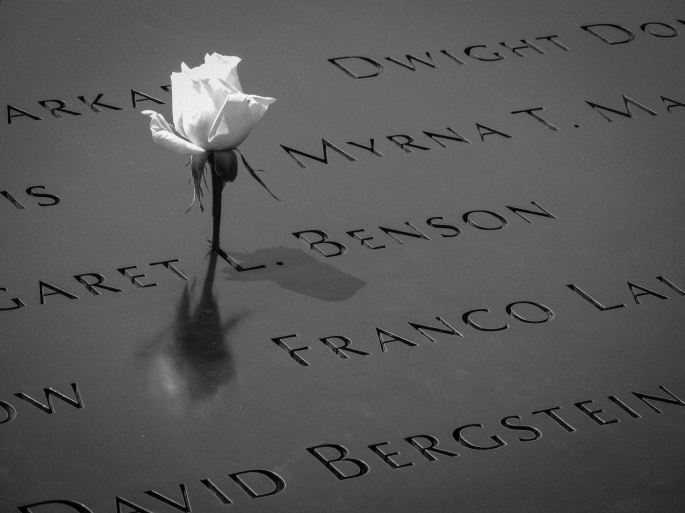
If we learn nothing else from this tragedy, we learn that life is short and there is no time for hate. Sandy Dahl, wife of Flight 92 pilot, Jason Dahl
Today, we remember the 2,977 people who were killed during the 9/11 coordinated terrorist attacks and honor the first responders and others who personally met the challenge. This day is also dedicated to community service.
I agree with President Obama who said, “Even the smallest act of service, the simplest act of kindness, is a way to honor those we lost, a way to reclaim that spirit of unity that followed 9/11.”
Affirmation: I remember and honor through service.
Coaching questions: What is one small act of service or kindness you will give to help reclaim the spirit of unity? How does your act of service/kindness enrich your life?
Never regret a day in your life: good days give happiness, bad days give experience, worst days give lessons, and best days give memories. Anonymous
The older I get, the less I regret a day. I sense my days quickly slipping away as I enter the fourth (if I’m lucky) quarter of my life. This motivates me to savor each and every day no matter what they bring. I have highs and lows but mostly, my days are “good days” that give me happiness.
How we frame the days of our lives—bad equals experience, worst equals lessons, best equal memories—makes a difference in whether or not we experience peace and joy in life.
Affirmation: Each day is a gift.
Coaching questions: How do you frame your bad and worst, good and best days? What helps you stay in the present and embrace each day as a gift?
September is National Recovery Month. It’s a time to think about those who are working hard in substance abuse recovery programs and the organizations that serve and support them.
The pandemic has been a major challenge for those living a life in recovery and those who are actively addicted. In Cook County Illinois, for instance, statistics are trending to double the number of opioid-related deaths in the wake of the pandemic. With the increase in substance use, there is an increased need for counseling services at a time when funding for not-for-profit organizations is down.
I’m highlighting this because, with all the “noise” in our world right now, the important messages of drug use and recovery are often lost.
Affirmation: I care about my recovering brothers and sisters.
Coaching questions: Has the pandemic caused you to engage in addictive behaviors? What are you doing to mitigate this behavior?
In prosperity our friends know us. In adversity, we know our friends. Colin Powell, American politician and retired four-star general
Friends are exceptionally important to me. As a motherless daughter and only child, I have always sought out friends to fill the mother/sister void in my life. I’ve learned that in adversity we know our friends, as General Powell says.
In my lifetime, I have disappointed people, made them angry, and lost their trust. Some friends retaliated and abandoned me, others, the true friends, stood by me knowing I needed help to regain my balance. I’ve learned to carefully chose my friends.
Jim Rohn, author and motivational speaker, says, “The most intimate of our associations, the closest five, have the greatest impact on our self worth, our habits, and our lifestyles.” Choose your five well—be one of the five for someone else.
Affirmation: I choose my friends carefully.
Coaching questions: What do friends mean to you? If you don’t have close friends, how might you cultivate meaningful relationships? In what ways do you show up as a friend?
Speaking openly about our grief can create powerful human connections. Our honesty and vulnerability leads not only to our own healing, but the healing of others. Carmel Breathnach, author
It is National Grief Awareness Day—a perfect time to, as Breathnach writes, consider the impact of speaking opening about our grief. As we collectively grieve our losses, we gain a sense of comfort, knowing that others understand.
Loss is part of the human experience. Perhaps losing my mother as a child taught me to not be surprised by loss. I marvel at daughters who are shocked by the death of their very elderly mothers. I want to ask, “Did you expect her to live forever?” Or, “Did you want to precede her in death?” Of course, I don’t ask these intrusive questions and I totally respect their feelings of great loss, but I do wonder about their expectations.
If you haven’t yet, someday you will fiercely grieve. Prepare yourself, not in a morbid way, but in a sense that death is part of the circle of life; the human experience.
Affirmation: I will grieve this day for my losses in the past and for those to come. My grieving reflects that fact that I’m fully alive.
Coaching questions: Who/what will you grieve/remember today? What have you learned from your losses—your grief? How have your losses contributed to who you are?