FEELING HOPELESS OR HELPLESS TODAY?

If you can’t feed a hundred people, just feed one. Mother Teresa

The day after a national election is always difficult for a little less than half of the population. We may feel hopeless and helpless and asking ourselves, “What more could I have done to make a difference? What can I do in the future to make the world a better place?”

Yesterday I sat in the pouring rain (I forgot my jacket) campaigning for someone I believed in for city council. I had done other campaigning for her but yesterday  I wasn’t making much of a difference. Most people in the community had already voted and my sign waving was receiving little, if any, attention. I could have gotten out of the rain and gone home. And yet, I stayed. I did it more for myself than for my candidate. I did it because it was one thing I could do. I could “feed one” or possibly influence one person. Just one! I did it to feel less helpless. I needed to DO something. 

It’s like the story of the star fish. Hundreds were on the beach dying and a little boy was throwing one back into the ocean. When a man asked him what difference he was making when so many were dying, the little boy pointed toward the sea and said, “I made a difference to that one.”

Affirmation: I can feed one. 

Coaching question: How have you taken care of yourself in the past when you’ve felt hopeless or helpless? 

Photo by Pedro Lastra on Unsplash

The Flower of Mother’s Day

Symbols are the imaginative signposts of life. Margot Asquith, author

Pink carnations have always been special to me because they were the flowers on my mother’s casket and one of the few memories I have of the months following her death seventy years ago.

 I thought they were randomly chosen by my dad but, perhaps, he chose them for their meaning. “Light pink carnations represent love and gratitude that are similar to a Mother.” They also say, “I’ll never forget you.”

In America, they are the official Mother’s Day flower. 

Affirmation: I honor the symbols in my life.

Coaching questions: What symbols do you hold dear? What do they mean to you and why? How do they help you keep your memories alive?

Photo by Sixteen Miles Out on Unsplash

Handling Disappointment

We must accept finite disappointment, but never lose infinite hope. Martin Luther King, Jr. 

I’ve experienced some disappointments this summer. Due to Covid and a bad hip (getting a new one on 9/12), I missed my granddaughter’s musical, step-granddaughter’s shower and wedding, being a guest at two book clubs that were discussing my book, my annual visit with special friends from where I once lived….to name a few. Life is like that. Stuff happens. 

Holding onto hope, as Dr. King suggests, has been a key to overcoming disappointment. Hope that I’ll eventually kick Covid and get back to the joy of pain-free walking. 

Gratitude has been the other key. Grateful that what I’m experiencing isn’t life-threatening, grateful for the many great books I’ve had time to read, grateful for the kindness and support of family, friends, and even, strangers. As I sit this morning enjoying the cool breeze on my tiny condo balcony in northern Illinois, I’m embracing the beauty of nature, God’s love, and you, dear friends. Have a wonderful day!

Affirmation: I am hopeful and grateful!

Coaching questions: How have you handled disappointment in the past? What’s in your mental toolbox for the future?

Never Take Away HOPE

Blogger’s note: I posted this blog three years ago but, since I still have such strong feelings about the topic, I’m reposing. Blessings!

Character cannot be developed in ease and quiet. Only through experience of trail and suffering can the soul be strengthened, ambition inspired, and success achieved. Helen Keller

It breaks my heart to read the posts of women in motherless daughters’ groups telling a woman who is in despair over having just lost her mother that “it doesn’t get any better.” I shout out at my computer screen, “For Heaven’s sake, give the poor grieving woman some hope!” Most of us, if we’re over thirty, have suffered at least one significant loss. If all of us never recovered from loss, we would all be walking around like the Zombies we were the first week.

Even Helen Keller, with no sight, hearing or voice, offered a message of hope for those who are suffering and in distress. I believe it’s important to acknowledge a person’s grief, be with her in the reality of the moment, offer no platitudes like “she’s better off now” or “you’ll be fine.” Saying nothing is always good. Your presence is what matters. Reminisce with her about her loved one. But please, please, don’t take away hope for her future. Hope may be the only thread attaching her to this Earth—sometimes, literally.

Affirmation: I will be a healer and do no harm.  

Coaching questions: What helped you most in times of despair? What words or presence brought you the most comfort? How do you show up for your friends and family in times of distress?

Photo by Ronak Valobobhai on Unsplash

Tightly Hugging Hope

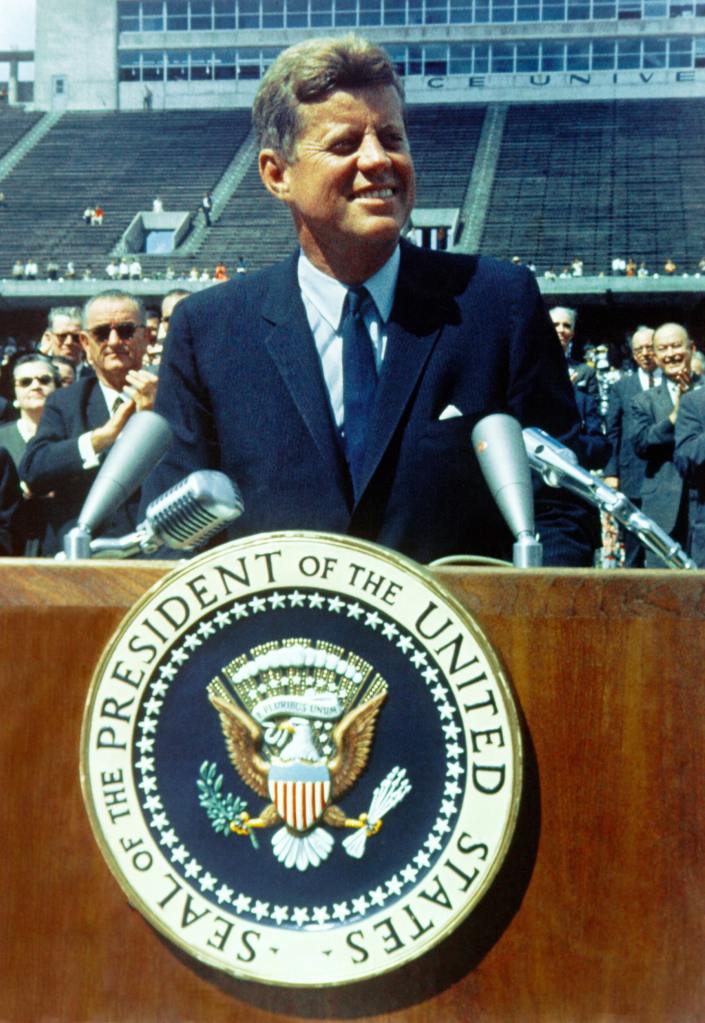
As we express our gratitude, we must never forget that the highest form of appreciation is not to utter words, but to live by them. President John F. Kennedy 

Today is the fifty-eighth anniversary of the assassination of President John F. Kennedy. If you were an adult living in the United States at that time, you undoubtedly remember the day very well. As a nation we felt not only sadness but hopelessness that this could happen in our country. 

When our world looks bleak and we feel like we’re drowning in grief, pain, regret, or anger, sometimes we must rely on hope to get us through. Tightly hugging hope to your chest is a way to stay on top of what has/is happening in your world. 

Affirmation: I’m always hopeful.

Coaching questions: What do you need to be hopeful about? Where do you find hope?

Photo by History in HD on Unsplash

Surfside, We’re With You

There is no medicine like hope, no incentive so great, and no tonic so powerful as expectation of something better tomorrow. Grison Swett Marden, MD

We have spent time this past week empathizing with families of the victims of the high rise building collapse in Florida. We watch as they hold out hope that their loved ones will be found alive. 

As Dr. Marden says, hope is a powerful medicine. But as the days turn into weeks, then what? How do we handle life when hope is gone? How do we learn how to live with our loss? 

We grieve, we take care of ourselves, we preform small daily tasks, we share stories with others who have similar losses, we seek help when we need it, we find creative outlets for our memories and our sadness.

In these next days, when hope in Surfside wanes, I pray that loved ones will find comfort as they celebrate the lives of those who were lost. I hope they know that people the world over are sharing in their sadness as we recall our own losses.

Affirmation: I share the grief of others.  

Coaching questions: How do you handle life when hope is gone? In the past, what helped you in your grief?

Photo by Ben White on Unsplash 

Hug Hope To Your Chest

By showing up with hope to help others, I’m guaranteed that hope is present. Then my own hope increases. By creating hope for others, I end up awash in the stuff. Anne Lamott, author

When our world looks bleak and we feel like we’re drowning in fear, grief, pain, or anger sometimes we must rely on hope and faith to get us through. Tightly hugging hope to our chest is a way to stay on top of what is happening in our world. 

Like a life preserver works in the water, hope can keep our heads above the surface as we tread towards the shore. Hope comes from friends, family, faith, or even your pet. 

Affirmation: I’m hopeful.

Coaching questions: How do you remain hopeful in these difficult times?  Where do you find hope and inspiration?

ron-smith-372792-unsplash

Photo by Ron Smith on Unsplash

Quoting Gandhi on Easter

A man who was completely innocent, offered himself as a sacrifice for the good of others, including his enemies, and became the ransom of the world. It was a perfect act. Mahatma Gandhi, Indian activist

You might think it strange that, as a practicing Christian, I’d quote Gandhi, a Hindu, on Easter Sunday. Gandhi, the father of Indian independence, had a goal of religious pluralism. His vision was for people with different religious beliefs to co-exist with mutual understanding. In his quote above, he is championing Jesus and describing his crucifixion as a “perfect act.” What Christian could say it better? 

Today is the pinnacle of the year for Christians. The day this man who “offered himself as a sacrifice for the good of others” rose from the dead after being crucified. For Christians, Jesus’ resurrection is personal. I hope that for all Easter is a symbol of hope, renewal and new life. 

Affirmation: Hallelujah! Christ is risen.

Coaching questions: If you’re a Christian, what does Easter mean to you? How has Jesus’ crucifixion and resurrection changed your life? If you’re not a Christian, how might you embrace the Easter message of renewal in your life? To whom do you turn in times of grief, pain, or great joy?

cristina-gottardi-189946-unsplash.jpg

Hope–Life’s Best Medicine

Hope is the thing with feathers;  That perches in the soul; 

And sings the tune without the words;  And never stops at all. 

Emily Dickinson, poet

As we struggle with the physical and emotional pains of life, hope is our best medicine. Hope gives us the sense that things will work out. I hold this belief in the value of hope based on my own life experiences and the stories of others.

Dr. Jerome Groopman, who holds a chair in medicine at Harvard, writes in his book, The Anatomy of Hope, “Hope gives us the courage to confront our circumstances and the capacity to surmount them. For all my patients, hope, true hope, has proved as important as any medication I might prescribe or any procedure I might perform.” If your hope is waning, search for “the thing with feathers,” as Dickinson so eloquently writes. Chase hope down, then hold it fast. Never give up hope.

Affirmation: I am filled with hope.

Coaching questions: How has having hope served you in the past? How can it serve you now? If you’re feeling low on hope, where can you get a recharge? What can you read, to whom can you speak or pray? 

ron-smith-372792-unsplash.jpg 

Photo by Ron Smith on Unsplash

What’s Your Word?

I do believe in starting the new year with new resolve, but instead of adopting a resolution, I choose a word of the year—a word that encapsulates my aspirations for the twelve months ahead. Melinda Gates, philanthropist 

For the last two years Melinda Gates has chosen the word “grace” and she thinks it is making a difference. She tells a story of the heart break she experiences when she visits children who are dying from preventable disease. Then she says, “A broken heart gives me urgency. A moment of grace gives me hope. That’s the power of a well-chosen word of the year. It makes the year better—and it helps me be better too.”

I think Gates is on to something. I’m choosing “impact” for my word of the year. I want to make an impact in the world—with my blog, my column, and, eventually, my book. I also want to impact others by caring about them, being a good friend, and fighting for policies to help our country thrive. 

Affirmation: I will make an impact this year.

Coaching questions: If you decided to choose a word, what would it be? Why? What difference can you envision it making? 

IMG_2747.jpg