Need Help Managing Political Stress?

If you ask what is the single most important key to longevity, I would have to say it is avoiding worry, stress and tension. And if you didn’t ask me, I’d still have to say it. George Burns, comedian and actor who lived to be 100

According to a recent American Psychological Association (APA) study on stress in America, 76 percent of Americans find that the future of our nation is a significant source of stress, and 66 percent are stressed by the current political climate.

Of course, you can’t make all the political stress go away and you shouldn’t. It’s important to stay informed but mindfulness can help you avoid political burnout. 

Here are three tips:

  • Learn to discern between thoughtful, informative content and stress-inducing, sensationalized material.
  • Be mindful of your media consumption. Regulate your digital environment by controlling notifications and choose specific times to engage with updates. It’s okay to react late to news!
  • Connect with individuals who provide a safe space for understanding current events. Sharing what you are thinking and feeling with trusted peers can mitigate the negative effects of stress.

One last thing…do something! Attach labels to postcards, send texts, contribute money, march, buy and wear the t-shirt. Doing something will help you feel empowered.

Affirmation: I have the power to manage my reactions to what is happening in the world around me.

Coaching questions: What tools do you use to manage stress? What’s working, what isn’t working? Adjust accordingly. 
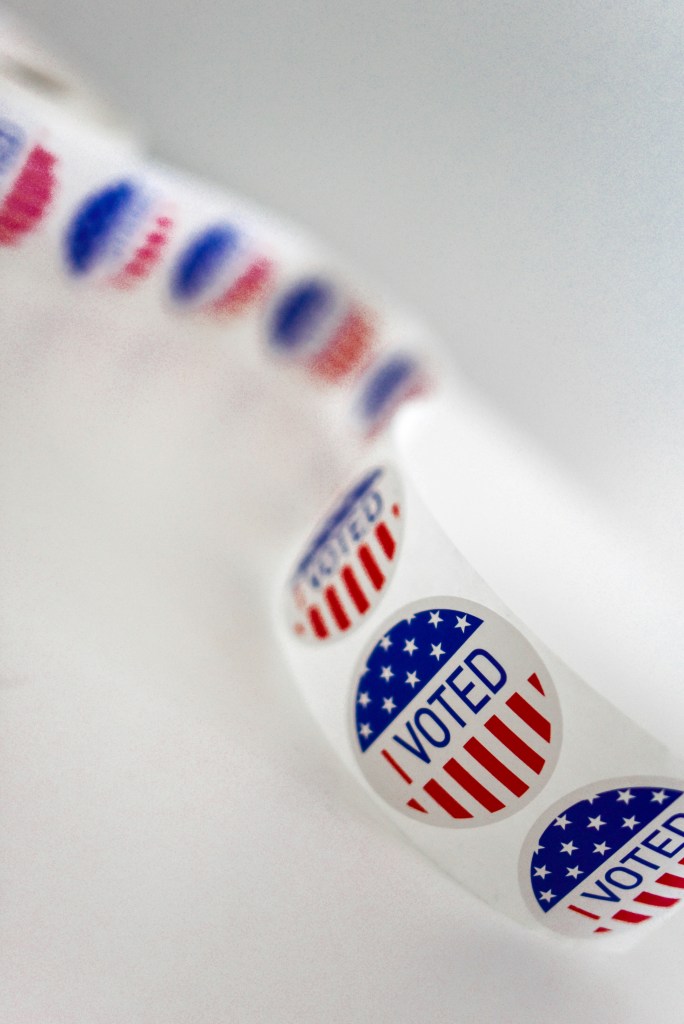
Photo by Element5 Digital on Unsplash

Change–It’s Coming Whether You’re Ready or Not!

Nothing is so painful to the human mind as a great and sudden change. Mary Wollstonecraft Shelley, author

When my late husband, Keith Bell, literally dropped dead of a heart attack at the age of fifty three, I experienced first hand the “great and sudden change” Shelley is talking about. In 2024, we’ll all experience change. I certainly hope it won’t be great or sudden (unless the change event is something really good) but you never know.

Psychiatrist Henry Emmons, MD, author of The Chemistry of Calm, writes, “Start making small changes when you’re not stressed. Think of it like exercise. If you’re trying to get in shape, you don’t try to do a month’s worth of workout in one day.”

The same is true when training yourself to deal with stress. If you earn how to calm your mind when your stress is small, the better prepared you’ll be for the big changes that are inevitably coming your way. 

Affirmation: I’m prepared for change.

Coaching questions: What big change have you handled in the past? How well do you handle change? What can you do now that will help you better handle change in the future?

Photo by Thomas de LUZE on Unsplash

Are you feeling stress, envy, or jealously? Sometimes it’s hard to tell

Is it possible that the stress you’re feeling is actually envy? Kristin Neff, PhD, co-author of The Mindful Self-Compassion Workbook writes, “Envy is an unconscious defense mechanism against a threat to our self-esteem.”

Since, according to Dr. Neff, envy is unconscious, it can be difficult to detect. “Envy frequently masquerades as stress, sadness, anger, jealousy, or resentment.” Social media is a fertile breeding ground for envy which, if left unchecked, can be a destructive force.

Envy is different from jealously. Jealousy typically involves a fear that someone will take something from us, while envy is coveting something that belongs to someone else.

Affirmation: I will learn to differentiate and understand my feelings.

Coaching question: What helps you understand what you’re feeling? How does knowing help you move on?

Photo by Pro Church Media on Unsplash 

Benefits of a COVID-19 Diary

Regular writing can bolster the immune system, help you recover from traumatic events more successfully and ease stress and depression. Professor James Pennebaker, from the University of Texas in Austin

Soon after I sequestered myself to keep safe during the COVID-19 pandemic, I started a COVID-19 Diary. Inspired by The Diary of Anne Frank, at first I thought of the diary as a historical document and a remembrance for my great-grandchildren. However, I soon discovered the immediate personal benefits of expressing my frustrations, fears, victories, and disappointments.

Research by Professor Pennebaker and others suggest that those who regularly write in a journal or diary have a more vigorous antibody response to bacteria and viruses and produce less cortisol, a stress hormone. I can’t prove any reduction in stress or increased antibodies but I do know that expressing my thoughts in a diary has a calming affect on me as I clear my mind of negativity. I also use my diary to track progress on my soon-to-be-published book. It helps me stay focused and reminds me that I am making progress even if it feels slow. 

Affirmation: I will continue to write in my diary.

Coaching questions request: What would it be like to start your own COVID-19 Diary? What are the possible benefits? Write about your feelings, activities, circumstances every couple of days for a week. Let me know how this exercise works for you. 

nick-morrison-FHnnjk1Yj7Y-unsplash

Tips To Help You Stop Worrying

You can pray or you can worry but you can’t do both. Vicki

Although people often say there are 365 “fear nots” in the Bible, technically it’s not true. In the King James Version, fear is spoken of over 500 times. If we expand our search to verses that encourage us not to worry or not to be anxious, it would be many, many more. 

Fear, which frequently manifests into worry and stress, is not only contrary to faith but it can cause physical harm. Here are five tips to help you kick the worry habit:

  1. Set aside designated “worry time” — set a timer, consider what’s bothering you then move on when your time is up.
  2. Write down your worries then mark those over which you have control. Erase the rest.
  3. Spend less time online surfing the bad news.
  4. Have faith that _____________ (fill in the blank) will move forward even if you stop worrying about it/them.
  5. Stop procrastinating and take care of those things you’re worrying about that are within your scope of control.

Affirmation: I can kick the worry habit.

Coaching questions: What’s on your worry list? Which of the above tips speaks to you? Which one will you implement today?


niklas_hamann-Pe4gh8a8mBY-unsplash

Photo by niklas_hamann on Unsplash

Reconnecting With Ourselves and Others

Humans have an incredible capacity to deal with stress and pain and trauma. What we can’t cope with is not truly connecting with ourselves and our community. Sarah Wilson, author

In an age when busy is better and technology rules, we frequently have little time for quiet contemplation or real connection with others. As much as I enjoy the connection Facebook and other technology offers, there’s nothing as rewarding as talking face to face with a dear friend. 

Most afternoons around four o’clock, I end the busy-ness of my day and take time to read in a quiet, comfortable place. Sometimes, I do nothing and just think.  I reconnect with myself and calm the beast that drives me.

Affirmation: I make an effort to connect to myself and my community.

Coaching questions: What’s keeping you from truly connecting with yourself and your friends? What’s one thing you’ll do today to resolve this dilemma? 

ben-white-148435-unsplash

Photo by Ben White on Unsplash

Let Your Habits Be Your Servants

’Tis easier to prevent bad habits than to break them. Benjamin Franklin

About forty percent of our daily life is habitual action. Brushing our teeth, making our bed, drinking coffee, going for a morning walk, checking social media. When, where, what and how much we eat and even how we interact with our friends and family—all largely based on habits. According to Gretchen Rubin, author of Better Than Before: Mastering the Habit of Our Everyday Lives, “Habit is a good servant but a bad master.” Habits can help us make positive change but they can also be saboteurs of our progress.

Often the most effective way to adopt a new habit is to replace a bad one with a better one. Diverting a river is better than damming it up. Watch for triggers that might set you back including boredom and stress. Commit to at least sixty days to establish a new habit. 

Affirmation: I can change my habits.

Coaching questions: What bad habit would you like to change? What good habit would you like to develop? What difference will it make in your life? Is the change powerful enough to pull you through sixty days of establishing a new path? Commit to it. You can do this!

What Changes Are In Your Future?

Nothing is so painful to the human mind as a great and sudden change. Mary Wollstonecraft Shelley, author

When my late husband, Keith, literally dropped dead of a heart attack at the age of fifty three, I experienced first hand the “great and sudden change” Shelley is talking about. This year, we will all experience change–hopefully not great and sudden but one never knows. Basic self-care practices—good sleep, healthy food, exercise, taking breaks— can help you navigate future change more smoothly.

“Start making small changes when you’re not stressed,” says psychiatrist Henry Emmons, MD, author of The Chemistry of Calm. “Think of it like exercise. If you’re trying to get in shape, you don’t try to do a month’s worth of workouts in one day.”

The same is true when training yourself to deal with the stress response. The more you learn how to calm your mind when your stress is small, the better prepared you will be for the big change that will inevitably come your way. 

Affirmation: I am ready for change.

Coaching questions: Consider how well you handle change. What will you do to prepare yourself now to handle change more effectively in the future? What difference might it make? 

Exchanging Perfection for Good-Enough

More smiling, less worrying. More compassion, less judgment. More blessed, less stressed. More love, less hate. Roy T Bennett, author

Are you striving to replicate the perceived “perfect” Christmas of your childhood for your grand children? Perhaps you want to impress your in-laws or not be judged by them. Maybe good-enough just doesn’t measure up to your personal desire to control the situation and make everything exactly right. 

It’s that time of the month to ask yourself, “What can I let go of?” Do I really have to make Aunt Susie’s rum balls? Who will I disappoint if I don’t? Accept the reality of not pleasing everyone so you can take care of yourself during this busy time. Loosen your attachment to an idealized past and create a good-enough holiday. Yourself will thank you and so will your children or grandchildren when you’re present for them and not a stress-out mess!

Affirmation: I can accept good-enough.

Coaching questions: If you’re stressed out right now, consider what you might delete from your activities, menu, gift-giving. What does a good-enough holiday look like?

Consider Going On a Media Diet

It turns out what you watch, read, listen to and play can affect your mood, temper, and even how generous and kind you are to others afterwards. Elaine Shpungin Ph.D., founder of Conflict 180 

If you are coping with significant change in your life, you may want to consider going on a media diet. Maybe you’re a fan of violent or dramatic games or shows. During a time of transition—the death of a loved one, divorce, job loss—when your emotions are close to the surface, you might opt for comedy instead. 

According to research by the Mayo Clinic, laughter calms the stress response and releases endorphins. Also consider your social media exposure. Although you may receive support from your friends via social media, managing your own feelings can be difficult enough without comparing yourself to others.

Affirmation: I take note of my media habits.

Coaching questions: How is your media consumption affecting your actions or mood? If changes are needed, what steps will you take this week?

IMG_2691.jpg