Is Your Body, “Pleasant to be With?”

It’s really pleasant to be with, familiar, faithful, complaining a little, continually going about its business, loving to lie down. Lillian Morrison, poet, excerpt from her poem, Body

This excerpt from the lovely poem, Body, reminds me how fortunate I am to have this old, familiar body that complains only a little and generally goes about its business. I’m missing going to the gym during this time of  COVID-19 but I’m committed to staying active with walking and swim aerobics. 

As a motherless daughter of a motherless daughter…both dying in their 30s…I’ve always felt that, for me, all the years past 35 have been gravy. So as I approach a healthy, happy 75, my life is better than gravy. My life is a second helping of mashed potatoes with the gravy.

Affirmation: My body is “pleasant to be with.”

Coaching questions: What’s your motivation to keep your body healthy? How’s that working out for you? How do you view the years following the “anniversary” year of being the same age as your mother when she died?

P.S. It’s sad that I couldn’t find any photos on the Internet of older ladies working out

jon-flobrant-sbjVthVW2X8-unsplash

Photo by Jon Flobrant

What Premature Birth Teaches Us

In an effort to learn more about structural racism in American, I asked Sharlene Voogd Cochrane, Professor Emeritus, Lesley University, to be a guest blogger today. 

Black women are almost three times more likely than white women to give birth before thirty-two weeks. Sarah DiGregorio, author of Early: An Intimate History of Premature Birth and What It Teaches Us About Being Human. 

DiGregorio goes on to explain that this statistic is true no matter the income level, health care, or education of the black woman. The research further suggests this troubling outcome is the result of the “stress for black women of living in America.”  Black mothers face extreme stress because of structural racism. They face a level of worry, conflict, and pressure that brings about negative health results. It’s an amazing and disturbing statistic!

We are hearing the term “structural racism,” in response to the murder of George Floyd.  For white people, the term invites us to look more closely at the racism embedded in our institutions including the often unacknowledged racist practices and assumptions within our economic and cultural institutions. Women birthing prematurely because of stress related to structural racism and other factors is a dire consequence. 

 Affirmation:  I will learn more about structural racism in America.

Coaching question: How can I identify and change structural racism in the places I work, live, attend church, and shop?

andre-adjahoe-tqunk3qB_yU-unsplash

Photo by Andre Adjahoe on Unsplash

The Problem With Secrecy…

Secrecy is a vacuum and nothing fills a vacuum like paranoid speculation. Max Brooks, author

One of the tragedies of mother loss is when family members are discouraged from speaking about the details of the person’s death or sharing memories about the loved one. After talking with motherless daughters who grew up in environments ruled by secrecy, I learned that the secrecy itself was as much of a problem as the actual death of their mother.

Healthy families have open discussions about the death of a loved one and frequently share their memories.

Affirmation: I am open and honest about the death of a loved one.

Coaching questions: How have family secrets kept you from becoming your best self? What will you do about it? What difference will it make? Be specific.

kristina-flour-BcjdbyKWquw-unsplash

Photo by Kristina Flour on Unsplash

Speaking Out On Things That Matter

Our lives begin to end the day we become silent about things that matter. Dr. Martin Luther King, Jr.

So much unrest, so much fear, so much anger—it’s exhausting to see it on television, social media, news feeds. And yet, I must add my voice because I believe Dr. King’s words, “Our lives begin to end the day we become silent about things that matter,” are true.

One way I speak out is through the written word. Here are a few ideas of others that resonate with me: Like the lost sheep story in the Bible, Jesus cared about all the sheep but went after the one that was “hurting.” There are professions in which “some bad apples” is not acceptable. Airline pilots who panic in a storm, gynecologists who are respectful “most of the time,” parents or teachers who are “usually not abusive” all come to mind. 

One of my dad’s favorite statements was, “Don’t judge your fellow Indian until you’ve walked many miles in his moccasins.” This seems to apply on many levels.

Affirmation: I will speak out on things that matter.

Coaching questions: How do you use your voice? What difference does it make?
 linkedin-sales-navigator-0QvTyp0gH3A-unsplash

Taking Care of Today Is Enough

So don’t worry about tomorrow, for tomorrow will bring its own worries. Today’s trouble is enough for today. New Living Translation of Matthew 6:35

When I read Matthew 6:35 in light of today’s world, I want to shout, “No kidding!” It seems like every day brings new “troubles” and “today’s trouble is (certainly) enough for today.” 

I’m a planner. In doing research for my book about mother loss, I discovered that it’s not unusual for people who have experienced early loss like to feel in control since they lost control of their life’s narrative so early. Planning is an artificial way to feel “in control.” For the first time in my life I’m in a circumstance of not planning beyond a few days. Plane travel—who knows when? House guests—who knows when? Meetings in person—who knows when? I’m going to reframe my frustration into an opportunity to learn to live more fully in the present and let the future just “be” for now.

Affirmation: I can be content without a plan.

Coaching question: In what way does Matthew 6:35 speak to you? 

sebastien-gabriel--IMlv9Jlb24-unsplash

Photo by Sebastien Gabriel on Unsplash

What Symbols Speak To You?

Symbols are the imaginative signposts of life. Margot Asquith, author

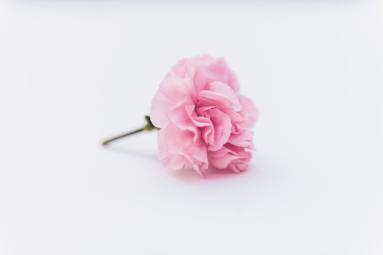
Pink carnations have always been special to me because they were the flowers on my mother’s casket and one of the few memories I have of the months following her death. I think they were randomly chosen but, perhaps, my dad chose them for their meaning. I’ll never know.

In the Dictionary of Flowers at the end of the book, The Language of Flowers, pink carnations (Dianthus Caryophyllus) mean I will never forget you. According to Mr. Google, it’s believed that pink carnations first appeared on earth from the Virgin Mary’s tears, making them the symbol of a mother’s undying love. It’s no wonder they have always held a special place in my heart. 

Affirmation: I honor the symbols in my life.

Coaching questions: What symbols do you hold dear? What do they mean to you and why? How do they help you keep your memories alive?

flavio-gasperini-OKFKQ9-nM_M-unsplash

Wise Words From Founder of Spanx

If you think about it, behind the fear of failure is really just the fear of embarrassment. Sara Blakely, Founder and CEO of Spanx

Most of us have an inner critic telling us to give up even before we start. Things aren’t always perfect….for me, spelling errors, quoting errors, and punctuation come to mind. But I believe that giving up our dreams because we fear that what we’re creating may be embarrassing is a sad way to live a life. 

So what if we’re embarrassed or fail? At least we lived life to the fullest, pursued our dreams, and left fear by the side of the road. 

Affirmation: I am not afraid of being embarrassed.

Coaching question: What would you pursue if you had no fear of embarrassment? 

ivan-aleksic-hko-iWhYdYE-unsplash

Taming COVID-19 Anxiety With Creativity

Just make something. Todd Brison, author

In a recent Medium post, Todd Brison wrote this about creativity endeavors, “This is your space. You have complete dominion. Hope is found here. Peace is found here. Silence, too. Acts of creation cannot heal a broken past. They cannot repair a world of despair. They cannot guarantee future hope. However, they can provide shelter in a storm.” 

My research and personal experience tells me that what Brison writes is true. In fact, Step Four in MOM’S GONE, NOW WHAT? is “Stir Up Your Creativity.” Generally, people don’t become more creative in spite of tragedy, they turn to creativity because of tragedy. They use creative endeavors to calm the anxiety related to uncertainty brought on by loss…and, there is no doubt, we are experiencing a heightened sense of loss right now. Paint, knit, cook, garden, learn a language, color…stir up your special creativity to bring you calm as you shelter in the storm.

Affirmation: I find comfort in creativity.

Coaching question: How will you tap into your creativity? 

(I’m coloring – see photo)


IMG_4046

Listen To Your Heart

The most beautiful people we have known are those who have known defeat, known suffering, known struggle, known loss, and have found their way out of those depths. Elisabeth Kübler-Ross, author of On Death And Dying

Helping a daughter move forward after the death or abandonment of her mother feels like part of my mission in this world. My mother lost her mother when she was three, I lost mine when I was eight. 

Using what I’ve learned about our losses to make a difference in the life of another by writing about it feels like important, heart-felt work. And, believe me, it is work. Although I published a small book about 17 years ago, I’m glad I didn’t know what I was getting into when I started down this path. Sometimes ignorance is bliss but, ignorant or not, doing what your heart tells you to do always works out in the end.

Affirmation: I listen to my heart.

Coaching questions: What is your heart telling you to do? What legacy do you want to leave behind? What’s a step you’re willing to take toward realizing your dream….no matter the cost?

Blank Book Cover Mock-up

Benefits of a COVID-19 Diary

Regular writing can bolster the immune system, help you recover from traumatic events more successfully and ease stress and depression. Professor James Pennebaker, from the University of Texas in Austin

Soon after I sequestered myself to keep safe during the COVID-19 pandemic, I started a COVID-19 Diary. Inspired by The Diary of Anne Frank, at first I thought of the diary as a historical document and a remembrance for my great-grandchildren. However, I soon discovered the immediate personal benefits of expressing my frustrations, fears, victories, and disappointments.

Research by Professor Pennebaker and others suggest that those who regularly write in a journal or diary have a more vigorous antibody response to bacteria and viruses and produce less cortisol, a stress hormone. I can’t prove any reduction in stress or increased antibodies but I do know that expressing my thoughts in a diary has a calming affect on me as I clear my mind of negativity. I also use my diary to track progress on my soon-to-be-published book. It helps me stay focused and reminds me that I am making progress even if it feels slow. 

Affirmation: I will continue to write in my diary.

Coaching questions request: What would it be like to start your own COVID-19 Diary? What are the possible benefits? Write about your feelings, activities, circumstances every couple of days for a week. Let me know how this exercise works for you. 

nick-morrison-FHnnjk1Yj7Y-unsplash