In Memory of Those Lost to Alzheimer’s

I want to tell you how much I miss my mother. Bits of her are still there. I miss her most when I’m sitting across from her. Candy Crowley, Broadcast Journalist

The month of November is known as Alzheimer’s Awareness Month. President Ronald Reagan made that designation in 1983. According to the Alzheimer’s Association, at that time there were less than two million people with the disease. Through the years that number has grown to 5.8 million. By 2050, this number is projected to rise to nearly 14 million.

As I was researching for my book, MOM’S GONE, NOW WHAT? I learned many facts about Alzheimer’s as I read articles and interviewed daughters who had lost or were losing their mothers to this horrific disease. During this time, I had the honor of interviewing, Allie, a young daughter whose mother, Annette, was diagnosed with Alzheimer’s at age forty-seven when Allie was eleven. Allie’s mother died in May, she was fifty-six. 

If you live in the Chicago, IL area or have access to channel WTTW, watch “Too Soon To Forget: The Journey of Younger Onset Alzheimer’s Disease” on Sunday, November 3 at 1:00 pm or Friday, November 8 at 3:30 am. Allie and her family are featured in this program.

Affirmation: I care about those suffering from Alzheimer’s disease and their families. 

Coaching request: If you know someone who is caring for a family member with Alzheimer’s, offer to help them with a meal or an everyday chore. Take time this month to educate yourself about Alzheimer’s disease.

fullsizeoutput_fc3.jpegAnnette M. Wheat 11/25/63-5/11/19

What Are Your Halloween Memories?

When black cats prowl and pumpkins gleam, may luck be yours on Halloween. Unknown

One of the days I especially miss being with my grandchildren is Halloween. When I lived nearby, I attended the school costume parade and went trick or treating with my daughter’s family. Even when my toes froze, I loved being part of the excitement. 

My kids won’t let me forget that, as a health-conscious young mother, one year I gave out nickels and another toothbrushes to Trick or Treaters. Most years I acquiesced and gave out candy. However, after my three kids sorted their candy, their favorite part, I offered them a wrapped gift in exchange for their loot. They could freely keep the candy or accept the gift. They always chose the gift—a big box of crayons or a small toy. Although they loved the sorting, the candy didn’t have much of an allure for them.

In ancient times, it was believed the souls of those who had died returned to visit their homes, and those who had died during the year journeyed to the otherworld on Halloween. Masks were worn to avoid being recognized by ghosts and it is in those ways that witches, hobgoblins, fairies and demons became associated with the day. Now, it is a day of fun for children and adults.

Trick or Treat??

Affirmation: Memories and traditions are special. 

Coaching questions: What traditions do you enjoy? How did you celebrate Halloween as a child or with your children? 

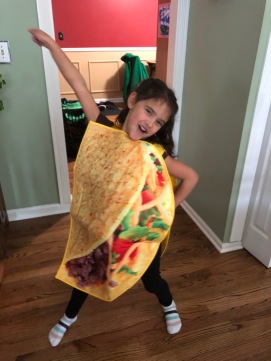
IMG_3558

This is my granddaughter, Marcella, dressed up as a taco for halloween this year. 

Beyond Forgetfulness

Forgetfulness is a form of freedom. Kahlil Gibran, Lebanese writer

How often do we say, “I forgot….the keys, the sweater, the birthday, a name, a phone number?”  For most of us of a certain age, some forgetfulness is routine. But what about those whose lives are slipping away, those who have passed up simple forgetfulness and are living in a foreign world, one without memories?

As I interviewed daughters for my book on mother loss, I found it particularly heartbreaking talking with those who are losing their mothers to Alzheimer’s disease. One woman said, “My mother is lost to me but not gone.” This mother had forgotten her daughter and everyone else important to her yet she was alive and may live for many more years. One daughter’s story exemplified Gibran’s quote. She said, “My mother used to have great anxiety and worry. As a result, she was often angry and depressed. Now, because of her dementia, she is free of worry and is experiencing joy.” Of course, this daughter knows her mother’s situation will worsen but, in the meantime, she is embracing the moment.

Perhaps you have lost or are losing your mother (or someone else you love) to this terrible disease. I can’t imagine what pain you’re experiencing but I can stand beside you and support you through it.

Affirmation: I’m grateful that my brain is alive and well.

Coaching questions: What does your ability to think, remember, reason mean to you? What can you do to support those who are affected by Alzheimer’s? 

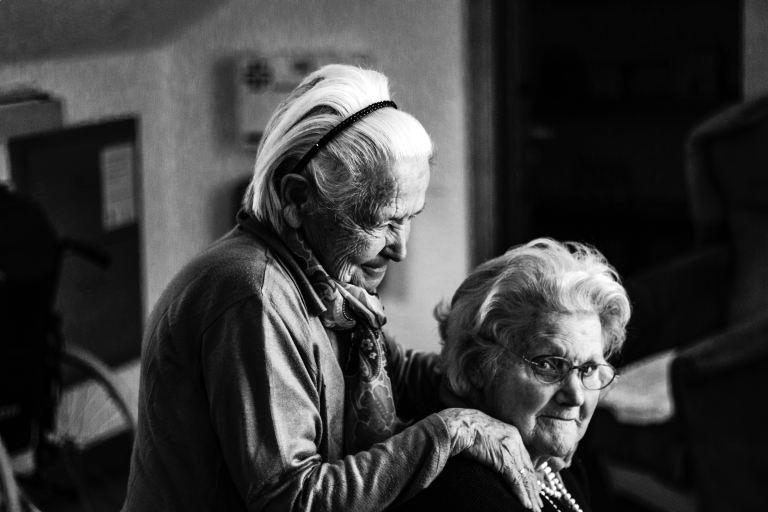
eberhard-grossgasteiger-iIFLDQmXPiw-unsplash.jpg

Photo by eberhard grossgasteiger on Unsplash

What To Do In Case of a Fall

If you’re a human being, it seems to me you should learn how to fall down in both the literal and the figurative senses. If toddlers are any measure, it appears we are born with the correct instincts, but by the time we’ve grown up, we’ve forgotten how it’s done. Annie Sheppard, author

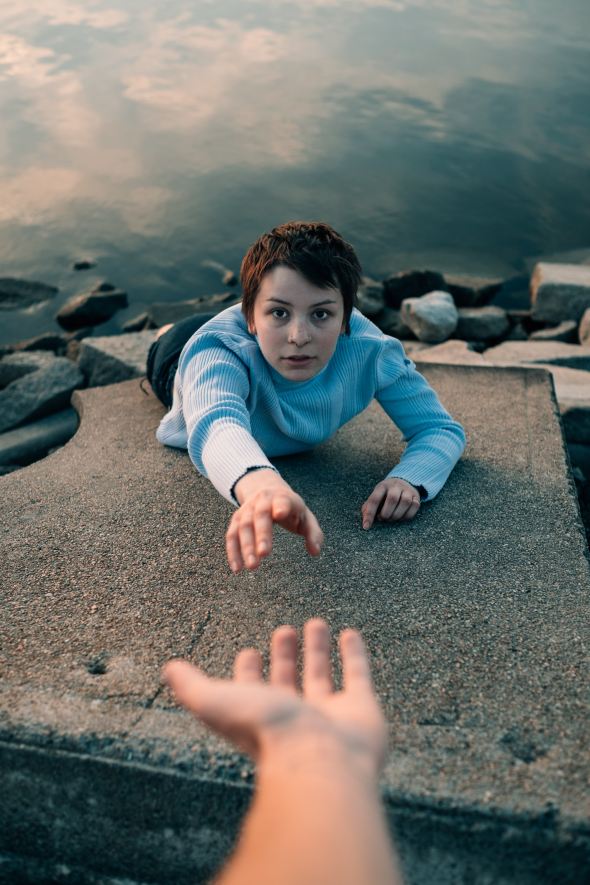
If you’re over sixty-five, falls are the leading cause of fatal injury and the most common cause of nonfatal trauma-related hospital admissions. Perhaps we’re worried about cancer or heart disease when we should be working on our balance (good core muscles) and watching out for throw rugs and showers with no grab bars. 

But what about the figurative fall. Devastation from this fall can come at any age. Perhaps you’ve lost your mate, your mother or father, been divorced, lost your job, have an at-risk child. Any of these circumstances, and many more, contribute to our sense of falling down. We may feel as if we’ve fallen down professionally, in our relationships, or as a parent. 

Toddlers, who are experts at falling down, have some lessons to teach us. Cry, holler if you must, feel sorry for yourself, ask someone to hold you, then, when you’re ready, get back on your feet and scurry off to embrace the rest of your life. You can do this!

Affirmation: I know how to survive a fall.

Coaching questions: What are your experiences with falling—both literally and figuratively? What have they taught you? How will you apply your learning? 

noah-buscher-AUM5vcnuYd4-unsplash.jpg

Photo by Noah Buscher on Unsplash

Ahhh, Nuts!!

Healthy eating isn’t a goal, it’s a way of living. Anonymous

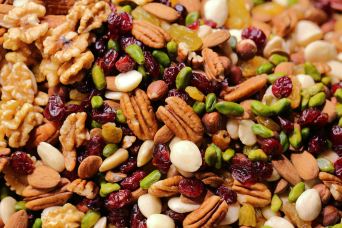
Tomorrow is National Nut Day. Yep, it’s a thing. For most of us, nuts are a terrific addition to our healthy eating regime. I keep bags of almonds, walnuts, and pecans in my freezer all the time (bulk buying is much more economical). However, to some (like my granddaughter, Tuscany) nuts are deadly. Those who have severe nut allergies have to carry epipens and be prepared at all times for an accidental nut encounter. Please be respectful of those with allergies. 

For those who can eat them, here’s what’s good about nuts: 

  1. Nuts are high in fat, low in carbs, and a great source of several nutrients, including vitamin E, magnesium, and selenium.
  2. Nuts contain antioxidants known as polyphenols, which may protect your cells  from damage caused by free radicals.
  3. Research suggest that nuts may reduce inflammation, especially in people with diabetes, kidney disease, and other serious health conditions.
  4. Many nuts are high in fiber, which can reduce disease risk, help keep you full, decrease calorie absorption, and improve gut health. 

Affirmation: I eat healthy nuts every day. Occasionally I will also act like a nut!

Coaching questions: Are nuts part of your healthy eating plan? If not, give them a try. 

maksim-shutov-pUa1On18Jno-unsplash

Photo by Maksim Shutov on Unsplash

Are You a Humble Person?

Be like the bamboo—the higher you grow the deeper you bow. Chinese Proverb

It seems humility has gotten a bad name in recent years. Rather than being associated with great leadership and noble actions, humility is frequently considered a weakness or disability. Yet, throughout history, many who are remembered and whose lessons and accomplishments have survived the ages, were men and women who demonstrated humility. 

Here are three signs that demonstrate humility:

  1. You lift others up. Rather than putting someone down in order to make yourself look more important, a humble person looks for ways to lift up others.
  2. You allow others to sing your praises. Although you own your success, you are quiet about your accomplishments.
  3. You admit your mistakes. When you are humble, you know you are not perfect. You recognize your mistakes and acknowledge them when they are pointed out.

Affirmation: I strive to be humble.

Coaching questions: Name a person, past or present, who you revere. Did their actions represent a humble spirit? If living a life of humility is important to you, how do you stay on track? In what ways can you applaud humility in others. 


daniel-klein-gako_x0wxmM-unsplash

Photo by Daniel Klein on Unsplash

Applying Mindfulness To Diet

Never doubt that a small group of thoughtful, committed citizens can change the world; indeed, it is the only thing that ever has. Margaret Mead, American cultural anthropologist

In my last blog, I wrote about mindfulness, the process of purposely bringing one’s attention to experiences occurring in the moment. As I apply mindfulness to various aspects of my life, I’m committing to adding one more—eating with sustainability in mind. 

Animal agriculture is the number two contributor to climate change—slightly more than all transportation pollution combined. What I put on my plate matters enormously—not just to my health but to the state of the environment. When I commit to eating a single planet-based meal each day I will save tens of thousands of gallons of water every year and drastically reduce my carbon output. I think it’s worth it. 

Affirmation: I will eat with sustainability in mind.

Coaching questions: What do you want to be more mindful about? What difference will it make?

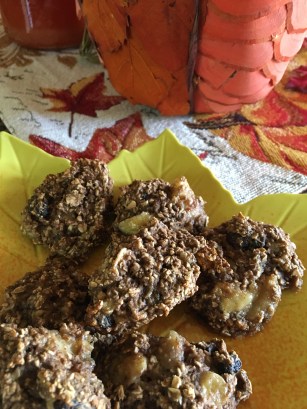
IMG_3538.JPGFat-free, sugar -free, gluten-free, animal product-free breakfast “cookies.”

Learn to Overcome Negative Thinking

You don’t have to believe everything you think. Why stay in a prison of self when the door is wide open? Let everything go. Let everything be. Dr. Bob Stahl and Steve Flowers, Mindful experts

According to Melody Wilding, Executive Coach for sensitive high-achievers, an effective way to work with negative thoughts is by following a simple mindfulness exercise including allowing negative thoughts to pass through your mind. As you do this, watch out for stories you’re telling yourself such as, “this always happens,” “I should have done….” or “I never do anything right.” Choose to use empowering rather than negative self-talk. 

Follow the advice of the mindfulness experts as you decide to let negative thinking go. When you practice releasing negative thoughts, be compassionate with yourself. Changing your mindset isn’t easy but being proactive about overcoming negative thinking can put you on a new, positive road.

Affirmation: I think positive thoughts.

Coaching questions: What can you do to help yourself think more positively? How will positive thinking benefit your life? What is a first step to letting go of negative self-talk? 

362049

The Surprising Benefits of Buying Flowers for Yourself

Flowers…are a proud assertion that a ray of beauty out values all the utilities in the world. Ralph Waldo Emerson

Many years ago, when I was a single mother, I read that putting flowers in your shopping cart was as important for your health as buying broccoli. I took the advice to heart and have been buying myself flowers ever since. Flowers bring me joy and feeling joyful helps me stay healthy in all ways.

Buying myself flowers also reminds me that I have the power to create positive feelings and beauty wherever I go. We attract what we believe we deserve. When we send out “love and flowers energy,” it returns to us in spades.

Affirmation: I can bring joy into my life.

Coaching questions: What brings you joy? What’s keeping you from getting it? 

tong-nguyen-van-a1nzDbO8wZs-unsplash.jpg

Photo by Tong Nguyen van on Unsplash

Going Beyond Awareness

I wouldn’t change you for the world, but I would change the world for you. Unknown parent of a child with Down syndrome 

October is Down Syndrome Awareness Month. Approximately one in every 700 babies in the United States is born with three copies of chromosome 21, instead of the usual two. Although children born with Down syndrome have an increased risk for certain medical conditions such as congenital heart defects, respiratory and hearing problems, Alzheimer’s disease, childhood leukemia and thyroid conditions, many of these conditions are now treatable, so most people with Down syndrome lead healthy lives. In fact, the life expectancy for people with Down syndrome has increased dramatically in recent decades from twenty five years in 1983 to sixty years today. People with Down syndrome attend school, work, participate in decisions that affect them, have meaningful relationships, vote, and contribute to society in many wonderful ways. 

All these facts help us become AWARE of Down syndrome. The broader goal, however, is ACCEPTANCE. How accepting are we of persons with differing abilities? As we champion quality educational programs, good health care, and give positive support to family members, people with Down syndrome have a greater opportunity to live healthy, fulfilling lives.  

Affirmation: I accept and champion persons with Down syndrome

Coaching question: When given the opportunity, what will you do to show awareness and acceptance of someone with Down syndrome? 


nathan-anderson-J3Xjyg5m8kY-unsplash.jpg