Six Life Lessons From Dr. Seuss

Be who you are and say what you feel because those who mind don’t matter and those who matter don’t mind. Theodor Seuss Geisel, pen name Dr. Seuss, American writer and illustrator (1904-1991)

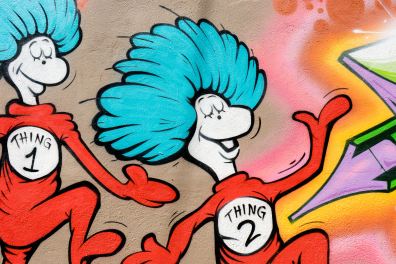
I grew up in the era of Dr. Seuss books and I still love the stories, the crazy characters, and the wisdom. In 1984 Geisel received a special Pulitzer Prize “for his contribution over nearly half a century to the education and enjoyment of America’s children and their parents.” The honor underscored the immense popularity of his works, which were perennial best sellers. According to various reports, by the early 21st century more than 600 million copies of Dr. Seuss books had been sold worldwide.

Here are a six important lessons imparted by Dr. Seuss: 

— Don’t cry because it’s over, smile because it happened.

—Unless someone like you cares a whole awful lot, nothing is going to get better. It’s not.

—A person’s a person, no matter how small.

— The more that you read, the more things you’ll know. The more that you learn, the more places you’ll go.

—Today you are you, that is truer than true. There is no one alive who is youer than you.

—You have brains in your head. You have feet in your shoes. You can steer yourself in any direction you choose. 

Affirmation: I can learn from a variety of sources.

Coaching questions: Which of these quotes speaks to you the most? Why? What’s your favorite Dr. Seuss book?
scott-webb-KesWZ9GyJ5k-unsplash.jpg


How to Pull Through Even When You’ve Been Punched in the Face

Everyone has a plan until they get punched in the face. Mike Tyson, professional boxer

Even if you think you’re prepared for the worst, there are times when life throws you a curve ball that smacks you right in the face. Here are a few reminders to help you pull through when you’re at your lowest. 

  • Reach out for help. Sometimes it’s hard to admit just how hard life is right now but hiding from the world isn’t the answer. Talk to a friend, clergy, therapist, or coach. What do you have to lose?
  • Even small changes can make a difference. Set small goals so you can experience progress and gain momentum. This forward movement will give you a boost of confidence and optimism. Make your bed, go for a ten minute walk, schedule lunch with a friend (even if you don’t feel up to it).
  • Are you strong enough to be grateful when you’re at your lowest? Think of one thing you’re grateful for even while you’re in the “pit.” Gratitude shifts the focus.
  • Remember the setbacks/crisis/challenges you’ve overcome in the past. Pat yourself on the back for coming out strong. You’ve done it before and you can do it again!

Affirmation: I can make it through this!

Coaching questions: How have you overcome severe life challenges in the past? How can you use this experience to address what is happening now? What’s one step you’ll take today to move  forward? 

baylee-gramling-5m4Z14SDL80-unsplash.jpg

Photo by Baylee Gramling on Unsplash

Are We No Better Than the Beasts?

This world of ours…must avoid becoming a community of dreadful fear and hate, and be, instead, a proud confederation of mutual trust and respect. Dwight D. Eisenhower, 34th President of the United States

Respect is the cornerstone of relationships; friend to friend, colleague to colleague, country to country. As we respect our ourselves and others, we are enriched in our journey. 

Respect is earned by standing up for what we believe, showing empathy for others, telling the truth, and demonstrating consideration for our differences. We must hold on to our mutual respect because, without it, Confucius says, “We are no better than the beasts.”

Affirmation: I respect myself and others.

Coaching question: In an age when disrespect has become the norm, what can you do to hold on to the power of respect in your life?

Dwight_D._Eisenhower,_official_photo_portrait,_May_29,_1959.jpg

Advice From Wilma Mankiller

Cows run away from the storm while the buffalo charges toward it—and gets through it quicker. Whenever I’m confronted with a tough challenge, I do not prolong the torment, I become the buffalo. Wilma Mankiller, the first woman elected to serve as chief of the Cherokee Nation.

“Do the hard thing first” is a common business productivity tip. “Feel the fear and do it anyway” is a mantra I frequently use in difficult situations. As we emulate the buffalo and run toward the sad feelings, difficult choices, or other challenges we face, we will not prolong the torment. We will gain peace of mind.

Life is short, take care of the difficult business of your life. Become the buffalo.

Affirmation: I can become the buffalo.

Coaching questions: What challenges in your life do you need to run towards right now? What step will you take today? How will you feel after you’ve faced the challenge?

markus-spiske-DKOG9IYTH7c-unsplash.jpg

Photo by Markus Spiske on Unsplash

The Importance of Sharing Stories

Sharing tales of those we’ve lost is how we keep from really losing them. Mitch Albom, American author

It is important for us all, no matter the loss we have experienced, to share the stories of the deceased. Telling the tales, reminiscing about the past, remember the details of a lost loved one is critically important to the welfare of the grieving. When photos are put away and silence about the past is the rule, ultimately everyone suffers. Recalling a loved one may initially bring tears of grief but ultimately those memories will bring tears of joy and help in recovery. 

I would know next to nothing about my mother if my father hadn’t shared with me who she was and how important she was in our life. Her picture was prominently hung above his bed, a photo album of our brief eight years together was readily accessible to me. I’m thankful for my dad’s openness and willingness to help me know my mother and keep her present in my life. 

Affirmation: I remember.

Coaching questions: What tales do you tell to keep your past loved ones present? If your family doesn’t speak about a loved one who has died, to whom might you turn to give you information and share your memories? 

etty-fidele-nF8eo2nX374-unsplash.jpg

Photo by Etty Fidele on Unsplash

What Does Friendship Mean to You?

Of all the things which wisdom provides to make life entirely happy, much the greatest is the possession of friendship. Epicurus, Philosopher

I’m very fortunate to have good friends. I just returned from spending a fantastic, long weekend on Block Island, Rhode Island with two college girlfriends. Being an only child, friends are sisters to me and I cherish them. Interpreting Epicurus, I believe a wise woman seeks friends with whom she can be herself, women (and men) who share her joys and sorrows, who help her become a better person, who make her heart sing. 

Friends take time, energy, and cultivation (just like a beautiful garden) but, believe me, friends will enhance your life for the rest of your life.

Affirmation: I seek out and cultivate friends.

Coaching questions and request: What does friendship mean to you? If you feel you’re lacking good friends, what steps can you take to attract friends to your life? Tell a friend how much they mean to you. 

fullsizeoutput_fbc.jpegFriends for fifty-six years

Remembering As We Serve

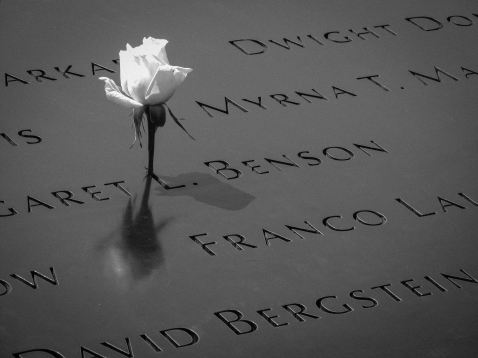
If we learn nothing else from this tragedy, we learn that life is short and there is no time for hate. Sandy Dahl, wife of Flight 92 pilot, Jason Dahl

Today, in the United States and elsewhere in the world, we are remembering the 2,977 people who were killed during the 9/11 coordinated terrorist attacks. Unfortunately, deaths continue to mount. Since 9/11, 241 New York City policemen have died from 9/11 related illnesses. This is ten times more than were killed in the attack and the number continues to grow. Twenty-two NY firefighters have died since 9/11 from related causes, 345 were killed in the attack. Let’s not forget those who continue to fight for their lives. 

In addition to remembrance, this day is also dedicated to community service. President Obama said, “Even the smallest act of service, the simplest act of kindness, is a way to honor those we lost, a way to reclaim the spirit of unity that followed 9/11.”

Affirmation: I remember and honor 9/11 through my service to others.

Coaching questions: What is one small act of service or kindness you will provide to help reclaim the spirit of unity? How does your service/kindness enrich your life? 

ben-lei-rpsS_bx-Za8-unsplash.jpg

Photo by Ben Lei on Unsplash

What’s a Key to Successful Aging?

If you don’t like something, change it. If you can’t change it, change your attitude. Maya Angelou, author

As I speak with women of the Silent and Greatest Generations, I’m learning that attitude is a significant factor in their successful aging. Perhaps, attitude is even a greater influencer than what they eat or how much they exercise.

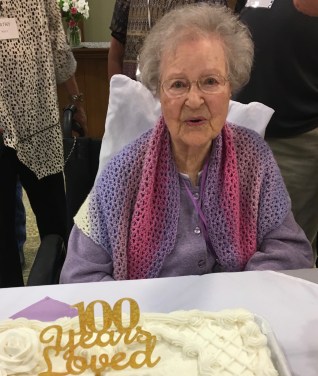
Maxine, a healthy centenarian with whom I spoke, gave the advice to “live one day at a time.” She embraced the shikata ga nai I wrote about in my last blog—accept what can’t be helped and keep putting one foot in front of the other. Another vibrant woman, age ninety-one, said, “Make it happen.” Her life continues to be built around recognizing  needs in her community then addressing the need. As a younger woman, she helped start a church, the local library, park district (including senior center and teen center), women’s club, artists’ association, historical society and museum. The day I interviewed her, she was preparing for an art show and sale. 

Affirmation: My attitude contributes to my successful aging. 

Coaching questions: What attitudes move you towards aging with grace? What attitudes do you need to tweak? 

fullsizeoutput_f98.jpeg

My vibrant friend, Maxine, on her birthday.


What’s the Hidden Cause of Your Fatigue?

Our fatigue is often caused not by work, but by worry, frustration and resentment. Dale Carnegie,   self-help writer and lecturer

In Japanese, shikata ga nai, means “it cannot be helped” or “nothing can be done about it.” It’s a phrase used to acknowledge an undesirable situation and a reminder that, when something is beyond our control, we need to mentally move on rather than let worry, frustration, and resentment wear us down. 

Scientific studies agree that dwelling on negative events may cause depression and other physical symptoms. Having recently experienced flooding in my condo, I know that mentally moving on is easier said than done. However, I’m striving to adopt shikata ga nai as a lesson in living a healthier, happier life. 

Affirmation: I mentally move on when a situation is beyond my control.

Coaching questions: Examine your fatigue. Consider it’s source. What situations or relationships beyond your control are causing you to obsess, worry, or lose sleep? What’s one step you can take to move towards adopting shikata ga nai?

anaya-katlego-mHdDmdeyVb4-unsplash.jpg

Photo by Anaya Katlego on Unsplash

Self Compassion Paves the Way For Self Help

The only sustainable path to achievement and happiness is to cultivate self compassion. Nick Wignall, Clinical psychologist

In writing a self help book about mother loss, I’m asking readers to consider ten steps to help them move forward after loss. Pursuing self improvement by reading books, attending groups, or watching youtube is a noble pursuit.

However, as Wignall says, cultivating self compassion must go hand in hand with self improvement. In order to have lasting growth and change, we must learn to be gentle with ourselves, participate in positive self talk, and treat ourselves as we treat our friends.

Affirmation: I travel the road to self improvement by being gentle with myself.

Coaching questions: In what ways do you embrace yourself as you pursue change in your life? How can you improve your inner dialogue? 

bruce-mars-AndE50aaHn4-unsplash.jpg

Photo by bruce mars on Unsplash