What’s a Key to Successful Aging?

If you don’t like something, change it. If you can’t change it, change your attitude. Maya Angelou, author

As I speak with women of the Silent and Greatest Generations, I’m learning that attitude is a significant factor in their successful aging. Perhaps, attitude is even a greater influencer than what they eat or how much they exercise.

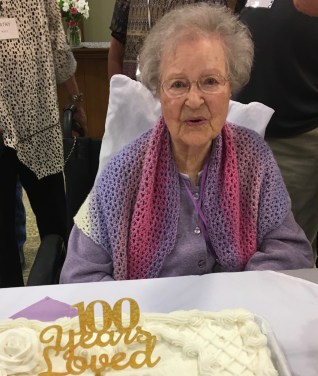
Maxine, a healthy centenarian with whom I spoke, gave the advice to “live one day at a time.” She embraced the shikata ga nai I wrote about in my last blog—accept what can’t be helped and keep putting one foot in front of the other. Another vibrant woman, age ninety-one, said, “Make it happen.” Her life continues to be built around recognizing  needs in her community then addressing the need. As a younger woman, she helped start a church, the local library, park district (including senior center and teen center), women’s club, artists’ association, historical society and museum. The day I interviewed her, she was preparing for an art show and sale. 

Affirmation: My attitude contributes to my successful aging. 

Coaching questions: What attitudes move you towards aging with grace? What attitudes do you need to tweak? 
fullsizeoutput_f98.jpeg

My vibrant friend, Maxine, on her birthday.

 

What’s the Hidden Cause of Your Fatigue?

Our fatigue is often caused not by work, but by worry, frustration and resentment. Dale Carnegie,   self-help writer and lecturer

In Japanese, shikata ga nai, means “it cannot be helped” or “nothing can be done about it.” It’s a phrase used to acknowledge an undesirable situation and a reminder that, when something is beyond our control, we need to mentally move on rather than let worry, frustration, and resentment wear us down. 

Scientific studies agree that dwelling on negative events may cause depression and other physical symptoms. Having recently experienced flooding in my condo, I know that mentally moving on is easier said than done. However, I’m striving to adopt shikata ga nai as a lesson in living a healthier, happier life. 

Affirmation: I mentally move on when a situation is beyond my control.

Coaching questions: Examine your fatigue. Consider it’s source. What situations or relationships beyond your control are causing you to obsess, worry, or lose sleep? What’s one step you can take to move towards adopting shikata ga nai?

anaya-katlego-mHdDmdeyVb4-unsplash.jpg

Photo by Anaya Katlego on Unsplash

Self Compassion Paves the Way For Self Help

The only sustainable path to achievement and happiness is to cultivate self compassion. Nick Wignall, Clinical psychologist

In writing a self help book about mother loss, I’m asking readers to consider ten steps to help them move forward after loss. Pursuing self improvement by reading books, attending groups, or watching youtube is a noble pursuit.

However, as Wignall says, cultivating self compassion must go hand in hand with self improvement. In order to have lasting growth and change, we must learn to be gentle with ourselves, participate in positive self talk, and treat ourselves as we treat our friends.

Affirmation: I travel the road to self improvement by being gentle with myself.

Coaching questions: In what ways do you embrace yourself as you pursue change in your life? How can you improve your inner dialogue? 

bruce-mars-AndE50aaHn4-unsplash.jpg

Photo by bruce mars on Unsplash

The Value of Time Spent Alone

You cannot be lonely if you like the person you’re alone with. Wayne W. Dyer

I don’t totally agree with Mr. Dyer’s quote. I think we all feel lonely from time to time no matter what our relationship is with ourselves. I used the quote because I think there is genuine value in time spent alone. Growing up as an only child with one parent meant I had plenty of alone-time. Throughout my life, I’ve welcomed time spent with just me. I like the quiet, the time for reflection, creativity, and acceptance. Alone-time helps me understand myself and others. I’m happy being in my own company.

Frequently when people are afraid of being alone they pursue relationships to escape themselves. When you’re comfortable in your own company, you can be with others without using them as a means of escape. Your relationships will be stronger when you learn how to enjoy your own company. 

Affirmation: I enjoy my own company. 

Coaching questions: How do you feel when you’re alone? If you’re answer is, “I hate being alone,” what steps will you take to learn how to enjoy your own company? 

nathan-anderson-XIInMAITuOc-unsplash.jpg

Photo by Nathan Anderson on Unsplash

How To Stay Peaceful

Peace is the result of retraining your mind to process life as it is, rather than as you think it should be. Wayne W. Dyer, self-help author and motivational speaker

Pipes in newer buildings shouldn’t burst in the middle of the night at the end of summer, hurricanes shouldn’t threaten people, homes, and livelihoods, people shouldn’t have to suffer with disease, daughters shouldn’t have to mourn their mothers, a critical natural resource shouldn’t be burning. But these things are happening to you, me, and others. 

I’m writing this from a Residence Inn while our condo is drying out after a flood. While here, I’m keeping an eye on the weather as a hurricane approaches the state where I live most of the year. This is the reality of my life at the moment. I’ve had worse days, to be sure, and I’ve had better. I’m not thinking, “why me?” because I know bad things happen to all of us. I don’t believe that I “should” have a smooth life. I’m grateful for the days when the sailing is smooth and I accept the facts as they present themselves. As Dyer says, peace comes when we process life as it is. I’m working on staying peaceful. 

Affirmation: I process life as it is.

Coaching question: If the “shoulds” are sabotaging your peace, what do you need to do to retrain your thinking to accept, or learn to peacefully live with, the inevitable difficulties of life? 

nasa-i9w4Uy1pU-s-unsplash.jpg

Photo by NASA on Unsplash 

Remember–Super Heroes Are NOT Real People

The gradual losses experienced by caregivers can lead to sadness, depression, anger, guilt, sleeplessness and other physical and emotional problems. Family Caregiver Alliance Site

Caregivers are frequently referred to as heroes, even super-heroes. But, they aren’t. Caregivers are not super-human or intended to be heroes. They are simply human beings doing their best to take care of someone they love whose brain is not working properly. Perhaps they may wish they had super powers or mystical abilities but to stay sane they must acknowledge that they can’t fix all the challenges that accompany a dementia diagnosis.

The Family Caregiver Alliance recommends that a caregiver identify her losses, her feelings about the losses, and her corresponding grief. The Alliance also recommends keeping a journal, attending a support group, and doing relaxation exercises. If you’re a caregiver, my heart goes out to you as you deal with the challenges you face.

Affirmation: I take care of myself as I take care of another.

Coaching questions: Whether you are a caregiver or not, in what ways do you try to be a super-hero? How’s that working for you? If you are a caregiver, what do you do to take care of yourself? What else do you need to do to remain healthy?

paul-stickman-P3ePH4bnbcs-unsplash.jpg

Photo by Paul Stickman on Unsplash

A Few Good Decisions Can Make a Big Difference

You only have to get things right a few times. Twelve investment decisions in my career have made all the difference. Warren Buffett, third richest person in the world

As I embrace my seventy-fifth year, I’m considering what past decisions help me sleep well and wake up smiling. Here are a few:

  1. I decided to do everything I can to stay mentally and physically healthy while living each day to the fullest knowing that, like everyone, my days are limited. I learned a long time ago that people DO die—including me.
  2. I decided I want to leave this Earth with no unfinished business. I choose to keep a clean slate with people I care about, make sure my financial life is in order, and have no unworn clothes in the closet with the tags on.
  3. I decided to be grateful for all that’s been given to me, including loved ones, rather than bitter, sad, or resentful about what’s been taken away. 
  4. I decided to claim the fact that Jesus died for my sins and, because I’ve asked Him, I am forgiven. This decision alone has kept me sane and joyful.
  5. I decided to surround myself with positive, trustworthy, caring people.
  6. I decided to stay active with friendships, creative endeavors, community activism, nature, and books.

Affirmation: A few decisions matter.

Coaching questions: What decisions have you made that make a difference in your life? Are there some others you need to make (it’s always a work in progress)? What’s holding you back? 

court-prather--5_sGvilNME-unsplash.jpg

Photo by Court Prather on Unsplash

How To Negate Negativity

The purpose of life is to live it, to taste experience to the utmost, to reach out eagerly and without fear for a newer and richer experience. Eleanor Roosevelt

Did you know that your brain is built to be more sensitive to unpleasant news than it is to pleasant? You’ll probably remember the rebuke longer than you’ll remember the praise. Sometimes, the sadness of death will impact a person more than the feelings of joy and warmth they received from their loved one.

This bias for negativity generally causes us to worry more than necessary, fear the worst, and focus on bad narratives for too long. When we allow this to happen, we rob ourselves of experiencing the joys around us.

Eckhart Tolle, spiritual teacher and author, writes, “All negativity is caused by an accumulation of psychological time and denial of the present. Unease, anxiety, tension, stress, worry — all forms of fear — are caused by too much future, and not enough presence. Guilt, regret, resentment, grievances, sadness, bitterness, and all forms of non-forgiveness are caused by too much past, and not enough presence.”

Affirmation: I feel the joy.

Coaching questions/requests: Are you experiencing an abundance of anxiety, stress, or worry? What about sadness, bitterness, regret? This week, take time to be aware of your negativity. As you do so, refocus your thoughts by meditating, having an attitude of gratitude, establishing a “worry time” or writing down your negative thoughts to get them out of your head. Some negativity will hang around for a while and that’s ok. What counts is your continued effort to redirect and reprogram. You will see the effects of it over time, just stick with it.

bruno-aguirre--RrsXC5aErw-unsplash.jpg

Photo by Bruno Aguirre on Unsplash

Happy 100th Birthday, Mom!

I was forced to live far beyond my years when just a child, now I have reversed the order and I intend to remain young indefinitely. Mary Pickford, American actress

My mom would have been 100 years old today had she not died at the age of thirty-four. Even though she had a short life, she lived it well. She was a college graduate and a Rosie the Riveter during WWII, attaching the fabric to the wings of fighter planes. Growing up without a mother (her mother died when she was three), she had to learn housewife skills after she was married including how to cook what was available to purchase with a ration card (once, she bought horse meat thinking it was a bargain piece of beef.) 

I’m most grateful for her extreme good sense to marry my dad, Leon Horn. He turned out to be the best dad anyone could hope for. In the eight years she was my mom she taught me many things by her example. For instance, she taught me how to entertain graciously, appreciate girlfriends, and have good manners. I don’t have the usual regrets like not having her at my wedding or the birth of my children. However, I wish I could have seen her dance, I wish she could know how wonderful her grandchildren turned out, and I wish we could go for a birthday lunch and I could order her lamb chops with mint sauce. 

Affirmation: I had a good mom.

Coaching questions: What are your favorite mom-memories? What are the most important lessons you learned from your mom? If your mom is still alive, have you told her lately that you love her?

fullsizeoutput_b01.jpeg

Think You’re Too Old to_______, Think Again

Growing old is no more than a bad habit which a busy person has no time to form. Andre Maurois, French author

My next book project (I’m a glutton for punishment) is telling the stories of women from the Greatest and Silent Generations. Basically, women eighty years old and up. After writing a few similar stories for a newspaper, I discovered how rewarding it is to honor these women for what they have accomplished and are accomplishing. In the next few weeks I will have the honor of interviewing two women over 100. I can’t wait to hear their stories!

I haven’t interviewed these women (yet), but if you’re feeling “old,” consider these examples:

— Julia Hawkins, 103, oldest woman to compete on an American track – started running at 100.

— Nola Ochs recently earned her bachelor’s degree at 95 then went on to earn her master’s at 96 – moved into the campus dorms.

—Sister Madonna Bruder has completed over 45 Ironman competitions and continues to compete at 86.

—Harley Davidson rider, Gloria Tramonten Struck, 90, intends to embark on a cross country ride at 100.

—Oldest newly weds are George (103) and Darren (91) Kirby.

It’s not all about “doing,” it’s also about becoming and contributing. More on that another time. 

Affirmation: Age is just a number.

Coaching questions: What does age mean to you? How do you feel about growing older? What do you want to accomplish as you age?   

david-vilches-WbKFMGyuw_E-unsplash.jpg

Photo by David Vilches on Unsplash