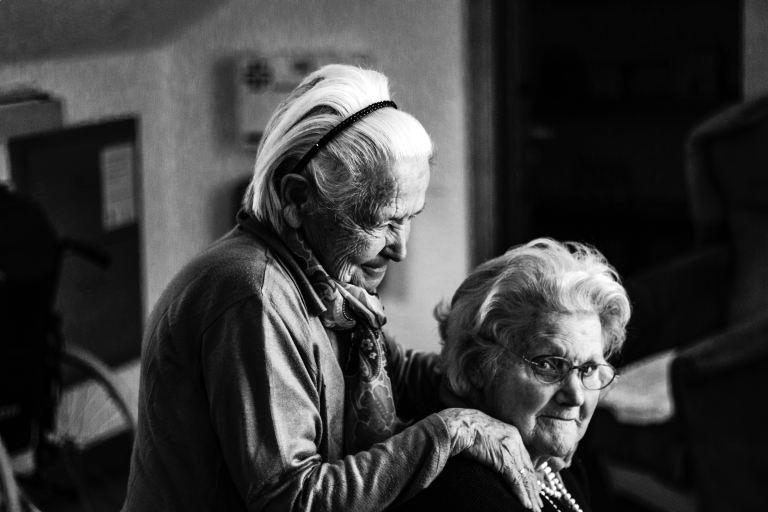
Are You Feeling Lonely?

The most terrible poverty is loneliness, and the feeling of being unloved. Mother Teresa

Nearly half of Americans report that they sometimes or always feel isolated or left out. But this loneliness epidemic isn’t just happening in America. Experts from many countries are looking at the scientific facts of loneliness and what health implications the emotion carries including heart disease, depression, and Alzheimer’s. 

Michelle H. Lim, scientific chair of the Australian Coalition to End Loneliness, states, “You might meet people and be embedded within families, be married, but you might still feel a sense of disconnection from other people.” Lim sees loneliness as more to do with the quality of the relationships people hold than the quantity of people they’re encountering day to day. “You can have social isolation but not feel lonely, or you can feel lonely and not be socially isolated.”

Hiding our loneliness from each other makes the problem worse. December is a particularly difficult time for those who feel lonely. Be aware of the people around you and notice who might be feeling isolated and lonely. Experiencing a recent loss of a loved one can magnify these feelings. Ending on a positive note, Lim says, “Humans are designed to be kind to each other, and we’re designed to rely on each other and to thrive.”

Affirmation: I strive to be kind and to help others thrive.

Coaching questions: When have you felt lonely? What has caused you to feel this way? If you know someone who is lonely, how will you reach out to them? 

nik-macmillan-umQlbZ4JiDI-unsplash

Photo by Nik MacMillan on Unsplash

Beyond Forgetfulness

Forgetfulness is a form of freedom. Kahlil Gibran, Lebanese writer

How often do we say, “I forgot….the keys, the sweater, the birthday, a name, a phone number?”  For most of us of a certain age, some forgetfulness is routine. But what about those whose lives are slipping away, those who have passed up simple forgetfulness and are living in a foreign world, one without memories?

As I interviewed daughters for my book on mother loss, I found it particularly heartbreaking talking with those who are losing their mothers to Alzheimer’s disease. One woman said, “My mother is lost to me but not gone.” This mother had forgotten her daughter and everyone else important to her yet she was alive and may live for many more years. One daughter’s story exemplified Gibran’s quote. She said, “My mother used to have great anxiety and worry. As a result, she was often angry and depressed. Now, because of her dementia, she is free of worry and is experiencing joy.” Of course, this daughter knows her mother’s situation will worsen but, in the meantime, she is embracing the moment.

Perhaps you have lost or are losing your mother (or someone else you love) to this terrible disease. I can’t imagine what pain you’re experiencing but I can stand beside you and support you through it.

Affirmation: I’m grateful that my brain is alive and well.

Coaching questions: What does your ability to think, remember, reason mean to you? What can you do to support those who are affected by Alzheimer’s? 

eberhard-grossgasteiger-iIFLDQmXPiw-unsplash.jpg

Photo by eberhard grossgasteiger on Unsplash

Have a Funeral In Your Heart

The few trees still upright were stripped of their branches, lonely flagpoles without a nation to claim them. Mike Mullin, author

More than three hundred twisters have wrecked havoc across the midwestern US states over the last two weeks alone. This is in addition to the unprecedented flooding across several states. People are in mourning for their possessions, their way of life, and the idea of life being the way they wanted it to be. 

In Asian philosophy, this mourning of the loss of how we thought life would be is called Ego Death. I profoundly experienced this when I was divorced over twenty-five years ago. I mourned the loss of a nuclear family and how I thought my life would be. Those who have lost their homes, possessions, livelihood, or their way of life must be willing to have a funeral in their heart. Grieving the loss of our expectations, as well as possessions or even loved ones, is an important step towards recovery. There is no way around grief. To move forward, the path is straight ahead. 

Affirmation: I accept the importance of grieving no matter what the loss.

Coaching question and request: What have you lost that you have yet to grieve? This could be something less profound than a parent, child, or spouse. Perhaps it is your innocence about the world. The loss of a friend, your most prized possession, or your way of life. Take a moment to think about your unfinished business around grief. Then do the work of having a funeral in your heart. 

nikolas-noonan-682177-unsplash.jpg

Photo by Nikolas Noonan on Unsplash

Will Your Life Be Filled With Lemons or Will You Make Lemonade?

You either get bitter or you get better. It’s that simple. You either take what has been dealt to you and allow it to make you a better person or you allow it to tear you down. The choice does not belong to fate. It belongs to YOU. Josh Shipp, youth motivational speaker

Of course, the natural and appropriate response to loss is sadness and grief. However, it’s been my experience that when the focus remains on the one you lost, there is less despair and depression than when the focus remains on yourself. When we get stuck in saying or thinking, “Why me? It’s not fair. How can I possibly cope?” we stymie our ability to move forward. So much depends on how we respond to our experience. 

The motherless daughters I interviewed who moved forward with their lives, frequently talked about all their mothers gave them, even if their time with them was short, rather than all they lost because of her death. Both conversations are appropriate but focusing on the former seemed to lead to more joy. 

Affirmation: I choose to get better.

Coaching questions: What is your response to loss? Is it working for you? What will help you focus more on the lost loved one and less on yourself?

IMG_2955.jpg


Use Creativity To Heal Yourself

Creativity is something that already exists inside each of us. It needs only to be uncovered. Gwen Coleman Detwiler, opera singer

One of the steps to recovering from loss is to apply your creativity. This may mean writing about your experience, tapping into the visual arts, engaging in dance or music to express your grief. You can also apply your creativity to establish a new or different life for yourself without a spouse, mother, or other loved one. 

To be human is to be creative. As we guard against pain or failure we block our vulnerability and creativity. Instead, be curious about your altered life and how you might use your creativity to express your feelings and explore new avenues for joy.

Affirmation: I am creative.

Coaching questions: How have you experienced your creativity in the past (think back to childhood if necessary)? What did it mean to you? What creative outlet will you use to heal yourself? 

darius-bashar-503822-unsplash.jpg

Re-writing Your Life

Never, never, never, never give up. Winston Churchill, British statesman

I’m doing a serious re-write of my book after it returned from three weeks in the hands of my capable editor. As I rethink the genre, the premise or through-line, the structure, I’m reminded of how this work is an analogy for re-writing one’s life after a significant loss. When your mother, husband, child or other significant person in your life dies, parts of your life need to be re-written. Perhaps you’re no longer defined as a care-giver or a partner and you’re wondering who you are and what you’re going to do without your former roles. 

Take a moment and reconnect with what you like and don’t like, how you see yourself in the future, and what contributions you want to make. Re-writing is not for the faint of heart. It takes perseverance, creativity, a determination to succeed and, in my case, prayer. Never, never give up.

Affirmation: I can re-write my life.

Coaching question/request: If you’re recovering from a recent loss, what steps are you taking to re-write your life? Take a moment to journal your thoughts on what’s next. Write about specific ways you can move forward—even if it is just for today or this week. 

IMG_2666

Permission to Laugh Out Loud

Once you can accept the universe as matter expanding into nothing that is something, wearing stripes with plaid comes easy. Einstein, German theoretical physicist

Einstein is the last person I’d expect to show up under humorous quotes. What a revelation—revelation—get it? As you can tell, I’m not a particularly funny person. Unless humor is direct, it eludes me. However, I truly admire and appreciate funny people. Those who cause us to laugh out loud have a precious gift we can all enjoy.

 If you’ve recently experienced loss, know that it is acceptable, and even desirable, to laugh out loud. Your momentary joy and laughter doesn’t negate the significance of your loss. 

Affirmation: I love to laugh.

Coaching questions: What tickles your funny bone and makes you laugh? If you don’t have enough laughter in your life, what can you do to bring it in? What movie or show can you watch, what friend can you call, what book can you read? Find something today to make you laugh out loud and bring tears to your eyes.

The Paper Heart

The reality is that you will grieve forever. You will not “get over” the loss of a loved one; you will learn to live with it. You will heal and you will rebuild yourself around the loss you have suffered. You will be whole again but you will never be the same. Nor should you be the same, nor should you want to. Elizabeth Kubler-Ross, psychiatrist, pioneer in near-death studies and author of  On Death and Dying

I interviewed a 33-year-old woman today about her mother loss experience. She was 12 when her mother died. Articulate and introspective, the young woman was wise beyond her years. When I asked her about advice for other motherless daughters, she told me this story.

“When I was in second grade, my teacher used the illustration of a torn, red, paper heart to show us what it is like when we mistreat others. She then taped the heart back together and showed us how, even though the heart is whole again, the tear does not completely disappear. I think recovery from losing a mother at a young age is similar. You heal from your broken heart, but you are never quite the same, a part of the brokenness and sadness remains always.”

Affirmation: I can heal.

Coaching questions: How have you patched up your broken heart? How are you different because of your loss?

IMG_2474.JPG

I Just Don’t Know What To Say

Who we have once enjoyed we can never lose. All that we love deeply becomes a part of us. Helen Keller, American author, political activist, first deaf-blind person to earn a bachelor of arts degree

Helen Keller has the right idea when it comes to words of sympathy. Offering supporting words to friends who are in emotional pain due to the critical illness or death of a loved one can be fraught with peril. Saying things like, “she’s in a better place” or “everything happens for a reason” or “I know just how you feel,” can be hurtful to many. Telling your own Super Griever story is not helpful either. Sharing a memory of the loved one, showing concern for the caregiver/grieving person herself, or saying nothing at all but being present is good too.

Don’t let “not knowing what to say” keep you from being a comforting person in your friend’s life. Send a card or a text, show up with tacos, offer to take the dog for a walk or their kids to a movie. Don’t be afraid to say, “I just don’t know what to say.” Trust me, she’ll get your message.

Affirmation: I care about my friends.

Coaching questions: When you have experienced a loss, what was helpful and comforting to you? Give some thought right now about how you might respond to a grieving or completely overwhelmed friend. Your words and actions will be ready when you need them in the moment.

You Are Not Alone

We are lonesome animals. We spend all of our life trying to be less lonesome. One of our ancient methods is to tell a story begging the listener to say — and to feel–“Yes, that is the way it is, or at least that is the way I feel.” You’re not as alone as you thought. John Steinbeck, author, recipient of the Nobel Prize for Literature

One purpose of writing my book, When Lightning Strikes, is to help people feel connected and understood…. to be able to say, “Wow, I’m not as alone in my experience as I thought!” 

Loss is universal. Whether it is parent loss, sibling loss, spouse loss, friend loss, health loss, or even pet loss (I just met an author who is writing a memoir of her dog)…we all have had losses in our life and, if we live long enough, will have losses in the future. Although I’m focusing on mother loss, because that is what I know best (although I have first hand experience with spouse, friend, and father loss as well), the stories of loss are universal. The questions, the grief, the guilt, the recovery, the empathy…all apply across the loss experience. 

Affirmation: I am not alone.

Coaching questions: If you have not “told your story” of loss to another caring person, consider doing so. How might the “telling” help you in your recovery? If you have done this and found it beneficial, how might you help another person tell their story?