Blog

Learning To Live With Loss

What we have once enjoyed we can never lose; all that we deeply love becomes a part of us. Helen Keller

(This is a repurposed blog from a few years ago but I thought the message important enough to repeat.)

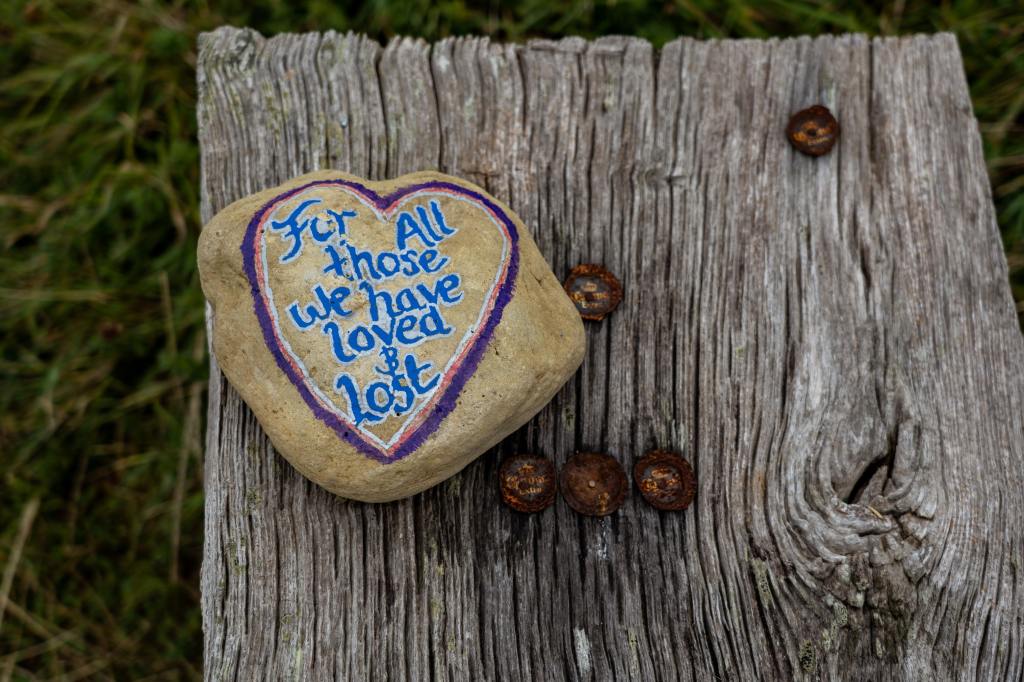
Loss of a loved one is always difficult. It’s the price we pay for having a great love. However, we can be joyful again as we learn to accommodate to life after loss.

C.S. Lewis in A Grief Observed likened accepting your life after loss to a man learning to walk after a leg has been amputated. Lewis writes, “The amputee may get along quite well, may even become facile and agile on crutches or on a carefully designed artificial limb. But the amputee must accommodate to permanent loss. He or she will never walk as before; repair does not mean a return to the way things were.”

Our life will never be as it was before our loss but those we love are always a part of us. 

Affirmation: I can learn to be joyful again after loss.

Coaching questions: How are you different after loss? In what ways have you accommodated to your loss? What will you do next? 

How Much Time Do You Spend On Your Phone?

The average American checks her phone 262 times a day. reviews.org

Two-hundred-sixty-two times a day!! Yikes! Tapping into all those news alerts, social posts, and texts comes at a big price. According to Johann Hari, author of Stolen Focus: Why You Can’t Pay Attention—and How to Think Deeply Again, cites research that it can take about 23 minutes to get back to the same level of attention we started with. 

The result? “We’re constantly living with profoundly degraded brainpower,” Hari writes. Suggestions on how to solve nomophobia (can’t be without my phone), a psychological condition that’s up for inclusion in the American Psychiatric Association’s handbook, include:

—Set a timer that signals it’s time to move away from your phone

—Install an app to block you from the internet for periods of time

—Lay your silenced phone upside down so you won’t be distracted by alerts on the screen

Lastly, connect to loved ones with your eyes! You’ll see clearly what matters most. 

Affirmation: I will be conscious of my phone time.

Coaching questions: Is time on your phone affecting your work or relationships? If you think you need to cut down on phone time, how will you accomplish this? When will you start?

Photo by Neil Soni on Unsplash 

Changing Bad Habits

’Tis easier to prevent bad habits than to break them. Benjamin Franklin

According to experts, about forty percent of our daily life is habitual action.

Gretchen Rubin, author of Better Than Before: Mastering the Habit of Our Everyday Lives, writes, “Habit is a good servant but a bad master.” In other words, habits can help us make positive change but they can also be saboteurs of our progress.

Often, the most effective way to adopt a new habit is to replace a bad one with a better one. Diverting a river is better than damming it up. Watch for triggers that might set you back including boredom and stress.

Affirmation: I can change my habits.

Coaching questions: What bad habit would you like to change? What good habit would you like to develop? What difference will it make in your life? Is the change powerful enough to pull you through at least sixty days of developing a new path? Commit to it. You can do this!

Ever Let Your Mind Wander?

Don’t tell me the moon is shining; show me the glint of light on broken glass.  Anton Chekhov, author

Did you know that in the U.S.A., February’s full Snow Moon reaches peak illumination today? For the best view of this Moon, look for it tonight; it will drift above the horizon in the east around sunset and reach its highest point in the sky around midnight

The name, Snow Moon, obviously comes from the typically heavy snowfall that occurs in February in many parts of the U.S. 

Names for this month’s Moon have historically had a connection to animals. The Cree traditionally called this the Bald Eagle Moon or Eagle Moon. The Ojibwe Bear Moon and Tlingit Black Bear Moon refer to the time when bear cubs are born. 

Another theme of this month’s Moon names is scarcity. The Cherokee names of Month of the Bony Moon and Hungry Moon give evidence to the fact that food was hard to come by at this time.

Affirmation: Sometimes it’s fun to let our minds wander.

Coaching questions/request: What is peaking your interest today? Do you allow time for your mind to wander into new territory? Be grateful if tonight’s moon isn’t Hungry Moon for you.

Photo by Javardh on Unsplash 

Bring On The Tears!

Cry. Forgive. Learn. Move on. Let your tears water the seeds of your future happiness. Steve Maraboli, author 

“Crying activates the body in a healthy way,” says Stephen Sideroff, Ph.D., a clinical psychologist at UCLA and director of the Raoul Wallenberg Institute of Ethics. “Letting down one’s guard and one’s defenses and [crying] is a very positive, healthy thing. The same thing happens when you watch a movie and it touches you and you cry… That process of opening into yourself… it’s like a lock and key.”

This must be good news for those of you who are prone to tears. Growing up in a “stoic” family environment, for me tears have always felt like a show of weakness and I avoid them if possible. However, there’s nothing as satisfying as a good cry when watching a sad or heartfelt movie alone. Or, an Olympic athletic realizing her lifelong dream. 

Affirmation: Crying is a healthy thing. 

Coaching questions: How do tears (your own and other’s) affect you? When do you give yourself permission to cry?

Photo by Javier Martínez on Unsplash 

Take a Moment to Share Your Story

We are lonesome animals. We spend all of our life trying to be less lonesome. One of our ancient methods is to tell a story begging the listener to say—and to feel—‘Yes, that is the way it is, or at least that is the way I feel.’  You’re not as alone as you thought. —John Steinbeck, author

Not only does sharing important stories from our past help us feel less lonesome, as Steinbeck says, it also helps us move forward after challenging life events. As a friend listens, nods, understands, or personally relates to our story, we feel validated. We begin to understand how our experience is not only meaningful to us but also to another person. 

In addition to sharing with trusted indivIduals, invite storytelling into your groups. Use a “Getting to Know You” question or share a story related to the topic at hand. This can happen in book clubs, Bible studies, planning committees, wherever caring people congregate. Tell your stories and invite others to do the same. 

Affirmation: I benefit from telling my story.

Coaching questions: To whom can you tell your mother loss story? What difference will it make?

Photo by Abo Ngalonkulu on Unsplash 

What Does National Freedom Day Mean To You?

Those who deny freedom to others deserve it not for themselves, and, under a just God, cannot long retain it. Abraham Lincoln, letter to H.L. Pierce, April 6, 1859.

Today is National Freedom Day in the United States. It’s the day we celebrate freedom from slavery, and recognize America as a symbol of liberty. On this day, Abraham Lincoln signed a joint House and Senate resolution that later became the 13th Amendment to the U.S. Constitution.

In a time when our voting rights are being restricted, some public school districts are questioning whether to teach the truth about our history, and books dear to our hearts are being banned in schools and libraries, National Freedom Day takes on renewed significance.

Affirmation: I support freedom..

Coaching questions: Why does freedom mean to you? What will you do to protect your freedom? 

Social History Archives

Another Definition of Meek

Blessed are the meek, for they will inherit the earth. Matthew 5:5

I’ve always wondered about Matthew 5:5 which is part of the Beatitudes and Jesus’ Sermon on the Mount. The dictionary definition of “meek” is: A person who is quiet, gentle, easily imposed on; submissive. 

Since experts widely agree that the New Testament was written in Greek, I considered a Greek definition of meek. The Greek word for meek is praus (prah-oos). Used in a sentence, it sheds a bit of light on my dilemma. 

For example, when a horse passed the conditioning required to be considered a war horse, its state was described as praus or meek. The horse had “power under authority” or “strength under control.” The horse had been conditioned to withstand the rigors and noises of battle under the authority of its rider without losing power or determination. 

When we become conditioned to the point of becoming praus by overcoming our adversities, we gain power under authority. Those of us who are believers, consider that authority to be God. 

Affirmation: I am meek.

Coaching question: What strength have you gained from your training through adversity? How have you “gained power under authority?” 

Finding Meaning In Loss

Discovering positive meaning in the loss of a loved one can be a way of honoring them. Quinton Skinner, author 

Discovering and recounting positive stories that have emerged from the loss of a loved one may not erase our pain. However, positive stories like, “I became more independent after the early death of my mother” or “I became more empathetic to the losses of others” may help us find meaning in loss. 

David Kessler, who worked closely with Kubler-Ross and is the author of Finding Meaning: The Sixth Stage of Grief, believes that you can’t have meaning without hope.

We often hear of parents, and others, who establish charities in honor of their lost loved ones. Why? Because this helps them attach meaning to the loss. Meaning, in turn, gives the bereaved hope. The heart may never be the same but it can return to joy, hope, and meaning.

Affirmation: When I’m ready, I will search for meaning in my loss.

Coaching questions: How will you find meaning in your loss? What meaning have you already found?

Reminder: Your loss isn’t a gift, a lesson, a test, or something to handle. 

Four End of the Day Questions to Ask Yourself

Self-reflection is like anything else in life: Small and consistent beats grandiose and occasional.  Bahram Akradi, CEO of Life Time

Already struggling with the goals you set for yourself for 2022? Accessing your progress on a daily basis will help keep you on track. Without daily assessment, you miss the opportunity to make adjustments when they’re small. 

As in business, when we constantly access, we can spot negative and positive trends and solve problems before they get out of hand. When we resist accessing honestly and often, trouble spots have a way of becoming acceptable habits.

Akradi suggests asking yourself a few basic questions at the end of the day:

  • Where did I do some good or make some progress today?
  • Where did I let myself or others down?
  • What can I do to keep my good habits going?
  • What can I do to address any negative triggers or trends before they get out of hand? 

Affirmation: To achieve my goals, I will develop a system to routinely access my progress.