Tips On How To Handle Mother’s Day

Dear Motherless Daughter,

You’re probably not looking forward to Mother’s Day this year—or any year. I’ve been motherless since I was eight and I still don’t look forward to Mother’s Day. Even when my children were young and celebrated me with handmade cards and burnt toast, I still felt sad that I wasn’t able to personally celebrate with my mom. 

When I was a kid, my dad and I planted window boxes for my mother on Mother’s Day. The colorful boxes sat under the two windows at the front of our modest, post-war bungalow in Nebraska. Flowers have always reminded me of my mother—from the pink carnations on her casket to the bachelor buttons and multi-colored zinnias she planted in our backyard.

I’ve had seventy-one Mother’s Days to learn how to survive the day in the healthiest way possible. Here are a few tips I’ve learned along the way:

* Plan ahead for how you’ll spend the day. My husband and I will take a local dinner cruise on Mother’s Day (I live in Florida). Balmy weather, beautiful scenery, the movement of the boat, and someone besides me preparing lunch, all make for a lovely day and takes my mind off the sadness.

* Do something to honor your mother. In my gardening days, I frequently planted a rose bush or other long-lasting, flowering plant. These days, I buy “us” a bouquet of pink carnations.

* Acknowledge your sad feelings. If you’re new to loss, use Mother’s Day as a time to tell your mother-story to a trusted friend or share your sad feelings with someone you love. If this isn’t possible, journal about your feelings. Be honest when someone asks, “How are you?” 

* Stay away from triggers. It’s hard to avoid the hype for Mother’s Day—ads for gifts, card displays, social media posts of happy mothers and daughters. Don’t fixate on them. Move along. You can be glad for those who are celebrating without immersing yourself in situations that tap into your sadness or anger. 

* Celebrate the mothers in your family. Even if it’s a difficult day for me, I’m thankful that my children didn’t grow up motherless. My mother also grew up without a mother (her’s died when she was three), so I’m particularly grateful to have broken the cycle of loss.

* Stop anticipating disaster. Sometimes the anticipation of Mother’s Day is worse than the actual day. That’s how “COVID-Christmas” was for me. Anticipating the holiday away from family was terrible; the actual day—not so bad. The lesson? Tell yourself it’s just another day—one day out of 365. Don’t succumb to the “ain’t it awful” syndrome. 

Thinking of you—Mershon
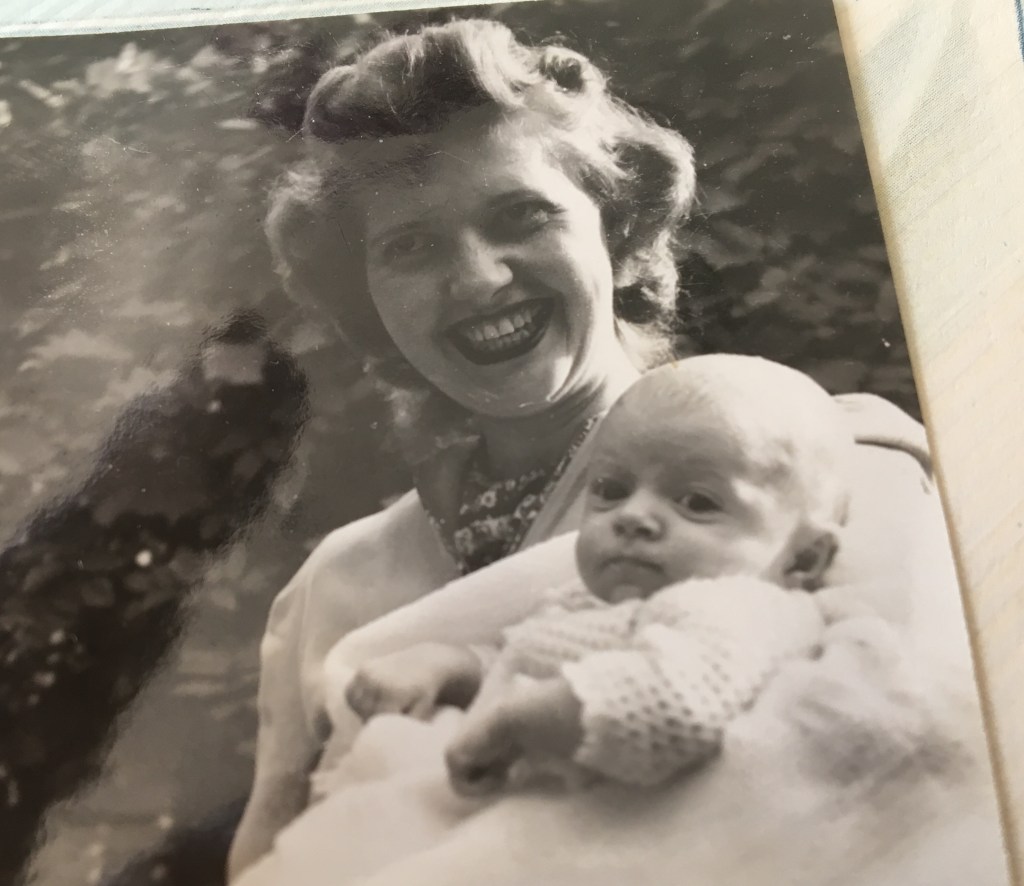
My Mom and I in 1945.

No Regrets

I don’t regret what I’ve been through. I’ve had ups and downs, super highs and some really low lows. I’ve been so blessed that I could never say, ‘I wish this didn’t happen.’ It’s part of who I am. Jennifer Lopez, entertainer

If a genie suddenly appeared in your life, what would you wish for? Like Lopez, I wouldn’t change much. The highs and lows of my life molded me into the less-than-perfect, 79-year old woman I am today.

If you’ve recently experienced loss, however, my guess is you would wish it away. But the inevitable can’t be wished away forever. Even though we wish that our loved ones could have stayed with us longer, all living things come to an end. 

Given the chance, I’d wish for world peace, the eradication of cancer, Alzheimer’s and other horrible diseases, and I’m not too crazy about hurricanes. But I choose not to wish my life away. How about you?

Affirmation: I have no regrets.

Coaching questions: If you had three wishes, what would they be? How have you been changed by the ups and downs of your life? What will help you be content with where you are in your life right now?

Photo by Dayne Topkin on Unsplash

The Flower of Mother’s Day

Symbols are the imaginative signposts of life. Margot Asquith, author

Pink carnations have always been special to me because they were the flowers on my mother’s casket and one of the few memories I have of the months following her death seventy years ago.

 I thought they were randomly chosen by my dad but, perhaps, he chose them for their meaning. “Light pink carnations represent love and gratitude that are similar to a Mother.” They also say, “I’ll never forget you.”

In America, they are the official Mother’s Day flower. 

Affirmation: I honor the symbols in my life.

Coaching questions: What symbols do you hold dear? What do they mean to you and why? How do they help you keep your memories alive?

Photo by Sixteen Miles Out on Unsplash

Unfinished Grieving? Have a Funeral in Your Heart

The few trees still upright were stripped of their branches, lonely flagpoles without a nation to claim them. Mike Mullin, author

Three weeks ago, Hurricane Ian ravaged parts of Florida and other states. Many people are in mourning for their possessions, their way of life, and the idea of life being the way they wanted it to be. Every day we are thankful that our southwest Florida house was spared as we empathize those who lost so much. 

In Asian philosophy, this mourning of the loss of how we thought life would be is called Ego Death. Those who have lost their homes, possessions, livelihood, and/or their way of life must be willing to have a funeral in their heart. 

Grieving the loss of our expectations, as well as possessions or even loved ones, is an important step towards recovery. There is no way around grief. To move forward, the path is straight ahead. 

Affirmation: I accept the importance of grieving no matter what the loss.

Coaching question and request: What have you lost that you have yet to grieve? This could be something less profound than a parent, child, or spouse. Perhaps it’s your innocence about the world, the loss of a friend, your most prized possession, or your way of life. Take a moment to think about your unfinished business around grief. Then do the work of having a funeral in your heart. 

Never Take Away HOPE

Blogger’s note: I posted this blog three years ago but, since I still have such strong feelings about the topic, I’m reposing. Blessings!

Character cannot be developed in ease and quiet. Only through experience of trail and suffering can the soul be strengthened, ambition inspired, and success achieved. Helen Keller

It breaks my heart to read the posts of women in motherless daughters’ groups telling a woman who is in despair over having just lost her mother that “it doesn’t get any better.” I shout out at my computer screen, “For Heaven’s sake, give the poor grieving woman some hope!” Most of us, if we’re over thirty, have suffered at least one significant loss. If all of us never recovered from loss, we would all be walking around like the Zombies we were the first week.

Even Helen Keller, with no sight, hearing or voice, offered a message of hope for those who are suffering and in distress. I believe it’s important to acknowledge a person’s grief, be with her in the reality of the moment, offer no platitudes like “she’s better off now” or “you’ll be fine.” Saying nothing is always good. Your presence is what matters. Reminisce with her about her loved one. But please, please, don’t take away hope for her future. Hope may be the only thread attaching her to this Earth—sometimes, literally.

Affirmation: I will be a healer and do no harm.  

Coaching questions: What helped you most in times of despair? What words or presence brought you the most comfort? How do you show up for your friends and family in times of distress?

Photo by Ronak Valobobhai on Unsplash

Seek Light In the Darkness

There is always some source of light in the darkness, shining on different opportunities, pointing toward new possibilities. Bahram Akradi, Founder and CEO of Life Time

When we experience loss, we often feel immersed in darkness. For some, it’s part of the grieving process. But know that there is always a source of light if one seeks it out. This light could come through our faith in God, an empathetic friend, or our own will to move forward. 

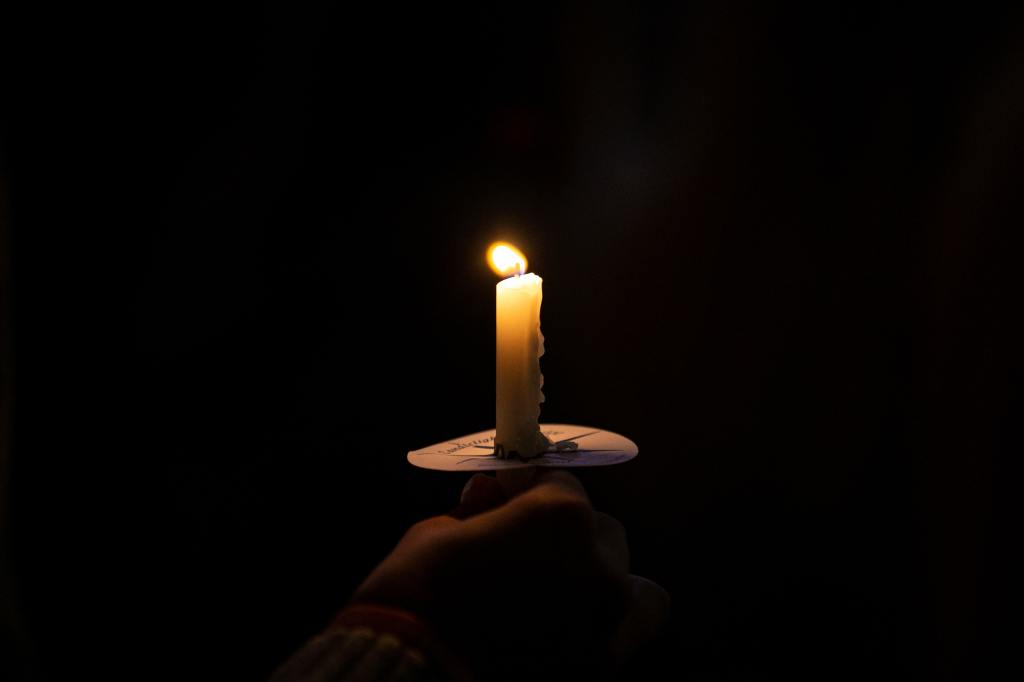
As Akradi says, the light points toward new possibilities and shines on different opportunities. A single candle can light up a room. Moving forward in the smallest way can yield a brighter future.

Affirmation: I will seek the source of light in the darkness.

Coaching questions: How do you deal with dark times? What helps you find the source of light?

Photo by Zac Cain on Unsplash 

Bring On The Tears!

Cry. Forgive. Learn. Move on. Let your tears water the seeds of your future happiness. Steve Maraboli, author 

“Crying activates the body in a healthy way,” says Stephen Sideroff, Ph.D., a clinical psychologist at UCLA and director of the Raoul Wallenberg Institute of Ethics. “Letting down one’s guard and one’s defenses and [crying] is a very positive, healthy thing. The same thing happens when you watch a movie and it touches you and you cry… That process of opening into yourself… it’s like a lock and key.”

This must be good news for those of you who are prone to tears. Growing up in a “stoic” family environment, for me tears have always felt like a show of weakness and I avoid them if possible. However, there’s nothing as satisfying as a good cry when watching a sad or heartfelt movie alone. Or, an Olympic athletic realizing her lifelong dream. 

Affirmation: Crying is a healthy thing. 

Coaching questions: How do tears (your own and other’s) affect you? When do you give yourself permission to cry?

Photo by Javier Martínez on Unsplash 

Surfside, We’re With You

There is no medicine like hope, no incentive so great, and no tonic so powerful as expectation of something better tomorrow. Grison Swett Marden, MD

We have spent time this past week empathizing with families of the victims of the high rise building collapse in Florida. We watch as they hold out hope that their loved ones will be found alive. 

As Dr. Marden says, hope is a powerful medicine. But as the days turn into weeks, then what? How do we handle life when hope is gone? How do we learn how to live with our loss? 

We grieve, we take care of ourselves, we preform small daily tasks, we share stories with others who have similar losses, we seek help when we need it, we find creative outlets for our memories and our sadness.

In these next days, when hope in Surfside wanes, I pray that loved ones will find comfort as they celebrate the lives of those who were lost. I hope they know that people the world over are sharing in their sadness as we recall our own losses.

Affirmation: I share the grief of others.  

Coaching questions: How do you handle life when hope is gone? In the past, what helped you in your grief?

Photo by Ben White on Unsplash 

Being Thankful for Helpers

When I was a boy and I would see scary things in the news, my mother would say to me, ‘Look for the helpers. You will always find people who are helping.’ Mister Rogers

Mister Rogers’s mother knew that if her son acknowledged the helpers he would feel calmer about the tragedy, knowing that someone was there to take control and put order to the chaos. It’s no wonder it is comforting for people to acknowledge health care workers and other helpers in this time of crisis. 

As I talk with daughters who lost their mother to death, abandonment or Alzheimer’s, the trajectory of their grief is often changed by the helpers who show up. The support and love of an older brother or sister, a grandmother, neighbor, friends in support groups, hospice worker, or a loving dad, can calm the chaos of the moment and become helpers in their lives.

Affirmation: I’m thankful for the helpers in my life.

Coaching questions: Who are the helpers in your life? How do they a difference? How do you show up as a helper for others? What difference do you make?

Photo by Georg Arthur Pflueger on Unsplash

There’s More to Grief Than Sadness

There are no happy endings. 

Endings are the saddest part. 

So just give me a happy middle, 

And a very happy start. 

Shel Silverstein, author

My experience of grieving showed me that grief is more than sorrow and sadness. Writing for medium.com, psychologist, Nick Wignall, concurs. “By limiting our grief exclusively to sadness, we end up invalidating the emotionally complex nature of grief. While sadness is often a large or even dominant part of our emotional reaction to loss, it’s almost never the only one.”

As I interviewed daughters who were grieving the loss of their mothers, I recognized emotions as wide-ranging as anger, disappointment, fear, anxiety, and, yes, even joy and thankfulness for what their mothers meant in their lives. 

Affirmation: I can grieve in many ways.

Coaching questions: What emotions show up for you when you’re in the process of grieving? How do you acknowledge and validate your wide range of emotions? 

ellieelien-Us2TMrzJuwU-unsplash

Photo by Ellieelien on Unsplash