Blog

Taking Care of Today Is Enough

So don’t worry about tomorrow, for tomorrow will bring its own worries. Today’s trouble is enough for today. New Living Translation of Matthew 6:35

When I read Matthew 6:35 in light of today’s world, I want to shout, “No kidding!” It seems like every day brings new “troubles” and “today’s trouble is (certainly) enough for today.” 

I’m a planner. In doing research for my book about mother loss, I discovered that it’s not unusual for people who have experienced early loss like to feel in control since they lost control of their life’s narrative so early. Planning is an artificial way to feel “in control.” For the first time in my life I’m in a circumstance of not planning beyond a few days. Plane travel—who knows when? House guests—who knows when? Meetings in person—who knows when? I’m going to reframe my frustration into an opportunity to learn to live more fully in the present and let the future just “be” for now.

Affirmation: I can be content without a plan.

Coaching question: In what way does Matthew 6:35 speak to you? 

sebastien-gabriel--IMlv9Jlb24-unsplash

Photo by Sebastien Gabriel on Unsplash

What Symbols Speak To You?

Symbols are the imaginative signposts of life. Margot Asquith, author

Pink carnations have always been special to me because they were the flowers on my mother’s casket and one of the few memories I have of the months following her death. I think they were randomly chosen but, perhaps, my dad chose them for their meaning. I’ll never know.

In the Dictionary of Flowers at the end of the book, The Language of Flowers, pink carnations (Dianthus Caryophyllus) mean I will never forget you. According to Mr. Google, it’s believed that pink carnations first appeared on earth from the Virgin Mary’s tears, making them the symbol of a mother’s undying love. It’s no wonder they have always held a special place in my heart. 

Affirmation: I honor the symbols in my life.

Coaching questions: What symbols do you hold dear? What do they mean to you and why? How do they help you keep your memories alive?

flavio-gasperini-OKFKQ9-nM_M-unsplash

Wise Words From Founder of Spanx

If you think about it, behind the fear of failure is really just the fear of embarrassment. Sara Blakely, Founder and CEO of Spanx

Most of us have an inner critic telling us to give up even before we start. Things aren’t always perfect….for me, spelling errors, quoting errors, and punctuation come to mind. But I believe that giving up our dreams because we fear that what we’re creating may be embarrassing is a sad way to live a life. 

So what if we’re embarrassed or fail? At least we lived life to the fullest, pursued our dreams, and left fear by the side of the road. 

Affirmation: I am not afraid of being embarrassed.

Coaching question: What would you pursue if you had no fear of embarrassment? 

ivan-aleksic-hko-iWhYdYE-unsplash

Taming COVID-19 Anxiety With Creativity

Just make something. Todd Brison, author

In a recent Medium post, Todd Brison wrote this about creativity endeavors, “This is your space. You have complete dominion. Hope is found here. Peace is found here. Silence, too. Acts of creation cannot heal a broken past. They cannot repair a world of despair. They cannot guarantee future hope. However, they can provide shelter in a storm.” 

My research and personal experience tells me that what Brison writes is true. In fact, Step Four in MOM’S GONE, NOW WHAT? is “Stir Up Your Creativity.” Generally, people don’t become more creative in spite of tragedy, they turn to creativity because of tragedy. They use creative endeavors to calm the anxiety related to uncertainty brought on by loss…and, there is no doubt, we are experiencing a heightened sense of loss right now. Paint, knit, cook, garden, learn a language, color…stir up your special creativity to bring you calm as you shelter in the storm.

Affirmation: I find comfort in creativity.

Coaching question: How will you tap into your creativity? 

(I’m coloring – see photo)


IMG_4046

Listen To Your Heart

The most beautiful people we have known are those who have known defeat, known suffering, known struggle, known loss, and have found their way out of those depths. Elisabeth Kübler-Ross, author of On Death And Dying

Helping a daughter move forward after the death or abandonment of her mother feels like part of my mission in this world. My mother lost her mother when she was three, I lost mine when I was eight. 

Using what I’ve learned about our losses to make a difference in the life of another by writing about it feels like important, heart-felt work. And, believe me, it is work. Although I published a small book about 17 years ago, I’m glad I didn’t know what I was getting into when I started down this path. Sometimes ignorance is bliss but, ignorant or not, doing what your heart tells you to do always works out in the end.

Affirmation: I listen to my heart.

Coaching questions: What is your heart telling you to do? What legacy do you want to leave behind? What’s a step you’re willing to take toward realizing your dream….no matter the cost?

Blank Book Cover Mock-up

Benefits of a COVID-19 Diary

Regular writing can bolster the immune system, help you recover from traumatic events more successfully and ease stress and depression. Professor James Pennebaker, from the University of Texas in Austin

Soon after I sequestered myself to keep safe during the COVID-19 pandemic, I started a COVID-19 Diary. Inspired by The Diary of Anne Frank, at first I thought of the diary as a historical document and a remembrance for my great-grandchildren. However, I soon discovered the immediate personal benefits of expressing my frustrations, fears, victories, and disappointments.

Research by Professor Pennebaker and others suggest that those who regularly write in a journal or diary have a more vigorous antibody response to bacteria and viruses and produce less cortisol, a stress hormone. I can’t prove any reduction in stress or increased antibodies but I do know that expressing my thoughts in a diary has a calming affect on me as I clear my mind of negativity. I also use my diary to track progress on my soon-to-be-published book. It helps me stay focused and reminds me that I am making progress even if it feels slow. 

Affirmation: I will continue to write in my diary.

Coaching questions request: What would it be like to start your own COVID-19 Diary? What are the possible benefits? Write about your feelings, activities, circumstances every couple of days for a week. Let me know how this exercise works for you. 

nick-morrison-FHnnjk1Yj7Y-unsplash

Be A Champion For Mental Health Awareness

A diagnosis has been enough without being burdened by secrecy and shame. Jane Pauley, television journalist who was diagnosed with bipolar disorder

May is Mental Health Awareness Month. Although we have made progress in our understanding, treatment, and acceptance of mental illness, we still have a long way to go. When any other organ is diseased or distressed, there is sympathy, understanding, and readily available treatment.

When the brain is diseased or distressed we frequently say, “Just get over it.” Or “You seem fine to me.” Sometimes, we think less of a person because they think or act in a way that is unclear to us. We need to champion those professionals and organizations that serve the misunderstood, unrecognized, and under-treated.

Affirmation: I acknowledge and champion those with mental disabilities and disease.

Coaching questions: How can you help a friend with mental illness come out from under the mantel of secrecy and shame? If you’re deeply depressed, suspect you’re bipolar, or have other possible mental health challenges, what’s keeping you from seeking professional help? 

hailey-wright-N6K_HC2VRb4-unsplash

Photo by Hailey wright on Unsplash

Accessing Your Risk

Risk: A situation that exposes you to danger, potential for uncontrolled loss of something you value, and intentional interaction with uncertainty. Google

If feels like all of these definitions apply to the world in which we live right now. While risk may be in the context of risking your life, it can also mean risking the danger of living in fear. Both concepts are worth exploring as we evaluate our choices in how much risk of exposure we are willing to experience in this new world of COVID-19. 

How you evaluate risk is very personal. As you look at the facts and talk to those you trust, consider your personal vulnerability and the risk-factor of others in your circle. I’ve found that there are no black and white choices. I’m basing my decisions on science and statistics. However, I will have to make choices that may feel somewhat risky as I come out of my cocoon. You will too. In the end, trust your common sense and intuition. 

Affirmation: I trust science, my common sense and intuition.

Coaching questions: How vulnerable are you and those in your inner circle to the negative affects of contracting COVID-19? On what will you base your decision on how to approach this new world? No matter what you decide, what are the risks?

niklas_hamann-Pe4gh8a8mBY-unsplash-2

Photo by niklas_hamann on Unsplash

You’re Not As Alone As You Thought

We are lonesome animals. We spend all of our life trying to be less lonesome. One of our ancient methods is to tell a story begging the listener to say—and to feel—‘Yes, that is the way it is, or at least that is the way I feel.’  You’re not as alone as you thought. John Steinbeck, author

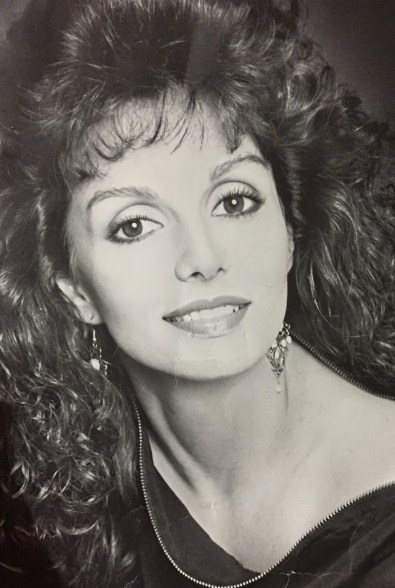
Sunday was the first anniversary of the death of the lovely lady in this photo who died of Early Onset Alzheimer’s. Her story, her daughter’s story, and her mother’s story are in my soon-to-be-released book, Mom’s Gone, Now What? What a difficult two days for these precious ladies. A first Mother’s Day followed by the first anniversary of death. But I know them to be strong women, I heard their strength in their voices and I see it in their actions. They were brave enough to tell their stories even at the height of their despair. 

One thing I know for sure is that telling stories to a trusted person helps us feel less lonesome, as Steinbeck says, as it helps us move forward after challenging life events. As a friend listens, nods, understands, and perhaps, relates to our story, we feel validated. We begin to understand how our experience was not only meaningful to us but also to another person. 

Affirmation: I will be a listener. 

Coaching questions: To whom can you tell your story? What difference will it make?

IMG_4639

Embracing Gratitude On A Difficult Day

Gratitude makes sense of our past, brings peace for today, and creates a vision for tomorrow. Melody Beattie, author

Today, Mother’s Day in the U.S., will be difficult for many women especially in the era of COVID-19 when families are apart. Even in normal times, Mother’s Day is frequently challenging for women who have lost their mothers, are estranged from their mothers, have no children but wish they did, and those who have lost a child. I’m thinking of you all. 

Today will be sad for me as well but gratitude will help me cope. I’m grateful for the friendly smile I inherited from my mom, I’m grateful for my wonderful family, I’m grateful for my good health and, even though it’s a day for mothers, I am grateful for having had an amazing dad.

Affirmation: Naming all that I’m grateful for has cheered me.

Coaching questions: What helps you feel grateful on a difficult day? What difference can you make in someone else’s day today?

fullsizeoutput_b01