Blog

D-Day Taught Us To Never Give Up

It was unknowable then, but so much of the progress that would define the 20th century, on both sides of the Atlantic, came down to the battle for a slice of beach only six miles long and two miles wide. President Barack Obama

June 6, 1944, seventy-five years ago today, was the largest seaborne invasion in military history. The landings on Normandy Beach were initiated by the Western Allies in an effort to liberate mainland Europe from Hitler’s reign and Nazi occupation during World War II. The Allied infantry began landing on the coast of France at 6:30 a.m. and by midnight, over 150,000 British, U.S. and Canadian troops had landed in Normandy. 

D-Day was a massacre with about 9,000 Allied soldiers either dead or wounded. Even with the massive losses, D-Day enabled the Allied forces to gain momentum and turn the tide toward liberation. 

How does D-Day speak to you other than eliciting gratitude and awe for their courage? To me, it says , “Never give up.” Faced with tremendous odds and death-defying conditions, 150,000 troops carried out orders and never gave up. The people they liberated never gave up. The voice of freedom never gave up. 

Affirmation: I will not forget. I will never give up on my goals, dreams, and the ongoing fight for freedom.

Coaching questions: What are you tempted to give up on? How does this 75-year-old story help you renew your drive to move forward and never give up? Where will you land?


IMG_2996.JPG

Challenging You to Keep a Journal

Keeping a personal journal, a daily in-depth analysis and evaluation of your experiences, is a high-leverage activity that increases self-awareness and enhances all the endowments and the synergy among them. Stephen R.Covey, author

Have you ever wondered why people like Charles Darwin, Winston Churchill, and Sara Blakely spent so much of their precious time writing things never to be seen by another soul? Because they knew the power of daily journaling. 

Here are just a few advantages of journaling: 

  • Writing what you’re feeling helps you clear your emotions, detach from the past, and vent any pent-up anger. You do this by transferring your emotions to paper which helps you get them off the hamster wheel of your brain.
  • Journaling helps you achieve your goals. Writing down long term goals is an important step to achieving success. Writing about what you want to do and/or have achieved each day to move you toward reaching your specific goals is what makes this happen. 
  • Keeps you in an attitude of gratitude. One of my favorite type of journals is a Gratitude Journal. Write what you are grateful for everyday. Keeping gratitude as a central part of your life keeps you forward thinking and positive. A similar journal is a Prayer Journal.
  • Records your life history. My former husband wrote in his journal every day for most of his adult life. When he died suddenly at the age of fifty-three, his journals were the history of his days on a Naval aircraft carrier, the weather, and what had happened in his life day to day life. 

Affirmation: Journaling can make a difference in my life.

Coaching question and request: How might journaling make a difference in your life? I challenge you to keep a hand-written journal for one week. 

PS I’m starting my new journal (see below) today. I’m with you all the way!

IMG_3001

I Am A Seed!

They tried to bury us but they didn’t know we were seeds. Mexican proverb

As a woman entrepreneur in the ’80’s, a single mom, a motherless daughter raised by a dad, a sudden widow, a board chair leading mostly men, there were times in my life that I felt the pressure of “being buried.” However, little did society, neighbors, corporate men know—I was a seed. In spite of the difficult circumstances or environment, I grew, I blossomed, I thrived.

A young, Mexican American, disabled woman recently quoted this proverb when speaking to her fellow graduates at a college commencement. To a much greater extent than I, she certainly must have felt buried many times. But, on that commencement day, she was a seed who had blossomed into a beautiful flower.

Affirmation: I am a seed.

Coaching questions: What’s causing you to feel buried? What will help you bloom?

christian-joudrey-90289-unsplash.jpg

Have a Funeral In Your Heart

The few trees still upright were stripped of their branches, lonely flagpoles without a nation to claim them. Mike Mullin, author

More than three hundred twisters have wrecked havoc across the midwestern US states over the last two weeks alone. This is in addition to the unprecedented flooding across several states. People are in mourning for their possessions, their way of life, and the idea of life being the way they wanted it to be. 

In Asian philosophy, this mourning of the loss of how we thought life would be is called Ego Death. I profoundly experienced this when I was divorced over twenty-five years ago. I mourned the loss of a nuclear family and how I thought my life would be. Those who have lost their homes, possessions, livelihood, or their way of life must be willing to have a funeral in their heart. Grieving the loss of our expectations, as well as possessions or even loved ones, is an important step towards recovery. There is no way around grief. To move forward, the path is straight ahead. 

Affirmation: I accept the importance of grieving no matter what the loss.

Coaching question and request: What have you lost that you have yet to grieve? This could be something less profound than a parent, child, or spouse. Perhaps it is your innocence about the world. The loss of a friend, your most prized possession, or your way of life. Take a moment to think about your unfinished business around grief. Then do the work of having a funeral in your heart. 

nikolas-noonan-682177-unsplash.jpg

Photo by Nikolas Noonan on Unsplash

Looking Through the Eyes of a Martian

People from a planet without flowers would think we must be mad with joy the whole time to have such things about us. Iris Murdock, author

Here in the United States, it’s nearly summer and flowers are starting to bloom. Those first buds are the best, especially if the winter and spring were long and difficult. With so much flooding and tornados around the country, a sunny summer day filled with flowers will be a welcome relief.

I love imagining, as Murdock did, what flowers would look like from the viewpoint of a Martian. My guess is, they would be wondrous beyond words. Take a moment today to look outside and see your world with Martian eyes. See all that is blooming and have a sense of wonder beyond words.

Affirmation: I see my world with new eyes.

Coaching questions: What are you taking for granted in your life? What wonders of nature do you appreciate the most? What helps you stay in wonder mode? 

IMG_2972.JPG

When Is Enough Enough?

Patriotism is supporting your country all the time, and your government when it deserves it. Mark Twain

In the United States, today is Memorial Day, a day to remember those who served in the military. As much as I love honoring veterans and active service members, Memorial Day is, more specifically, about honoring those who lost their lives in service to our country.

The greatest loss of life for the U.S. was in our own Civil War where brother fought brother killing 623,026 when our population was only thirty-one million.  

In total, 1,316,771 American lives have been lost to war. In addition, I shutter to think of the millions of men, women, and children who have been killed in wars worldwide. What can we do to stop the killing, maiming, and emotional trauma? 

Affirmation: I will seek peace.

Coaching questions: Thinking of the loss others have experienced is helpful in dealing with our own losses. Who are you thinking of today? What was their contribution to our freedom? What’s one thing you can do to promote peace in the world? 

Below is a photo of my dad. Although he served in both WWII and Korea, he was one of the lucky ones who returned home to live another fifty-six robust years working in a Veterans’ Hospital.

IMG_2157


Remembering What’s Important

I’ll always remember the things you taught me and how much you loved me. Unknown

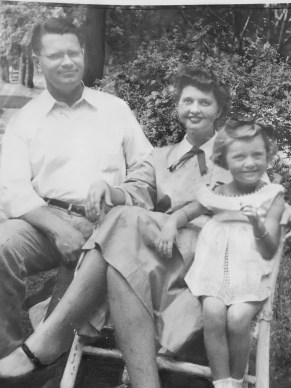
My mother died sixty-five years ago today. She was in my life for eight short years. I have mostly defined her influence on my life by her death; the importance of living each day to the fullest knowing that life can be short and how I grew to be independent and self-confident as a motherless daughter. It was only recently, as I wrote my book on mother loss, that I finally began to consider what she taught me before her death.

As she set card tables with linen cloths and handprinted china for her bridge club, she taught me how to be a gracious hostess and value of women friends. When she reprimanded me after I stuck my tongue out at the closed front door as she called me in for dinner, she taught me to show respect. Along the way, she also taught me manners and where to put the forks. I’m grateful for the things my mother taught me and I’m grateful for her love.

Affirmation: I will always remember.

Coaching questions: What did your mother teach you that you’re grateful for today? What are your precious early memories? What will your children, grand children, nieces or nephews remember as they recall your influence in their lives?

fullsizeoutput_c79.jpegMy family circa 1948

What’s Keeping You From Eating Together?

Researchers have confirmed what parents have known for a long time: Sharing a family meal is good for the spirit, the brain, and the health of all family members. Anne Fishel, PhD, cofounder of Harvard’s Family Dinner Project

Thirty-five years ago, my son, Dan, returned home from junior high and asked, “Did you know that most families don’t eat dinner together?” Apparently, his health teacher had asked how many in the class regularly had dinner with their families and he was only one of about three to raise his hand. He just assumed everyone ate dinner together every night. All these years later, the family dinner is even more of a relic.

Yet, research links family dinner with lower rates of substance abuse, depression, better grades and enhanced self-esteem. Here are a few tips to make family dinner happen. 

1. Make the commitment. Start with one meal, find a date that works, and put it on    everyone’s calendar. 

2. Keep the food simple. Even healthy take-out, when eaten together, is a step.

3. Make the meal time fun. This isn’t a time for grilling kids about grades or family arguments. Stash the phones, look at one another, and laugh a lot!

Affirmation: My family benefits when we eat together.

Coaching questions: What keeps your family from eating meals together? What can you do to change this circumstance at least once a week? How will you get buy-in from the others? How committed are you? 

pablo-merchan-montes-772136-unsplash.jpg

Symbols Matter

Symbols are the imaginative signposts of life. Margot Asquith, author

Pink carnations have always been special to me because they were the flowers on my mother’s casket and one of the few memories I have from the months following her death. I think they were randomly chosen but perhaps my dad chose them for their meaning. I’ll never know.

In the Dictionary of Flowers at the end of the book, The Language of Flowers, pink carnations (Dianthus Caryophyllus) mean I will never forget you. According to Mr. Google, it’s believed that pink carnations first appeared on earth from the Virgin Mary’s tears, making them the symbol of a mother’s undying love. It’s no wonder they have always held a special place in my heart. 

Affirmation: I honor the symbols in my life.

Coaching questions: What symbols do you hold dear? What do they mean to you and why? How do they help you keep your memories alive?

IMG_2970.jpg

Help For Those With Mental Illness

A diagnosis has been enough without being burdened by secrecy and shame. Jane Pauley, television journalist who was diagnosed with bipolar disorder

May is Mental Health Awareness Month. Although we have made progress in our understanding, treatment, and acceptance of mental illness, we still have a long way to go. When any other organ is diseased or distressed, there is sympathy, understanding, and readily available treatment.

When the brain is diseased or distressed we frequently say, “Really?” Or “Just get over it already.” Or “You seem fine to me.” Sometimes, we think less of a person because they think or act in a way that is unclear to us. We need to champion those professionals and organizations that serve the misunderstood, unrecognized, and under-treated. 

Affirmation: I acknowledge and champion those with mental disabilities and disease.

Coaching questions:  I can almost guarantee you know someone with a mental illness. How can you help them come out from under the mantel of secrecy and shame? If you’re deeply depressed, suspect you’re bipolar, or have other possible mental health challenges, I urge you to seek professional help just as you would if it was another type of illness.

kyle-broad-29486-unsplash.jpg

Photo by Kyle Broad on Unsplash